
How Much Does a Cold Room Panel Production Line Cost in 2026? Full CAPEX + OPEX Breakdown
A cold room panel production line costs anywhere from USD 180K for a single-mould discontinuous cell to USD 2.4M for a 35 m continuous double-belt press line — and the CAPEX number on the invoice is often 60–75% of the total money you need to reach first production. This pillar walks the full 2026 cost stack: 4 line tiers with real turnkey ranges, the six hidden CAPEX items every first-time buyer forgets, the per-square-metre OPEX math that decides payback, and the ROI models we run for factory owners in Europe, MENA and LATAM.
Turnkey cold room panel production line CAPEX in 2026: Tier 1 entry discontinuous single-mould USD 180K–320K (40–80K m²/year), Tier 2 mid discontinuous 2–3 moulds USD 340K–650K (80–180K m²/year), Tier 3 small continuous 25 m press USD 850K–1.4M (240–480K m²/year), Tier 4 large continuous 30–35 m press USD 1.5M–2.4M (480K–1.2M m²/year). Six hidden CAPEX items — coil storage rack (USD 25–70K), foam raw-material tank farm (USD 40–120K), thermal oil boiler (USD 55–140K), compressed-air and cooling water (USD 30–80K), civil works and pit (USD 60–180K), first six months raw material (USD 90–320K) — add 40–80% on top of the sticker. OPEX per m² of finished panel: PU raw material USD 5.20–6.80, skins USD 3.50–5.20 (PPGI 0.5 mm), labour USD 0.40–2.10 (line-utilisation dependent), utilities USD 0.30–0.65, maintenance USD 0.15–0.30. Payback for a well-utilised continuous line 22–34 months; for a well-utilised discontinuous line 18–28 months at the smaller capex bracket.
A cold room panel production line is not a single-price purchase. The line CAPEX quoted in your RFQ is between 60% and 75% of the real cash you need to reach first production, and the per-square-metre OPEX after commissioning is what decides whether the factory pays back in 20 months or 40. This pillar walks the full 2026 cost stack — four turnkey tiers with real price ranges, the six hidden CAPEX items every first-time buyer forgets to budget, the OPEX math per square metre of finished panel, and the payback models we run when factory owners in Europe, MENA and LATAM come to us for a spec-and-quote. If you are pricing your first line, or reviewing a supplier RFQ, read it against these numbers rather than against a single "USD X" figure.
Speed-Read — Cold Room Panel Production Line Cost, 2026
| Tier | Configuration | Turnkey CAPEX (line only) | Annual output (2-shift) | Fits |
|---|---|---|---|---|
| Tier 1 | Entry discontinuous · single mould · low-pressure PU | USD 180K – 320K | 40,000 – 80,000 m² | New factory · single spec · pilot volume |
| Tier 2 | Mid discontinuous · 2–3 moulds · high-pressure PU | USD 340K – 650K | 80,000 – 180,000 m² | Custom cold-room + walk-in freezer OEM |
| Tier 3 | Small continuous · 25 m press · 1.2 m width | USD 850K – 1.4M | 240,000 – 480,000 m² | Regional cold-storage panel supplier |
| Tier 4 | Large continuous · 30–35 m press · dual-profile | USD 1.5M – 2.4M | 480,000 – 1,200,000 m² | Chain cold-storage + roofing panel volumes |
The tiers above are line CAPEX only — moulds/press, foaming machine, control system, installation, commissioning, FAT. The total money to reach first production is line CAPEX plus the six hidden items in section 3 below, typically 40–80% on top of the sticker.
1. What "line CAPEX" actually includes in a proper quote
A turnkey line quote — the number you see on the supplier's proposal cover page — should include, at minimum, ten line items. If any of these is missing, the quote is under-scoped and the gap will surface as a change order after PO:
- Press or mould assembly (double-belt continuous press or hydraulic discontinuous press with moulds)
- Decoiler pair (continuous only) or skin-handling tooling (discontinuous)
- Edge profiling roll set for one edge design (continuous) or side rails per mould (discontinuous)
- High-pressure PU foaming machine with mixing head, day tanks and controls
- Foam raw-material dosing system (metering pumps, viscosity control, ratio verification)
- Panel cutting (flying saw for continuous, in-mould trim for discontinuous)
- Panel stacker or take-off table
- Control cabinet with PLC and HMI (Siemens / Allen-Bradley / Mitsubishi tier)
- Installation and commissioning at your site
- Factory acceptance test (FAT) at supplier factory + site acceptance test at your plant
Watch out for suppliers who list "installation" as "installation supervision only" (you provide the workers) or "FAT" as "supplier internal only" (no customer sign-off). Both are common quote games that shift real cost to you. A serious quote defines FAT sign-off criteria explicitly — throughput target, reject-rate ceiling, panel-dimensional tolerance, foam-density variance.
2. The four tiers explained — what each configuration produces
Tier 1 · Entry discontinuous (USD 180K – 320K)
A single hydraulic press with one mould (typically 1.2 × 3 m or 1.2 × 6 m), a low-pressure PU foaming machine, manual skin loading. Cycles at 10–15 minutes per panel, one shift produces 20–40 panels/day, two shifts 40–80 panels/day. At 1.2 × 4 m average panel this is 40,000–80,000 m²/year. This is the correct starting point for a new-market factory that needs to prove commercial viability before scaling — the CAPEX is small enough to fund from working capital, the ramp is fast (4–6 months from PO to first production), and the same press can grow with additional moulds later.
Tier 2 · Mid discontinuous (USD 340K – 650K)
The same hydraulic press with 2–3 moulds allowing parallel or staged cycling, plus a high-pressure PU foaming machine for tighter density tolerance and better closed-cell content. Skin-handling gets some mechanisation (skin transporter, vacuum lifter for stainless plates), and a second edge profile becomes economical. Output climbs to 80,000–180,000 m²/year at 2-shift utilisation. This is the sweet spot for custom cold-room and walk-in freezer OEMs — flexibility to serve a mixed order book, throughput to serve a regional market, CAPEX still fundable from a modest bank facility.
Tier 3 · Small continuous (USD 850K – 1.4M)
A 25 m double-belt continuous press with a matched decoiler pair, one profile tool, high-pressure PU foaming machine sized for 30–36 kg/min metered output, flying saw and stacker. Line runs 6–8 m/min continuous at 1.0 or 1.2 m panel width, producing 240,000–480,000 m²/year at 2-shift utilisation. This is where the economics flip — the labour cost per square metre drops by roughly half versus Tier 2, and the raw-material cost per square metre drops 3–5% from better foam metering. Tier 3 is right when you have a confirmed order book above 240,000 m²/year for one or two panel specs.
Tier 4 · Large continuous (USD 1.5M – 2.4M)
A 30–35 m double-belt press with dual profile tooling (tongue-and-groove and camlock in the same line), a higher-throughput foaming machine (40–55 kg/min), side-cutter for stainless coil trim, automatic panel stacker with turnover for both-face inspection. Line runs 10–14 m/min at 1.2 m width, producing 480,000–1,200,000 m²/year. Fits chain cold-storage panel suppliers, industrial roofing panel manufacturers and pre-fab building panel operations where one panel spec runs the whole book.
3. The six hidden CAPEX items every first-time buyer forgets
The RFQ number is the line. The factory costs more. These are the six items we see missing from first-time buyers' budgets, in the order they hit:
| Hidden item | Range | Why it is not in the line quote |
|---|---|---|
| Coil storage rack + handling crane | USD 25K – 70K | "Site preparation" scope — supplier assumes you have it |
| Foam raw-material tank farm | USD 40K – 120K | Polyol and isocyanate storage tanks, insulated + heated for cyclopentane systems, ATEX-rated for flammable-agent lines |
| Thermal oil boiler + piping | USD 55K – 140K | Continuous press platens need 8–15 kW/m heat input; the boiler and thermal fluid loop are usually separate scope |
| Compressed air + cooling water | USD 30K – 80K | Air compressor, cooling tower or chiller, water treatment |
| Civil works and pit foundation | USD 60K – 180K | Continuous press pit (typically 1.2 m deep × line length), reinforced foundation, floor drainage |
| First 6 months raw material | USD 90K – 320K | Polyol + isocyanate + blowing agent working capital; day tanks empty until you pour |
Add these up and the total factory reach-first-production budget is 40–80% higher than the line CAPEX quote. For a Tier 3 line at USD 1.1M CAPEX, expect USD 1.6–1.9M total.
4. OPEX per square metre — the number that decides payback
CAPEX is one-time; OPEX is every month. The per-square-metre OPEX on a well-run cold room panel line in 2026 breaks down as follows for a standard 100 mm panel with 0.5 mm PPGI skins and 42 kg/m³ core density:
| Cost item | USD/m² finished panel | Notes |
|---|---|---|
| PU raw material | 5.20 – 6.80 | Polyol + MDI isocyanate + cyclopentane/HFO at 100 mm core, 42 kg/m³ |
| Skin material | 3.50 – 5.20 | Two 0.5 mm PPGI skins at USD 850–1,050/tonne |
| Labour | 0.40 – 2.10 | Falls sharply with utilisation; low bracket = well-utilised continuous, high = under-utilised discontinuous |
| Utilities (heat, power, air, water) | 0.30 – 0.65 | Thermal oil heat is the dominant load; power for foaming machine and press hydraulics |
| Maintenance + spare parts | 0.15 – 0.30 | Preventive maintenance, filter changes, seal replacement, PLC support |
| Total variable OPEX | USD 9.55 – 15.05 / m² | A finished 100 mm panel at ex-factory cost |
Selling price for a 100 mm PU sandwich panel in 2026 varies by market: Europe USD 22–34/m² (EN 14509 certified, PPGI 0.5 mm both sides); Middle East USD 18–28/m²; LATAM USD 15–26/m²; Africa USD 14–22/m². Gross margin on well-run lines is 30–55% depending on market and line utilisation. Under-utilised lines can run at negative gross margin — the fixed OPEX (rent, standing labour, minimum thermal maintenance) does not fall with output as fast as revenue does.
5. Payback models by tier
Assuming a well-utilised line at 80% of nameplate output, a realistic gross margin of 40%, and no debt service:
| Tier | Total budget (line + hidden) | Annual output at 80% util | Gross profit at USD 20/m² | Payback |
|---|---|---|---|---|
| Tier 1 | USD 320K – 550K | 32,000 – 64,000 m² | USD 260K – 510K | 14 – 24 months |
| Tier 2 | USD 550K – 1.05M | 64,000 – 144,000 m² | USD 510K – 1.15M | 12 – 22 months |
| Tier 3 | USD 1.35M – 2.2M | 192,000 – 384,000 m² | USD 1.5M – 3.1M | 10 – 18 months |
| Tier 4 | USD 2.3M – 3.8M | 384,000 – 960,000 m² | USD 3.1M – 7.7M | 7 – 14 months |
Payback in the table assumes 80% utilisation on a mature order book. First-year utilisation is typically 40–60% while the sales team fills the book, which pushes the actual payback 6–12 months longer than the steady-state number. Two factors change the model materially:
- Blowing agent choice — a cyclopentane line lowers raw-material cost per m² by USD 0.30–0.60 versus HFC-245fa, but requires ATEX-rated equipment (add USD 50K–120K CAPEX).
- Skin thickness — moving from 0.5 mm PPGI to 0.6 mm adds USD 0.70–1.10/m² variable cost with almost no selling-price uplift; buyers upgrade skin only when the destination market pays for it.
6. Cost drivers you can actually influence
Three levers change your cost curve materially without changing the line spec:
1. Raw material sourcing. PU polyol prices vary 8–15% across suppliers on any given quarter. Qualifying two or three suppliers and running quarterly RFQs is worth 40–80 basis points of gross margin over a year.
2. Line utilisation. Every increment of utilisation moves fixed cost per square metre down. A Tier 3 line running at 60% instead of 80% has USD 0.60–1.10/m² higher total cost. The commercial team is the biggest lever on your line's payback, not the engineering team.
3. Panel spec discipline. A factory that runs six panel specs at 100,000 m²/year each is cheaper per square metre than a factory that runs twenty specs at 30,000 m²/year each, on the same line. Change-over waste and re-tooling time compound.
7. Reference standards for panel and cost benchmarking
Cold room panel specifications and cost expectations tie back to certification standards. Panel design certifies to EN 14509 in Europe (structural, thermal, fire, durability), FM 4880 for insured-property assemblies in North America, and ASTM E84 for surface burning characteristics. Foam thermal conductivity is measured under ASTM C518 / ISO 8301. The cost tables in this pillar assume compliance with these standards; a line quoted below the tier ranges above is usually not equipped to certify to them.
8. Common cost mistakes we see in first-time RFQs
Buying a bigger line than the order book supports. The most expensive single mistake in the segment. A Tier 4 line at USD 2.4M with a Tier 2 order book (144,000 m²/year) is a 40-month payback pretending to be a 10-month one. Buy the tier that fits your confirmed year-one book, not your five-year vision.
Skipping the ATEX line item on a cyclopentane quote. ATEX-rated equipment for a flammable-agent foaming line is USD 50K–120K on top of a standard line. Suppliers who quote cyclopentane compatibility without ATEX are quoting a line you cannot commission under most fire codes.
Under-budgeting first-year raw material. Polyol and isocyanate day tanks need to be full at commissioning and the working capital between order and payment stretches 60–120 days. First 6 months' raw material is a working-capital line item, not an operating expense.
Believing published line-speed as steady-state output. Nameplate line speed is a demonstrated peak; steady-state output is typically 70–85% of nameplate once change-overs, cleanings and minor stoppages are counted. Budget cash flow on steady-state, not nameplate.
Sourcing raw materials from the supplier's default vendor. Suppliers typically recommend their tested polyol supplier so the FAT will pass — that is legitimate for the FAT window, but rotating to a locally sourced or dual-sourced polyol after commissioning is standard cost discipline. Qualify the second source at FAT.
FAQ
Can I finance a Tier 3 or Tier 4 line, or do I need to pay cash?
Both routes work in 2026. Equipment finance in Europe and North America runs 5–7 year terms at prime + 2–4 points for known cold-room OEMs. Chinese-domestic supplier finance (LC-based, deferred payment) is available on many Chinese-built lines at 90–180 day terms. Interest is a real cost — factor it into the payback model, not into "financing details."
How much does the pit foundation for a continuous press add?
USD 60K–180K depending on soil conditions and press length. A 30 m double-belt press needs a reinforced concrete pit typically 1.2 m deep and slightly wider than the press. Soil conditions with high water table can add USD 40K–80K for drainage and de-watering.
What is the price gap between a Chinese-built and a European-built line at the same tier?
Chinese-built lines at Tier 3 and Tier 4 sell 30–50% below European equivalents at equivalent process spec. The gap is not equipment quality — it is service reach and PLC brand. European lines dominate in markets where local integrators only service Siemens/Beckhoff and where the panel testing lab expects European supplier documentation. Chinese lines dominate where the local integrator network services Mitsubishi/Delta/Inovance and where the destination market accepts Chinese supplier documentation.
Does the CAPEX table include a training budget?
Line CAPEX includes on-site commissioning training (typically 5–10 days for 4–8 operators). Ongoing operator development is separate — budget USD 15K–35K/year for training refresh, supervisor certification and process engineering support in years 2–5.
What is the shortest realistic timeline from PO to first commercial panel?
Tier 1 discontinuous: 4 months. Tier 2 discontinuous: 5–6 months. Tier 3 continuous: 7–8 months. Tier 4 continuous: 8–10 months. Timelines below these are usually a supplier under-quoting a schedule they cannot hold; timelines above are worth negotiating a late-delivery penalty on (0.2–0.5% of contract value per week overrun, capped at 5%).
How does OPEX scale with the shift from PU to PIR foam?
PIR foam raw material is roughly 8–15% more expensive per kg than standard PU, but PIR cures faster and to a higher fire class, and in some markets sells at USD 2–5/m² premium. On a well-utilised Tier 3 or Tier 4 line, switching from PU to PIR is often gross-margin-neutral or slightly positive because the market pays for the fire rating. On smaller lines the raw-material premium eats the gross margin.
For UREXCEED's spec-and-quote on a PU cold room panel production line sized to your actual first-year order book, send us your target panel spec and daily output — we quote against the tier table above with the hidden CAPEX items called out separately, and we run the payback math against your real destination-market panel selling price rather than a book number. Related engineering deep-dives: Continuous vs Discontinuous PU Sandwich Panel Line walks the line-type decision that sets which tier you are shopping in, and How to Choose a PU Sandwich Panel Production Line: 12-Point Buyer's Framework is the RFQ evaluation checklist that keeps supplier quotes honest against these numbers.
المنتجات المذكورة في هذا المقال
هل أنت مستعد للتخطيط لمشروع التبريد الخاص بك؟
شاركنا هدف الإنتاج ومزيج المنتجات — فريقنا الهندسي يرد بخطة طاقة إنتاجية وعرض أسعار خلال ثلاثة أيام عمل.
اطلب عرض أسعار هندسيمقالات ذات صلة
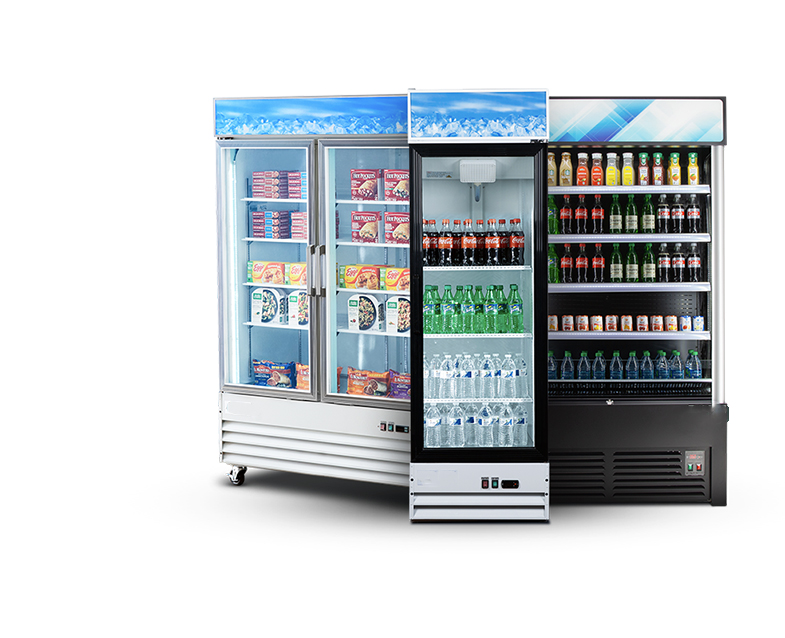
Beverage Cooler Production Line — Cost, Payback & Turnkey Setup (2026 Pillar Guide)
Investment tiers from a single-door entry line to a full bottler-program build, the payback math behind a 3,000-unit/day line, and the complete equipment list and certification checklist a beverage cooler OEM needs to go from contract to first shipment.
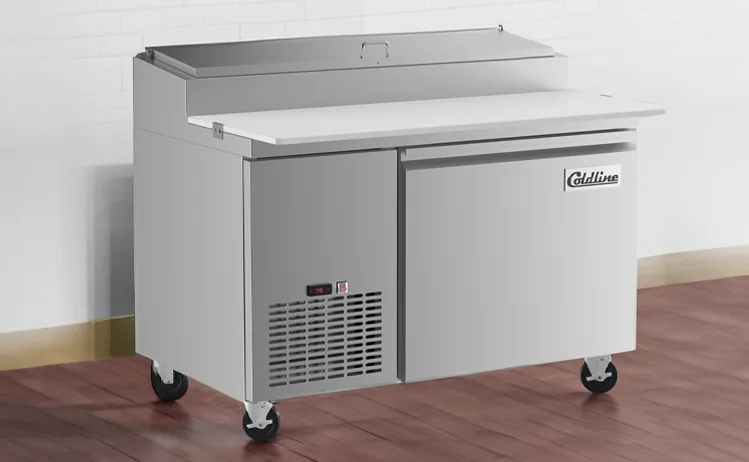
Chef Base Production Line: Cost, Break-Even & Turnkey Manufacturing (2026 Pillar Guide)
Investment tiers, the break-even math behind an 800-unit/day line, and the full equipment list and certification checklist a foodservice OEM needs to start chef base and refrigerated-counter production.
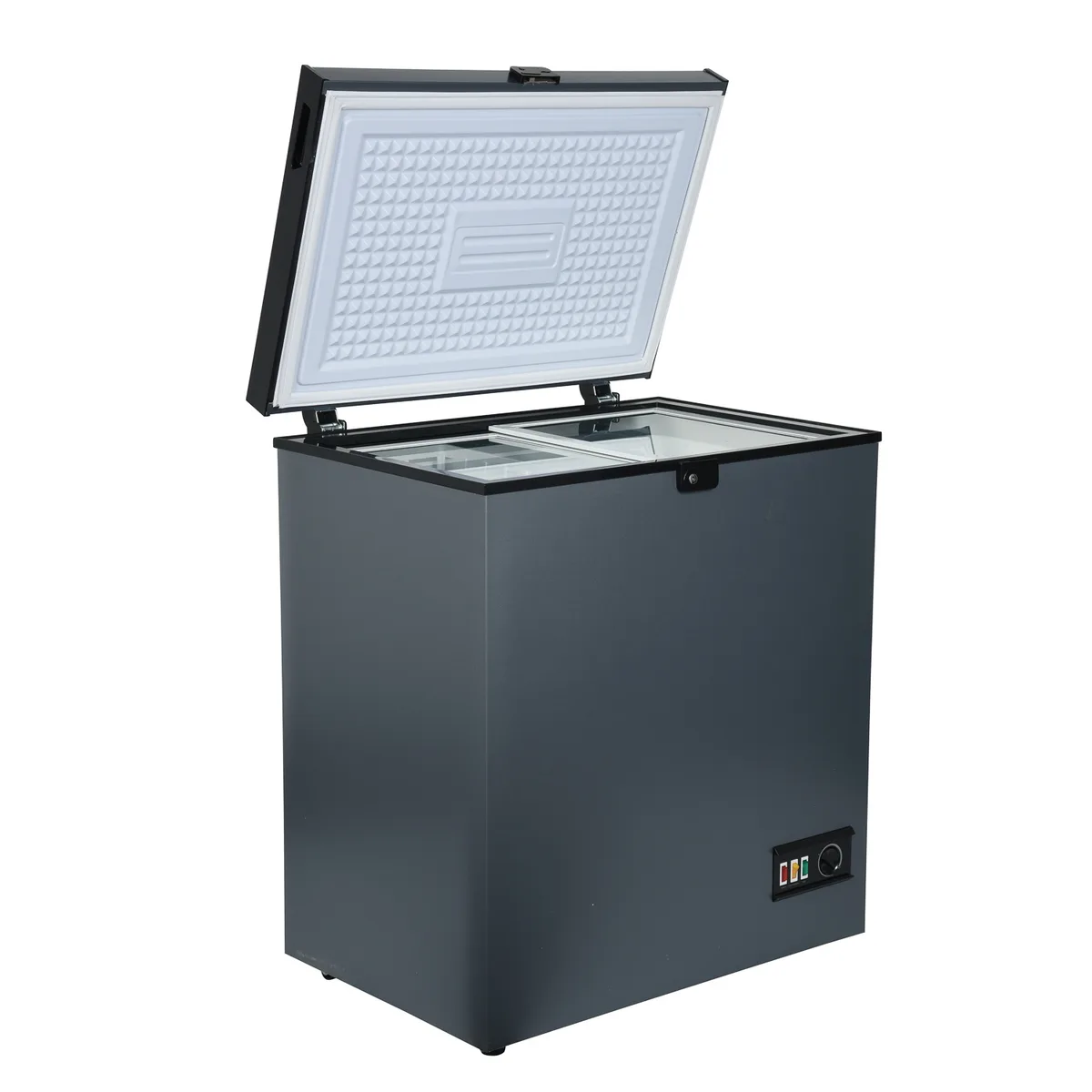
Chest Freezer Production Line — Cost, Capacity & Turnkey Factory Setup (2026 Pillar Guide)
Investment tiers from a 300-unit/day entry line to a 3,000-unit/day ultra-low-temperature build, the ATEX and Ecodesign pitfalls that stall first-time freezer OEMs, and the complete equipment list, mould selection logic and staffing plan needed to go from contract to first accepted cabinet.