
Máquina dosadora de cola PU: tipos, aplicações e guia de seleção para compradores
A dosagem automatizada de cola PU substitui a aplicação manual em fábricas de refrigeradores — com largura de cordão consistente, ciclos 3x mais rápidos e economia de adesivo de 15-25%.
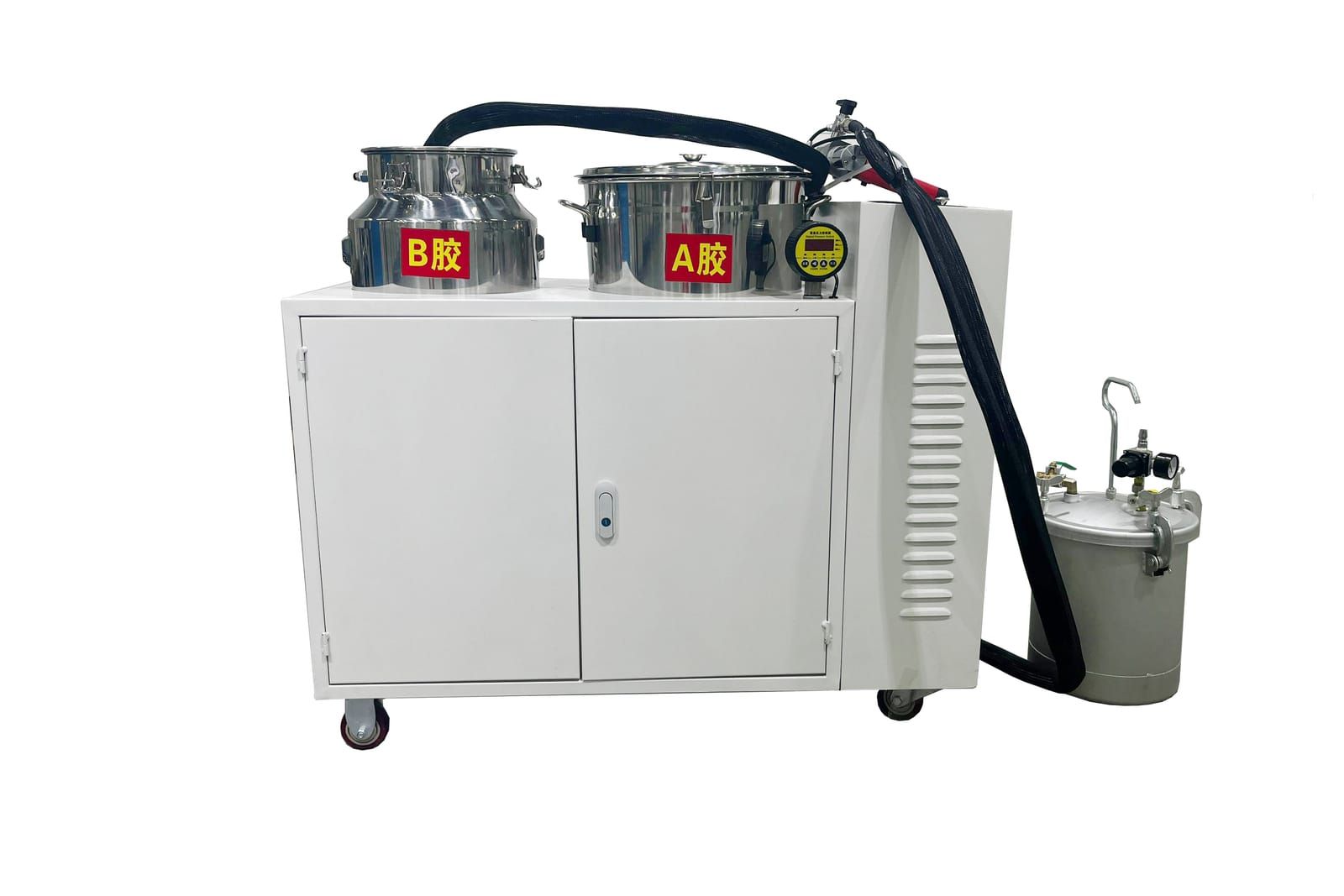
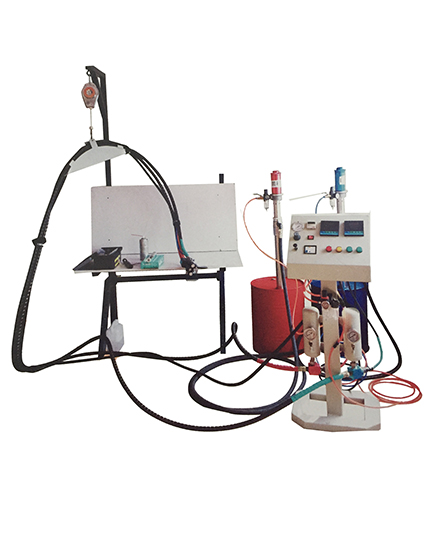
Três tipos: pistão pneumático (USD 8.000-15.000), bomba de engrenagens (USD 12.000-25.000), servo volumétrico (USD 25.000-45.000). Quatro aplicações: vedação de juntas de porta, vedação de painéis, colagem de placas de dobradiça, vedação de caixas isotérmicas. Retorno do investimento 4-8 meses.
Why automated glue dispensing replaces manual application in refrigerator factories
Manual adhesive application on a refrigerator production line means an operator with a hand-held gun laying PU sealant along a door gasket groove or panel joint. The result: bead width varies between 2 mm and 6 mm within a single door, adhesive consumption runs 30-40 % above theoretical need, and cycle time per unit sits around 45-60 seconds. At 800 doors per shift, those inconsistencies compound into visible gasket lifting, cold-bridge leak paths, and warranty returns.
An automated PU glue dispensing machine eliminates the operator variable. A servo-driven or pneumatic dispensing head follows a programmed path at constant speed, delivering a bead of 2.5 mm +/-0.05 mm at a flow rate the PLC controls to within 1 g/min. Cycle time drops to 12-18 seconds per door. Adhesive savings of 15-25 % pay for the machine in 4-8 months on most lines running two shifts.
Three main dispensing machine types
The market divides into three pump technologies. Each suits a different viscosity range, bead precision requirement, and budget.
| Type | Pump mechanism | Bead accuracy | Viscosity range | Flow rate | Price range (USD) | Best for |
|---|---|---|---|---|---|---|
| Pneumatic piston | Air-driven piston displaces adhesive | +/-0.3 mm | 5,000-30,000 mPa-s | 10-120 g/min | 8,000-15,000 | Low-volume lines, simple bead patterns, budget-constrained plants |
| Gear pump | Precision gear pair meters flow | +/-0.15 mm | 10,000-50,000 mPa-s | 5-200 g/min | 12,000-25,000 | Mid-volume lines, door gasket bonding, panel sealing with medium-viscosity PU |
| Servo volumetric | Servo motor drives precision screw or piston | +/-0.05 mm | 5,000-80,000 mPa-s | 1-300 g/min | 25,000-45,000 | High-volume turnkey lines, multi-bead programs, tight-tolerance assemblies |
Pneumatic piston machines are the simplest to maintain: fewer moving parts, no servo drives to calibrate, and spare parts cost under USD 200 per year. The trade-off is bead repeatability. For door gasket bonding where the groove is 3 mm wide and the adhesive must sit centred within 0.2 mm, a gear pump or servo system is the practical minimum.
Gear pump systems handle the bulk of refrigerator factory dispensing work. They tolerate the filler particles common in PU sealants (up to 100 micron particle size) without excessive wear, and their flow-rate stability over an 8-hour shift stays within 2 % drift.
Servo volumetric machines justify their cost on lines above 1,200 units per shift or when multiple bead patterns must run without mechanical changeover. The servo motor adjusts flow rate, bead width, and start/stop response within a single PLC program cycle (typically 4 ms), so switching from a 2.5 mm gasket bead to a 5 mm panel seal takes zero physical tooling change.
Four key applications in cold-chain manufacturing
Door gasket bonding. The magnetic gasket strip is bonded into a PVC or ABS door liner groove using single-component PU adhesive (viscosity 15,000-25,000 mPa-s). Bead width: 2-3 mm. A continuous bead must run the full perimeter without gaps at corners; otherwise cold air leaks through and condenser run-time increases 8-12 %. Automated dispensing with corner-deceleration programming solves this.
Panel joint sealing. Sandwich panels for cold storage rooms have tongue-and-groove or cam-lock joints. PU sealant (viscosity 30,000-50,000 mPa-s) fills the joint to block moisture ingress and thermal bridging. Bead width: 4-6 mm. A cold storage production line integrating inline dispensing seals 120-180 linear metres of joint per hour.
Hinge-plate adhesion. Metal hinge plates are bonded to the outer door skin before screw insertion. Two-component PU adhesive (mix ratio 1:1 to 3:1, pot life 90-180 seconds) applied as four dots of 0.8-1.2 g each. The dispensing machine must switch between continuous-bead and dot-dispensing modes within the same cycle.
Insulation box edge sealing. After high-pressure PU foaming, the exposed edges of the insulation box (where inner liner meets outer shell) are sealed with a flexible PU sealant to prevent moisture migration into the foam core. Bead width: 3-4 mm, applied at 200-400 mm/s traverse speed.
How to choose the right dispensing machine
Four parameters drive the decision:
- Adhesive type and viscosity. Single-component PU sealants (5,000-30,000 mPa-s) work with all three pump types. Two-component systems (mix ratio accuracy matters) require a servo volumetric machine with a static or dynamic mixing head.
- Bead width and tolerance. If your assembly tolerance is 0.5 mm or wider, a pneumatic piston machine is adequate. Below 0.2 mm tolerance, move to gear pump. Below 0.1 mm, servo volumetric is the only reliable option.
- Cycle time requirement. Calculate the dispensing path length, divide by traverse speed, and add start/stop overhead. A 3-metre gasket perimeter at 300 mm/s takes 10 seconds of dispensing time plus 2-3 seconds for head positioning. If your takt time is under 15 seconds, servo machines with multi-axis robot integration are needed.
- PLC integration. If the dispensing station sits inside a refrigerator production line, the machine PLC must accept the line master's start/stop signals, model-change commands, and fault interlocks via Profinet, EtherNet/IP, or Modbus TCP.
Placing the dispensing station in a turnkey line
In a refrigerator assembly sequence, glue dispensing happens at two points. Gasket bonding and hinge-plate adhesion occur before the door enters the foaming jig, because the PU foam expansion would displace wet adhesive. Edge sealing occurs after foaming, once the foam has cured (typically 4-7 minutes post-injection, see our foaming machine maintenance guide for curing parameters).
Inline integration means the dispensing head mounts on a 2-axis or 3-axis gantry above the conveyor. The gantry follows the door profile using coordinates stored in the PLC recipe database, one recipe per door model. Offline integration means a standalone dispensing cell with its own conveyor and operator load/unload. Inline saves floor space and eliminates a transfer step; offline provides buffer capacity and easier maintenance access.
For lines producing 600+ doors per shift, inline integration with dual dispensing heads (one per side of the door) cuts the bottleneck. The two heads operate simultaneously, reducing per-door dispensing time from 14 seconds to 7-8 seconds.
Machine cost and ROI calculation
Typical investment ranges by machine type:
- Pneumatic piston standalone cell: USD 8,000-15,000 (including pressure vessel, controller, and single-axis traverse).
- Gear pump with 2-axis gantry: USD 12,000-25,000 (including heated hose, controller, and recipe storage for up to 20 models).
- Servo volumetric with 3-axis gantry and 2K mixing head: USD 25,000-45,000 (including servo drives, vision-guided bead inspection, and line PLC integration).
ROI calculation against manual labour: two operators on a two-shift gasket-bonding station cost approximately USD 1,800-2,400/month in total compensation (South/Southeast Asia factory rates). A gear-pump machine at USD 18,000 replaces both operators, adds 15-25 % adhesive savings (USD 300-500/month on a 500-door/day line), and produces zero rework scrap. Payback period: 5-7 months. In higher-wage markets the payback shortens to 3-4 months.
Frequently asked questions
What adhesive viscosity range can PU glue dispensing machines handle?
Most machines handle 5,000 to 80,000 mPa-s. Pneumatic piston types work best below 30,000 mPa-s. Gear pump systems handle up to 50,000 mPa-s. Servo volumetric machines with heated platens and progressive-cavity pumps can dispense adhesives up to 80,000 mPa-s without flow interruption.
Can one dispensing machine handle both single-component and two-component PU adhesives?
Not without hardware changes. Single-component systems use a single pump and heated hose. Two-component systems require two independent metering pumps, a static or dynamic mixing head, and a flush circuit to prevent cured material from blocking the mixer. Some servo volumetric platforms offer a modular head that swaps between 1K and 2K configurations in under 30 minutes.
How do I verify bead quality during production?
Inline vision systems (2D camera above the bead) measure width, continuity, and position against the programmed path. Set rejection thresholds at bead width outside the +/-10 % tolerance band or any gap longer than 2 mm. Some servo machines include a built-in laser profiler that feeds bead height and width data back to the PLC for closed-loop flow adjustment in real time.
What maintenance does a glue dispensing machine require?
Daily: flush the dispensing head with the manufacturer-specified cleaning agent after each production run. Weekly: inspect inline filters (80-120 mesh), check hose heating elements, and verify flow-rate calibration with a gravimetric test. Monthly: replace pump seals on gear-pump systems, lubricate gantry linear guides, and back up PLC recipes. Annual: full pump rebuild and heated-hose replacement if the outer sheath shows cracking. Total annual maintenance cost: USD 800-2,000 depending on machine type.
What is the typical lead time for a custom dispensing machine?
Standard pneumatic or gear-pump machines ship in 4-6 weeks. Servo volumetric machines with custom gantry dimensions and 2K mixing heads take 8-12 weeks. If the machine must integrate with an existing production line PLC, add 2-3 weeks for control-system engineering and factory acceptance testing (FAT).
Produtos mencionados neste artigo
Pronto para planear o seu projeto de refrigeração?
Partilhe o seu objetivo de produção e mix de produtos — a nossa equipa responde com plano de capacidade e cotação em três dias úteis.
Pedir cotação de engenhariaArtigos relacionados
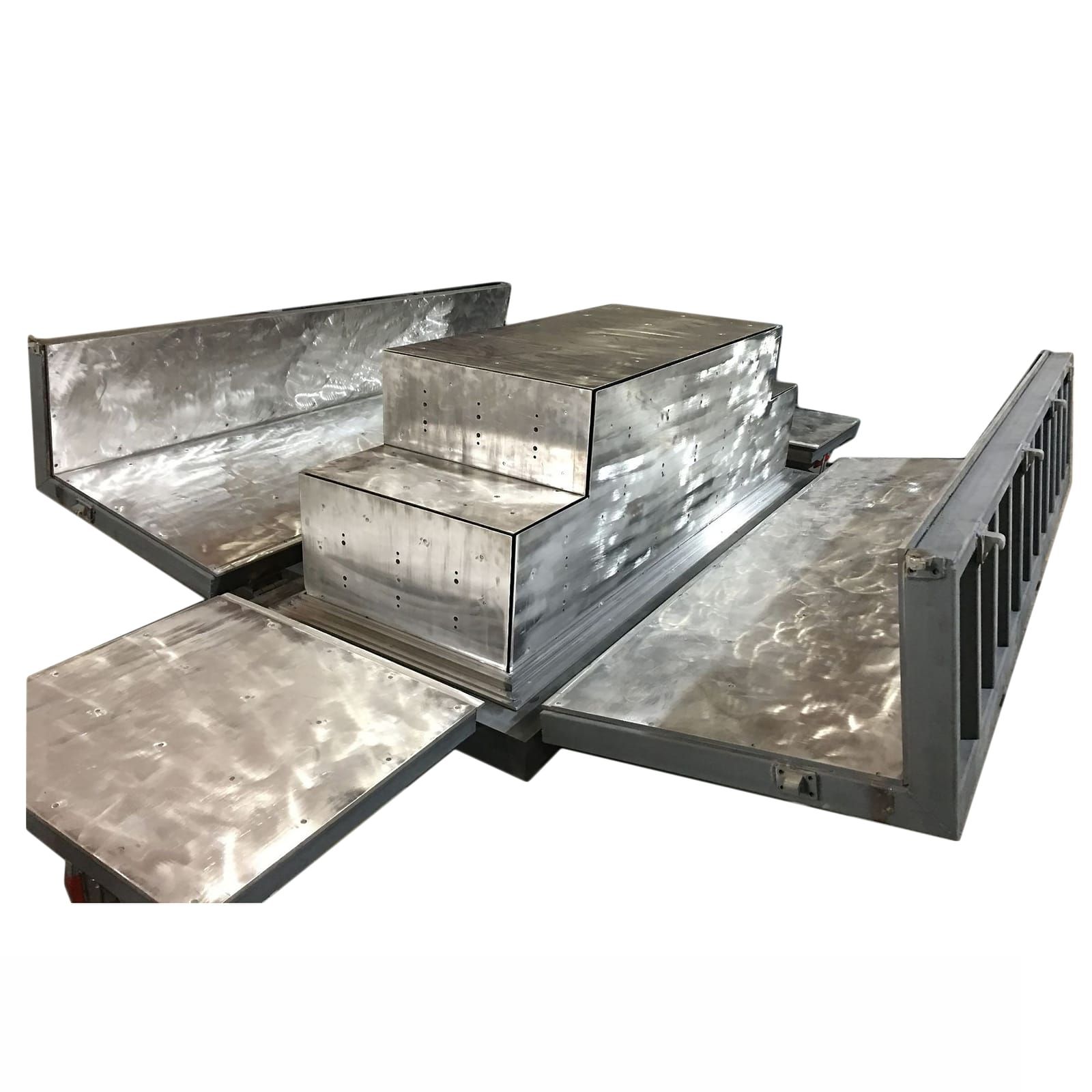
Moldes de termoformação vs moldes de espumação na produção de frigoríficos — Comparação prática
Dois moldes muito diferentes, uma só linha de produção. Eis como ajudamos os donos de fábrica a escolher — com precisão, vida útil, prazo e orçamento típico.
Máquina de espumação PU de alta pressão vs baixa pressão — Qual a certa para a sua fábrica?
Mesmos químicos, máquinas muito diferentes. Comparamos pressão, produção, qualidade da espuma e investimento para que escolha a máquina de espumação PU certa para a sua linha.