
Continuous vs Discontinuous PU Sandwich Panel Line: Which One Fits Your Cold-Room Panel Factory?
A continuous PU sandwich panel line and a discontinuous press-mold line make the same product on paper — an insulated metal-skin panel — but they build completely different factories. Continuous lines are throughput machines: double-conveyor presses that pour PU between two steel coils and cut panels at line speed, sized for chain cold-room and roofing volumes. Discontinuous lines are flexibility machines: hydraulic-press fixtures that foam one panel at a time, sized for custom cold rooms, thick panels and low-volume premium orders. This buyer's guide compares them across eight decision axes — CAPEX, throughput, panel size, skin material, foam type, floor footprint, tooling flexibility and time to first panel — and gives you a straight answer on which one fits your factory.
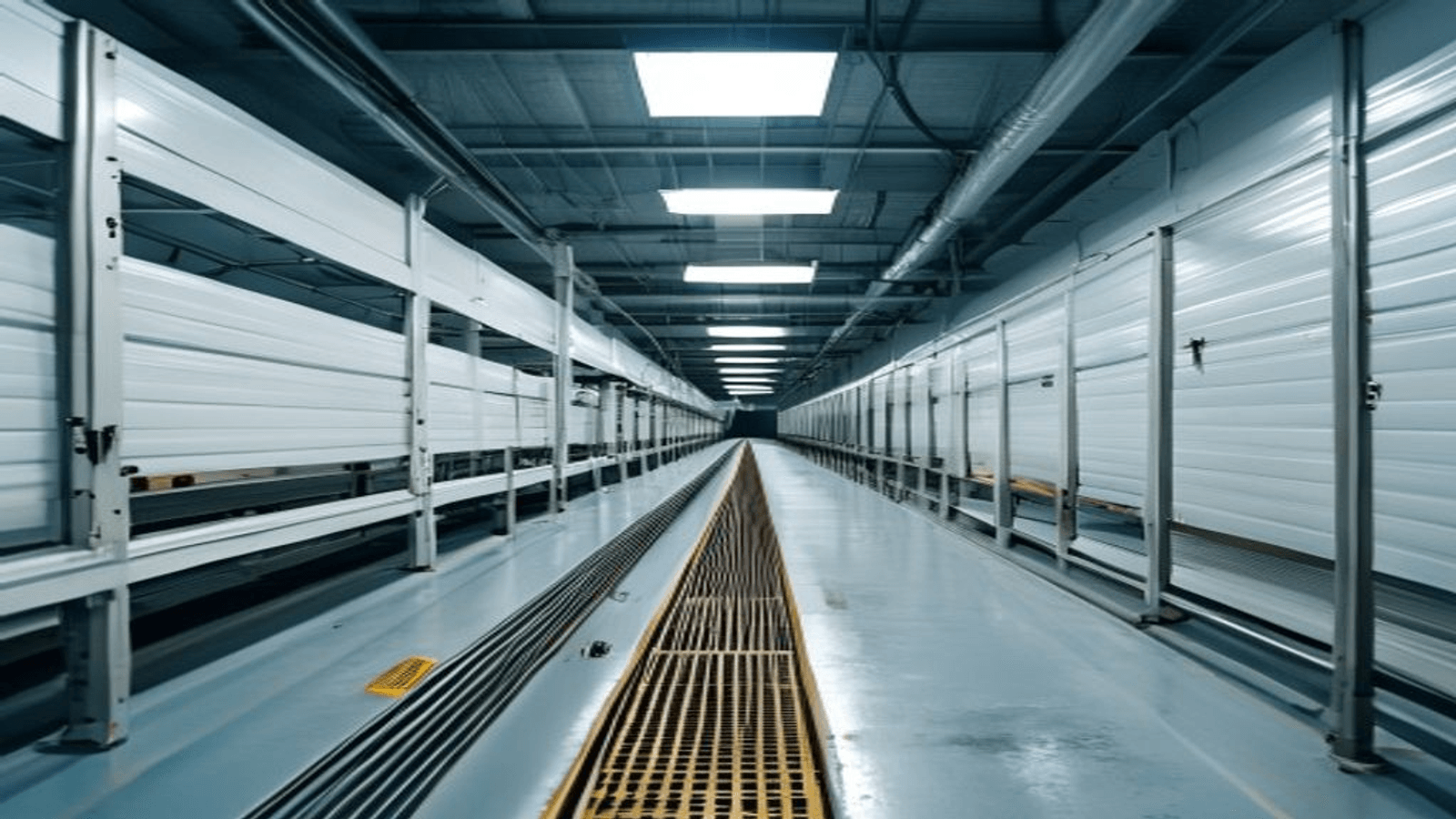
Continuous PU sandwich panel lines and discontinuous press-mold lines both produce metal-skin insulated panels, but they build different factories. Continuous: 6–20 m/min line speed, USD 850K–2.4M CAPEX, panels 1.0–1.2 m wide × 3–20 m long, cold room + roofing volumes above 240,000 m²/year, needs a 60–120 m production hall. Discontinuous: 1–4 panels per cycle × 8–15 min cycle, USD 180K–650K CAPEX, panels up to 1.5 m × 12 m, custom cold rooms + modular walk-in units + thick cores, works in 25–40 m of floor. Choose continuous when your average panel is a repeat spec produced in the thousands of square meters per week; choose discontinuous when your book is a mix of custom sizes, thick specialty panels, or the launch volume is under 240,000 m²/year. Both use the same PU foam chemistry (cyclopentane blowing agent, closed-cell, 38–45 kg/m³ core density) and both certify to EN 14509 for building assemblies.
A cold-room panel manufacturer buying their first PU sandwich panel line asks the same question in every RFQ we see: continuous or discontinuous? The two lines make what looks like the same product — an insulated metal-skin panel — but they build completely different factories. A continuous line is a throughput machine: two steel coils unroll into a long double-conveyor press, PU foam gets poured between them, and finished panels come out the other end at line speed. A discontinuous line is a flexibility machine: a hydraulic-press fixture opens, one or a few panels' worth of skins go in, foam is poured, the press closes and cures, then it opens again. Same chemistry. Same insulation performance. Completely different economics, tooling and factory footprint. This guide walks the eight decision axes that separate the two, gives price bands both lines actually sell at in 2026, and closes with a decision matrix that maps your production plan to the line that fits it.
Speed-Read — Continuous vs Discontinuous PU Sandwich Panel Line
| Decision axis | Continuous line | Discontinuous (press) line |
|---|---|---|
| Throughput | 6 – 20 m/min continuous · 240,000 – 1,200,000 m²/year (2-shift) | 1 – 4 panels per press cycle · 8 – 15 min/cycle · 40,000 – 240,000 m²/year |
| CAPEX (turnkey) | USD 850K – 2.4M | USD 180K – 650K |
| Panel width | Fixed 1.0 – 1.2 m (line-set) | Up to 1.5 m per press cavity |
| Panel length | 3 – 20 m (flying-saw cut) | 2 – 12 m (mould length) |
| Panel thickness | 40 – 200 mm (in-line adjust) | 50 – 250 mm (mould change) |
| Skin material | Pre-painted galvanised steel (PPGI), aluzinc, stainless coil, aluminium foil | Steel sheet, GRP, stainless, aluminium, plywood — any pre-cut skin |
| Line footprint | 60 – 120 m long × 20 m wide production hall | 25 – 40 m long × 15 m wide |
| Time to first panel | 7 – 10 months order to commissioning | 4 – 6 months order to commissioning |
Numbers above are working ranges from turnkey line projects in 2026. The rest of this article explains why the two lines specify differently and how that maps to your factory plan.
What a continuous PU sandwich panel line actually is
A continuous line is a moving factory. Two coils — one for the upper skin, one for the lower — unroll into a decoiler pair at the head of the line. Each coil passes through a profiling roll set that stamps the tongue-and-groove or camlock edge shape the finished panel will need. The two profiled skins meet at a foaming station, where a high-pressure PU foaming machine pours a metered layer of polyol-and-isocyanate mix onto the moving lower skin. Both skins then feed into a double-belt press — a heated conveyor above, another below — where the foam expands, closes cell walls, cross-links and cures against the two skins simultaneously. The panel exits the press already bonded, is scored by a flying saw to whatever length the order calls for, and stacks off the end of the line ready for wrapping. Line speed is set by the press length divided by cure time — a 25 m press curing PU at 6 m/min gives about 4 minutes in the press, which is enough for a 100 mm core to close-cell out fully. Faster line speed comes from a longer press. Because the skins are coils and the panels are cut on the fly, the line's daily output is limited mostly by coil loading and cure chemistry, not by press cycles. This is why continuous is the correct choice for chain cold-room and roofing manufacturers — the whole line is designed to make the same panel spec, thousands of square meters a shift, without stopping.
What a discontinuous (press-mold) PU sandwich panel line actually is
A discontinuous line is a mold. A hydraulic press with two heated platens sits in the center of the workshop. An operator loads a pre-cut top and bottom skin into the press, positions the tongue-and-groove edge profiles at the sides, closes the press to its target thickness, and a high-pressure PU foaming machine — sometimes a low-pressure system for very thick or filled cores — pours the polyol/isocyanate mix through a nozzle into the closed cavity. The mix expands, hits the two skins, cures for 8 to 15 minutes depending on core thickness and foam formulation, and the press opens. The finished panel is lifted out; a second panel loads. Because the skins are pre-cut sheets and not coils, the line accepts almost any face material — steel, stainless, GRP, plywood, aluminium — and any width the press can hold. Because each cycle is a fresh mold-up, the panel thickness is set by the press stroke, not by a continuous cure profile, which means the press can make a 250 mm core panel that a continuous line cannot cure fast enough to run economically. And because the press cavity length is fixed by the mould, panel length is up to the mould length rather than free. This is the line that dominates custom cold-room and modular walk-in factories where the book is a mix of specs, thicknesses and skin materials, and no one panel spec is repeated a hundred thousand square meters at a time.
The eight decision axes explained
1. Throughput — the number that decides most factory plans
Throughput is where the two lines sit in completely different economic bands. A continuous line at 6 m/min with a 1.2 m panel width runs about 432 m² of finished panel an hour, or roughly 240,000 m² a year on two shifts once you subtract change-over and maintenance. A well-optimised 12 m/min line clears 800,000 m² a year. A discontinuous press cycling every 10 minutes on a mould that holds two 1 × 3 m panels produces 36 m² an hour, or about 43,000 m² a year on one shift. A three-mould press cell doubles that. The break point where continuous starts to make economic sense over discontinuous is roughly 240,000 m² a year of average-spec panel demand — above that number, the higher CAPEX of the continuous line pays back inside three years on the per-square-metre labour and foam savings; below it, discontinuous stays ahead on cash flow.
2. CAPEX — turnkey line pricing in 2026
A continuous line, turnkey with foaming machine, double-belt press, decoiler pair, profiling rolls, flying saw, control system and installation, prices between USD 850K and USD 2.4M in 2026. The spread comes almost entirely from press length: a 25 m press is entry-level; a 35 m press with side-cutter and stainless option pushes into the top of that band. A discontinuous line — hydraulic press, one or two moulds, foaming machine, skin-handling tooling, control panel — sits between USD 180K and USD 650K. Adding moulds costs USD 40K–120K each, so a factory that starts with a single mould and adds two more over the first year lands near the top of that band. Neither number includes the plant hall, utilities or working capital.
3. Panel width — fixed by continuous, variable by discontinuous
A continuous line is a fixed-width machine: the profiling rolls, the press and the flying saw are all sized for one panel width, and changing that width is a factory-level retooling, not a shift-change. That is why every continuous line RFQ specifies width up front — 1.0 m or 1.2 m is the industry standard because it matches steel coil width. A discontinuous press's width is the mould, so any width the press can hold is fair game. Cold-room builders that need 1.15 m panels for a specific rack pitch, or 1.5 m for a warehouse door leaf, get that flexibility naturally from a discontinuous line — it is a mould, not a coil-line.
4. Panel length — flying saw versus mould length
Continuous is essentially unlimited in length (the flying saw cuts at whatever length the control panel is set to), which is why continuous panels dominate cold-storage warehouses, poultry sheds and industrial roofs where 6 to 20 m panel runs are common. Discontinuous is capped at mould length — typically 12 m for a large press, more often 3, 6 or 8 m for a standard cold-room mould. This is one of the reasons continuous took over the roofing panel segment and discontinuous stayed dominant in the modular cold-room and walk-in freezer segment.
5. Panel thickness — the range PU chemistry allows on each line
PU foam cures faster in thinner cores because the exotherm from the crosslink dissipates more easily. On a continuous line, that limits practical throughput above about 200 mm — the press has to slow down enough that the thick core reaches full cure, and line economics fall off. Discontinuous presses handle 250 mm and above comfortably because the cure clock is per-panel, not per-metre. If your product mix includes low-temperature cold-rooms (–25 °C to –40 °C) that spec 200–250 mm cores, or ultra-low medical freezer walls at 300 mm with VIP interlayers, a discontinuous line will be more economical.
6. Skin material flexibility
A continuous line runs coils, which effectively means pre-painted galvanised steel (PPGI), aluzinc, stainless coil or aluminium foil. Any face material sold on a coil can go through the line. Any face material sold as pre-cut sheets — GRP, plywood, food-grade stainless plate, fibre-reinforced polymers — cannot be run continuously without a coil-conversion step that is rarely worth building. Discontinuous runs pre-cut sheets by design, which is why food-grade GRP-faced panels for meat-processing cold rooms, plywood-faced panels for structural insulated panels (SIP) and mixed-skin (steel + GRP) panels for pharmaceutical clean rooms are made almost universally on discontinuous lines.
7. Line footprint and utility demand
A continuous line's footprint is dominated by the press and the panel-cooling zone downstream of it. A 30 m press with 5 m of decoiler in front and 20 m of cutting and stacking behind sits in a hall that is at least 60 m long. Add coil storage, panel storage and a foam raw-material tank farm and 80 to 120 m is realistic. Utilities scale with press length: a 30 m double-belt press typically needs 250–400 kW installed electric plus a thermal-oil heater capable of 8–15 kW/m of press length. A discontinuous line sits in 25 to 40 m of hall with a single hydraulic power unit at 55–90 kW. This is a factor of two to three in floor space and a factor of three to five in utilities — a real cost when land or grid capacity is constrained.
8. Time from PO to first panel
A continuous line, from PO to first commissioned panel, is a 7 to 10 month project because the press is a made-to-order structural assembly, the profiling tooling has to be cut for the specific edge profile, and mechanical and electrical installation is on-site. A discontinuous line ships in 4 to 6 months because the press is a standard hydraulic assembly and the moulds can be built in parallel. For a factory that has a launch order to fill in six months, discontinuous is often the only path.
Decision matrix — when to choose which
The clean answer, based on the eight axes above, is:
Choose a continuous PU sandwich panel line when
- Your book is dominated by one or two panel specs (edge profile, width, thickness) sold repeatedly — typical of cold-storage warehouse, poultry shed and roofing manufacturers.
- Average annual panel demand exceeds 240,000 m² and you have visibility to grow into 400,000+ m².
- Skin material is a coil (PPGI, aluzinc, stainless coil).
- Panel length is regularly above 8 m.
- You have 60+ m of production hall and 400+ kW of grid capacity available.
Choose a discontinuous (press-mold) line when
- Your book is custom or mixed-spec — modular cold rooms, walk-in freezers, refrigerated container conversions, pharmaceutical clean rooms.
- Average annual panel demand is below 240,000 m² or your production ramp is 12–24 months.
- Skin materials include GRP, plywood, food-grade stainless plate, or a mix.
- Panel thickness includes cores above 200 mm.
- Working capital or floor space is tighter than the continuous line footprint allows.
Around 60% of the first-time factory RFQs we see actually fit a discontinuous line better than they realise — usually because the RFQ was written by an engineer benchmarking against a competitor's continuous plant instead of against the actual book of business the new factory is going to run.
Total cost of ownership beyond the sticker
Both lines use the same PU foam chemistry — polyol, MDI isocyanate, cyclopentane or HFO blowing agent, closed-cell 38–45 kg/m³ core density — so the raw-material cost per square metre of finished panel is within 5% between the two. The real TCO gaps are labour, waste and utility.
Continuous is more labour-efficient at scale. A tuned continuous line runs with 4–6 operators per shift regardless of throughput, so the labour cost per square metre falls as line utilisation rises. A discontinuous cell runs with 3–5 operators regardless of shift output. At 100,000 m²/year, per-square-metre labour cost on a discontinuous line is 30–40% lower than a continuous line running at that low a utilisation. At 500,000 m²/year, per-square-metre labour cost on continuous is 40–60% lower.
Discontinuous wastes less foam on change-overs. Every time a continuous line changes width, thickness or edge profile, the first 10–30 m of panel from the changeover is out-of-spec and either downgraded or scrapped. On a small-lot custom factory, that scrap eats the throughput advantage. Discontinuous change-overs are per-mould and generate almost no foam scrap.
Utility bill scales with press heat load, not skin conveyance. A 30 m continuous double-belt press running at 6 m/min consumes 6–10 kWh of thermal energy per metre of panel produced. A discontinuous press consumes 8–12 kWh per panel cycle regardless of panel size, because you are heating the platens either way. On a per-square-metre basis, continuous is more efficient — but the whole calculation flips if the continuous line is under-utilised.
Common sourcing mistakes we see weekly
- Buying a continuous line for a custom cold-room book. RFQ says "600,000 m²/year target" but the actual first-year book is 90,000 m² of 40 spec variations. The line runs 15% of the time and the change-over scrap wipes out the margin. This is the single most common expensive mistake in the segment.
- Buying an undersized press mould for a discontinuous line. A 2.4 × 6 m mould is quoted at USD 45K and looks like a bargain until the book calls for 8 m panels a year in. Buy the largest press you can afford up front — you cannot economically retrofit a bigger press.
- Skipping the raw-material qualification. Both lines are sensitive to polyol viscosity, isocyanate index and blowing-agent choice. A line that runs perfectly on the supplier's demo polyol can fail on a locally sourced substitute. Qualify raw materials as part of the FAT, not after.
- Under-specifying the utility connection. Continuous line thermal oil heaters and press hydraulic systems have real inrush current. Get an electrical engineer involved in the RFQ, not just the process engineer.
Fire, thermal and building code — where PU sandwich panel lines certify
Cold-room and construction panels off either line certify to the same standards. In Europe, EN 14509 governs self-supporting double-skin metal-faced insulating panels for building assemblies; it sets structural, thermal, fire and durability requirements. Fire performance is graded per EN 13501-1, with PU cores typically B or C class and PIR cores B-s2, d0. For US and Canadian markets, FM Global's FM 4880 approval standard rates panel assemblies for insurance underwriting, and ASTM E84 tests surface burning characteristics. Both continuous and discontinuous lines can produce panels that meet these standards — the certification is about the panel spec (core density, fire retardant load, skin type, edge design), not the line that made it.
FAQ
Can a discontinuous line be upgraded into a continuous line later?
No, not economically. A discontinuous press is a stand-alone hydraulic assembly; a continuous line is a coordinated conveyor-press-cutter system. The correct upgrade path is to sell the discontinuous line to a smaller customer or move it to a satellite factory and buy the continuous line as a new capital project.
Can the same PU foaming machine feed both a continuous line and a discontinuous press?
In principle yes if the throughputs match, but the practical answer in production factories is no. Continuous lines use a dedicated high-pressure foaming machine tuned for continuous pour at a fixed shot rate; discontinuous presses use a foaming machine sized for the mould cavity that shoots in bursts. Running one machine on both is a change-over headache that eats efficiency.
What is the shortest panel a continuous line can cut?
The flying saw sets a practical minimum around 2 m — below that, the panel does not fully clear the press before the next cut, and downstream handling becomes awkward. If your book includes many panels shorter than 2 m, a discontinuous line is more efficient.
What is the maximum thickness a continuous line can produce?
Practically, 200 mm at economic throughput. A continuous line can run 240 mm but the press has to slow to 3–4 m/min and the double-belt has to be re-tensioned; at that point the economics favour a discontinuous press.
Which line is easier to certify to EN 14509?
Neither is inherently harder — certification is the panel spec, not the line. What matters is the consistency of the panel produced. Both a well-run continuous line and a well-run discontinuous press produce test-panel-quality output; both an over-utilised continuous line running near change-over and an undertrained discontinuous cell produce inconsistency that shows up in re-tests.
How does PIR change the line specification versus PU?
PIR foam cures faster and to a higher thermal-decomposition temperature than PU. On a continuous line, PIR allows the press to run slightly faster at the same panel thickness — a 6 m/min PU line often runs 7–8 m/min at the same thickness on PIR. On a discontinuous press, PIR cuts cycle time 15–25% at the same thickness because the reaction exotherm is stronger. Both lines can run either chemistry; the choice is usually made by fire-code requirements in the destination market rather than by line type.
For UREXCEED's turnkey cold room panel production line and continuous double-belt press configurations, or for a discontinuous press-mould cell built around your first-year production book, request a spec-and-quote — we quote either line honestly against your actual production plan, not against an idealised throughput number. Related engineering deep-dives on the wider PU sandwich panel factory: Cold Storage Panel Production Line Setup Guide and Cold Storage Temperature Zones: Insulation Thickness Specifications.
Building a factory? See our production line guide → For a complete plant, browse our cold storage room manufacturing solutions.
Produits mentionnés dans cet article
Prêt à planifier votre projet frigorifique ?
Indiquez-nous votre objectif de production et votre gamme de produits — notre équipe répond avec un plan de capacité et un devis sous trois jours ouvrés.
Demander un devis techniqueArticles associés
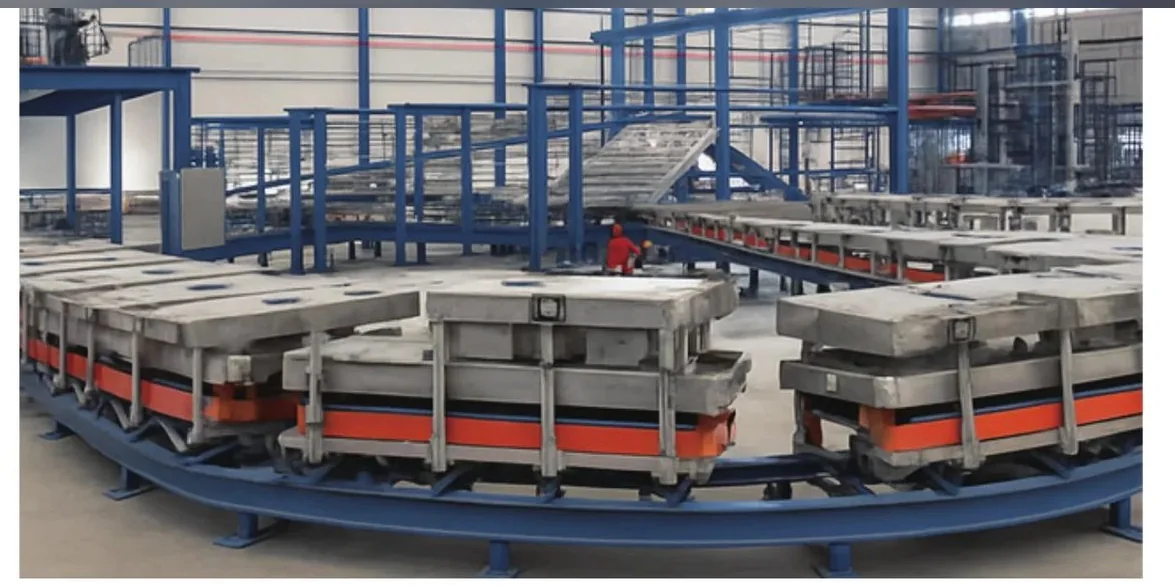
26-Station Ground-Rail Foaming Line Throughput: The Real Math Behind the Numbers
The station count in a foaming line's name is the wrong number to size capacity on. Hourly output is set by takt time and OEE; the 26 stations set curing time and work-in-process. This guide walks the actual throughput math for a closed-loop ground-rail line so you size it against your real production target.
Chef Base PU Foaming, Deep Dive: Why a Load-Bearing Cabinet Is Foamed Differently from a Domestic Fridge
A chef base carries heavy cooking equipment on its top deck, soaks up radiant heat from the cooktop, and is built from two stainless skins — so its PU foam has to be a structural member and an insulator at once. This deep dive walks the engineering that separates chef-base foaming from domestic-cabinet foaming: load-bearing density, k-factor under a hot deck, stainless adhesion, and the defect modes that punish treating the two cabinets the same.

Cigar Humidor Cabinet PU Foam, Deep Dive: Why a Humidity-Holding Cabinet Is Foamed Differently from a Cold-Chain Fridge
A cigar humidor cabinet shares a fridge's two-skin, one-PU-shot construction but not its goal: it holds a narrow 65–72% relative-humidity band at around 18 °C, not a low temperature. This deep dive walks the engineering that makes humidor foaming its own discipline — RH stability, a vapor-tight envelope (ASTM E96 permeance), the condensation a single void causes near saturation, dimensional stability so the door seal stays tight for years, and why it is a precision low-pressure job rather than a high-volume one.