
AHU Casing: Construction, Panels & PU Foaming Guide
Learn how an AHU casing is built: double-skin panels, thermal-break frames, PU foam, EN 1886 classes, failure modes, and foaming-line requirements.
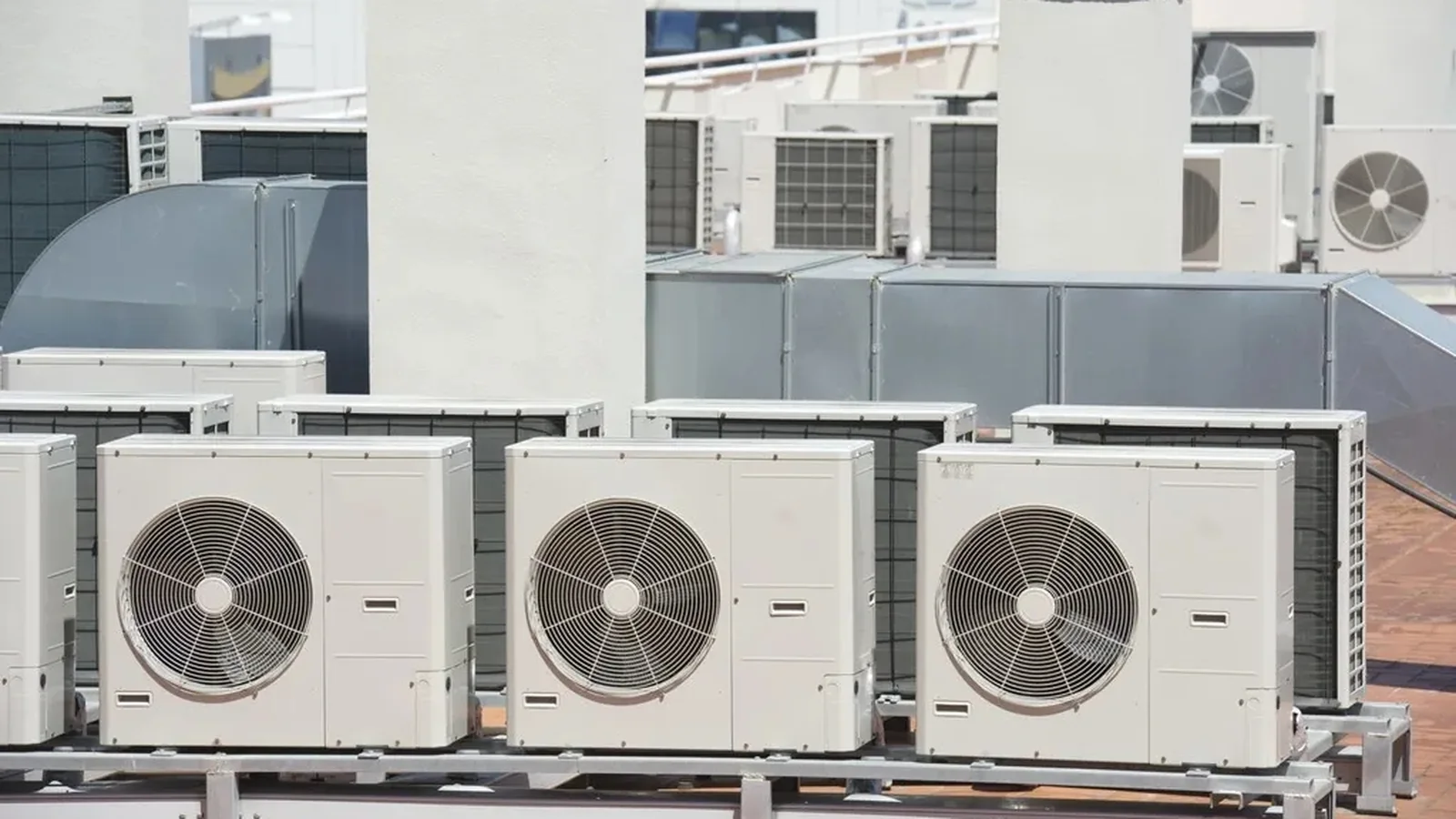
An AHU casing panel is a load-bearing double-skin sandwich, so its PU foam has to carry three specs at once, not just insulate. First, thermal transmittance: the panel is graded by U-value class (EN 1886 T1–T5), which comes straight out of foam thickness and a low, uniform k-factor measured under ASTM C518 / ISO 8301. Second, thermal bridging: the metal frame and screws that hold the panel together are a cold-bridge path, and if the exterior surface drops below dew point the casing sweats and grows mold — EN 1886 grades this as a TB class, and full corner-to-corner foam fill plus a thermal-break frame is what holds it. Third, rigidity: a fan runs the panel at positive or negative pressure, so the sandwich must not deflect beyond its mechanical class (D1/D2), which the foam density and skin-to-core adhesion set (compressive strength per ASTM D1621). The failure modes — cold-bridge condensation at the frame, a void that spikes local U-value and sweats, panel bow under fan pressure, skin delamination, density variation across a large flat panel — map straight onto those three demands. It is high-pressure, large-panel foaming with press or fixture tooling. We supply the foaming line, moulds and raw materials only — not compressors, fans, coils or a turnkey air handler.
An air-handling unit and a refrigerator both hide polyurethane between two metal skins, but they ask completely different things of it. A fridge wall insulates a box that sits still in a kitchen; an AHU casing panel is the machine's structure — it holds the fans, coils and filters, seals against the pressure those fans create, and has to stay dry on the outside while cold air runs on the inside. That is why an AHU panel is not a fridge wall with a different logo on it. It is a load-bearing, pressure-rated, condensation-critical sandwich panel that happens to be foamed with the same chemistry. This deep dive walks the engineering that makes an air-handler casing panel its own discipline: why it is graded by a thermal-transmittance class instead of a single R-value, why thermal bridging — not raw insulation — is the spec that most often gets a casing rejected, why the panel has to stay rigid while a fan tries to bow it, and the defect modes that punish a line that foams an AHU panel the way it foams a cabinet. For the commercial side — line scale, buyer types and output — start from our HVAC AHU foaming line solution; this article is about why the panel is specified and foamed differently.
What is an AHU casing?
An AHU casing is the structural enclosure around an air-handling unit's fans, coils, filters and dampers. The complete casing combines a load-bearing frame, double-skin insulated wall and roof panels, a base frame, access doors, and the gaskets or seals that control air leakage. A casing panel is only one part of that enclosure: two metal skins bonded to an insulating core and fixed to the frame. Keeping those terms separate matters when specifying a line. Panel foaming determines core continuity, skin adhesion, thickness and much of the panel's thermal and mechanical performance; the finished casing also depends on the frame, thermal breaks, panel-to-frame joints, doors and seals. UREXCEED supplies the equipment at the casing-panel layer — the metering system, press or fixtures, moulds and PU raw materials — while the AHU manufacturer integrates the complete casing and the equipment inside it.
AHU casing construction at a glance
| Part | Typical construction | Job | UREXCEED scope |
|---|---|---|---|
| Frame | Aluminium profile or galvanized steel | Carries the casing and locates each panel | Panel-frame fixtures and mould interfaces |
| Outer and inner skins | Coated galvanized steel; stainless inner skin where hygienic duty requires it | Protects the core and forms the structural faces | Skin handling and foaming-process integration |
| Insulated core | PU or PIR in a double-skin panel | Limits heat flow and bonds the skins into a rigid sandwich | Metering, mixing, moulding and process setup for foam cores |
| Thermal break | Insulating profile, isolator or gasketed joint | Interrupts the metal heat path through the frame | Fixture and edge-fill provisions; casing design stays with the AHU OEM |
| Access door and gasket | Insulated door with a perimeter seal | Provides service access while controlling leakage | Door-panel foaming equipment where included in the agreed panel matrix |
| Base frame | Structural steel or project-specific support frame | Supports the assembled unit and transfers its load | Outside the panel-foaming equipment scope |
Why an AHU casing panel is a structure, not just insulation
Every insulated panel on a foaming line insulates, but an AHU casing panel carries the whole machine. An air handler is a metal cabinet — often room-sized — that houses supply and return fans, heating and cooling coils, filter banks and dampers, and the double-skin sandwich panels bolted onto a frame are what give it shape, stiffness and its seal against the outside air. That means the foam has three simultaneous jobs where a refrigerator wall really has one. It has to insulate, so conditioned air inside does not gain or lose heat through the casing. It has to be structure, because the panel spans between frame members and takes the push and pull of fan pressure without buckling. And it has to keep the outer skin above the dew point, because an AHU frequently runs air colder than the plant room around it, and a casing that sweats drips water, corrodes and grows mold. Across more than 1,800 line projects in over 40 countries, the cabinets where foam discipline shows up hardest are the ones where the panel is doing more than insulating — the medical cabinet, the chef base and the AHU casing — and the AHU is the one where the foam is simultaneously the insulation, the structure and the anti-condensation layer. So the design conversation starts from a different place: the foam is not lining a still box, it is building a pressurized machine casing that must not sweat.
Common AHU casing types and insulation choices
Single-skin vs double-skin. A single-skin casing uses one metal layer and is mainly a cost- and weight-led choice for applications with modest thermal, acoustic and cleanliness requirements. A double-skin casing encloses insulation between inner and outer skins, protects the insulation from the air stream and allows the core and skins to act as a structural sandwich. Buyers should compare the required thermal class, acoustic duty, panel thickness, weight, cleanability and skin material rather than treating the two constructions as interchangeable.
PU/PIR foam vs mineral wool. Foam cores are selected where low thermal conductivity, continuous fill and skin adhesion need to work together in a rigid panel. Mineral wool may be selected where a project's fire or acoustic specification leads the decision, but it is not made on UREXCEED's PU foaming equipment. For either core, specify the required thermal, fire and acoustic performance, panel thickness and weight, and verify the complete casing construction with the AHU engineer and certification body; the insulation choice alone does not certify the finished unit.
Before choosing the foam recipe or line layout, define the complete casing specification:
- Panel thickness and skin material: state the wall, roof, base and door-panel build-up rather than one nominal thickness.
- EN 1886 thermal class: name the target T class for the finished casing.
- Thermal-bridging class: name the target TB class and the intended frame or fastener break strategy.
- Mechanical and leakage classes: state the pressure/deflection target and the casing leakage target. Foam fill and panel stiffness contribute, but joints, door seals and panel-to-frame fit also control leakage; a foaming line alone cannot deliver whole-unit certification.
Thermal transmittance: an AHU panel is graded by U-value class, not a single R-number
Because an AHU casing is a certified building-services product, its insulation is not sold as one headline R-value — it is graded as a class. Under the European casing standard EN 1886, a panel's thermal transmittance is classed T1 through T5, where a lower number means a lower U-value and a better casing, and buyers specify the class the whole air handler must meet. That U-value comes out of exactly two foam variables working together: how thick the sandwich core is, and how low and uniform its thermal conductivity (k-factor or lambda) is. Heat crosses the panel at a rate governed by conductivity divided by thickness, so a thicker core of low-k, fine-celled closed-cell PU foam is what moves a panel from a poor class to a top one — which is why premium AHU panels run 30 to 150 mm of core where a domestic fridge gets by with less. The conductivity itself is a measured property, read for these panels under heat-flow-meter standards such as ASTM C518 or the ISO equivalent ISO 8301; the class a manufacturer certifies is really that k-factor and that core thickness together. The catch, as on any foamed panel, is uniformity: a large flat panel with a low-density shadow behind a stiffener or an unfilled corner leaks disproportionately through the weak spot, dropping the whole panel's effective U-value below the class it was supposed to hold. On an AHU the target is therefore not just "thick and low-k," it is thick, low-k and filled evenly across the entire panel face.
Thermal bridging: the spec that actually gets an air handler rejected
If there is one place an AHU casing is won or lost, it is not the middle of the panel — it is the frame. A double-skin panel is held in a metal profile, and metal conducts heat hundreds of times faster than PU foam, so every frame member and every fastener that reaches from the cold inner skin to the warm outer skin is a thermal bridge. On an air handler running chilled air, that bridge cools a stripe of the outer casing, and if that stripe drops below the dew point of the plant room, the casing sweats — water beads on the outside of the machine, drips onto the floor, corrodes the steel and feeds mold. This is why EN 1886 grades thermal bridging separately, as a TB class (TB1 best to TB5 worst) defined by a thermal-bridging factor: it measures how close the coldest outer-surface temperature gets to the inside air, precisely because that gap is what sets whether the casing condenses. The line answers this in two places at once. The frame design has to break the metal path — thermal-break profiles, plastic isolators or a gasketed joint so no fastener runs skin to skin — and the foam has to be fully present right up to the frame, because an under-filled edge or a shrinkage gap next to the profile turns a manageable frame bridge into a cold void that sweats. A line tuned to fill the open middle of a panel but leave a soft, resin-starved band along the frame will pass a k-factor check and still fail a condensation test, which is why edge fill and frame detailing are treated as their own discipline on an AHU panel, not an afterthought.
Mechanical rigidity: the panel has to hold its shape while a fan bends it
A refrigerator wall lives under no real load; an AHU panel spends its life being pushed and pulled. A supply fan pressurizes the casing and a return section runs it under suction, so every panel sees a pressure differential trying to bow it outward or suck it inward, and it has to do that for years without permanent deflection, buzzing or joint leakage. EN 1886 grades this as a mechanical strength class (for example D1 and D2) tied to a maximum allowable deflection at a stated test pressure — a panel that bellies out past its class breaks the casing seal and lets air leak, which shows up as a separate air-leakage class the same standard defines. The lever for stiffness is the sandwich itself: a double-skin panel is rigid only if the foam core bonds to both skins well enough to make the three layers act as one structural sandwich, and if the core has enough density and compressive strength to resist the skins shearing or the panel crushing at its supports. That compressive strength is a measured property under ASTM D1621, the standard test for compressive properties of rigid cellular plastics, and it scales strongly with foam density — so an AHU panel is foamed to a structural density target, not merely the lowest density that gives an acceptable k-factor. The honest trade-off is that the density that gives rigidity and the density that gives the very lowest k-factor pull in slightly different directions, so an AHU panel is tuned to hit both a mechanical class and a thermal class from one metered shot, which is exactly the density-versus-k-factor balance we cover in the PU foam density and k-factor guide.
Density, adhesion and even fill across a large flat panel
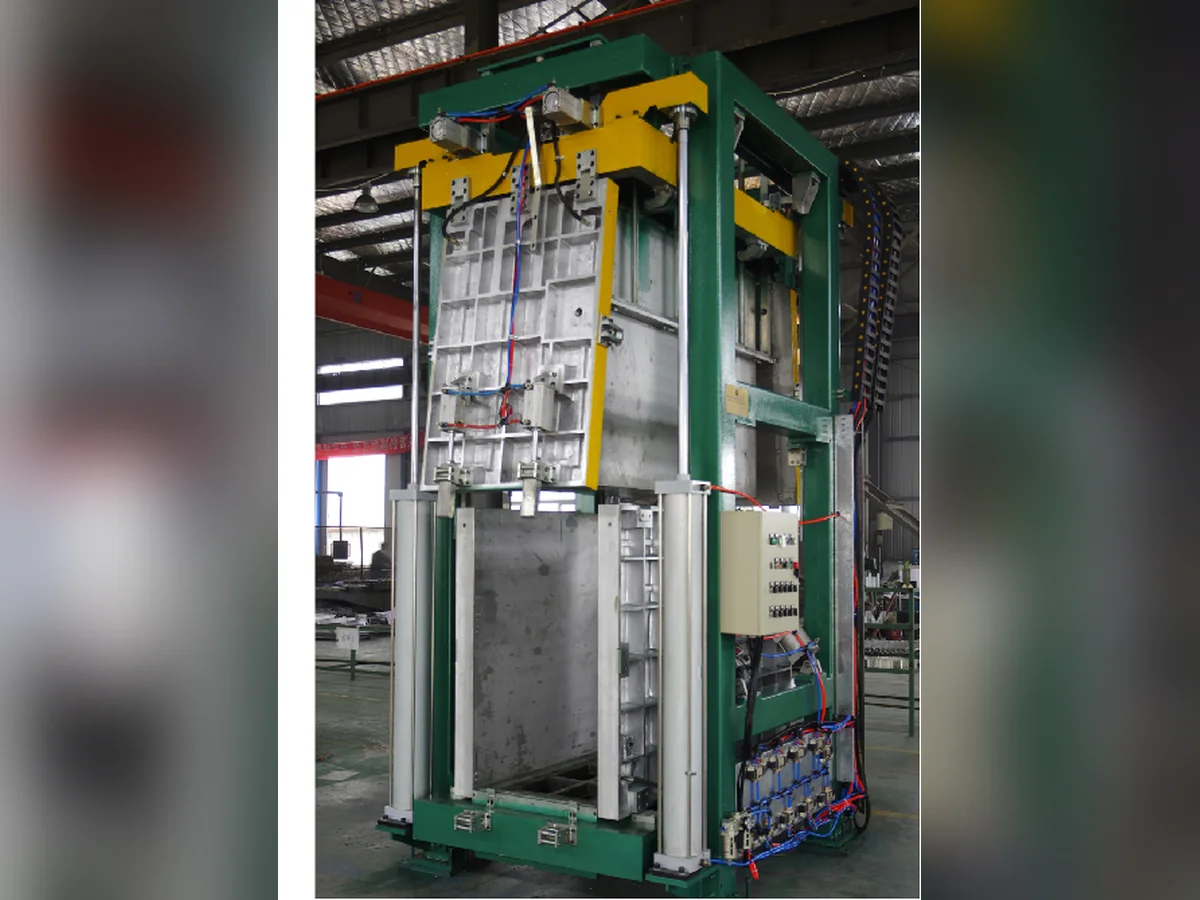
The physical fact that makes AHU foaming its own problem is size: these panels are large, flat and thin relative to their area, and a foam shot has to flow a long way and fill uniformly before it gels. On a small cabinet the resin reaches every corner easily; on a two-metre AHU panel the same shot has to travel across a wide, shallow cavity, and if the metering, temperature or shot placement is off, the far end sets at a lower density than the injection end. That density gradient shows up twice — as a U-value that drifts across the panel, and as a stiffness that is soft where the fill ran thin — so even fill across the whole face is the master variable an AHU line is built around. It is why AHU panels are foamed on high-pressure systems with accurate metering and, for discontinuous production, in a press or fixture that clamps the panel flat and to exact thickness through the full cure. Skin-to-core adhesion is the other half: the foam has to bond to both metal skins as it rises, because a panel where the core has released from a skin is no longer a structural sandwich — it delaminates, drums and loses its rigidity class even if the foam itself is fine. Good adhesion comes from clean, correctly prepared skins and a system chemistry and rise profile matched to the panel, which is one more reason an AHU program is a tuned line, not a cabinet line running bigger moulds. The foaming machine and press that deliver that even, well-bonded fill are the high-pressure PU foaming machine and the panel production line and press — the same panel-foaming discipline behind cold-room and insulated-panel work, which we detail in the cold-storage panel production line setup guide.
Where AHU panel foam fails — and how the line prevents it
The failure modes of an AHU casing panel are specific, and they map directly onto the three demands above. The most damaging is cold-bridge condensation at the frame — a fastener or profile that runs skin to skin, or a resin-starved edge beside it, that cools the outer casing below dew point and makes the machine sweat, corrode and grow mold. Next is a core void or low-density shadow, an unfilled or thin pocket that spikes the local U-value, drops the panel below its thermal class and becomes its own cold, sweating spot. Then panel deflection under fan pressure, where a core too soft or too thin, or a skin that never bonded, lets the panel bow past its mechanical class so the casing seal breaks and air leaks. Then skin delamination, where poor adhesion or a bad rise profile releases the core from a skin, killing the sandwich stiffness and drumming the panel. And density variation across the panel face, the size-driven mode where the far end of a large shot sets soft. The line answers each one structurally rather than by inspection-after-the-fact: thermal-break frame design plus verified edge fill kill the cold-bridge and void modes; accurate high-pressure metering and a clamped press or fixture through a fixed cure kill the deflection and density-gradient modes; and clean skin prep with a matched rise profile kills delamination. Verification is then per-panel — fill, weight, thickness and flatness checked on every panel at demould, and thermal and pressure classes proven on sample builds — so a defect is caught on the line, not on the customer's air handler at the commissioning rig.
What this means if you're sourcing an AHU panel foaming line
The practical takeaway for an air-handler OEM is to spec the foam for the fact that the panel is a structure, not a liner. Pin down the thermal class the casing must certify (the EN 1886 T-class) and let it set core thickness and the k-factor target together, valuing uniform fill over a headline number you cannot hold across a two-metre panel. State the thermal-bridging class you have to meet, because on chilled-air units that TB class — not the middle-of-panel U-value — is what stops the casing sweating, and it drives both your frame detailing and how completely the foam fills the edges. Tell the line supplier the pressure the fans impose and the mechanical class the panel must hold, so the foam density, thickness and skin adhesion are tuned to a deflection limit, not just an insulation value. And because these panels are large and flat, ask specifically how the line holds even density and skin bond across the whole face, because that is where an AHU panel differs most from a cabinet wall. If you're specifying a complete AHU casing rather than a single panel format, the same T-class, TB-class and D-class targets apply across every wall, roof, base and door panel in the casing. We supply the metered high-pressure PU foaming system, the panel production line and press and the PU raw materials behind AHU casing-panel production — the fans, coils, dampers, controls and any turnkey air handler belong to the HVAC OEM who runs the line. To size a line to your panel matrix and volume, start from our HVAC AHU foaming line solution and tell us the panel sizes, thickness range, thermal and thermal-bridging classes and target output — we will match the foaming system, press or fixtures, moulds and layout to the rigid, bridge-free, evenly filled panel an air handler casing has to be. For investment planning and certification scope, continue with the AHU panel production line cost and certification guide.
Building a factory? See our production line guide → For a complete plant, browse our HVAC AHU foaming line solutions.
Frequently asked questions
What is an AHU casing, and what is it made of?
An AHU casing is the structural enclosure around the unit's fans, coils, filters and dampers. It combines a load-bearing frame and base with double-skin insulated wall and roof panels, access doors, and gaskets or seals at the joints. Each casing panel is only one part of that assembly: two metal skins bonded to an insulating core and fixed to the frame. The complete casing's performance therefore depends on the panels, frame, thermal breaks, doors and seals working together.
What does the EN 1886 thermal transmittance class (T1–T5) mean for the foam?
EN 1886 grades an AHU casing's insulation as a class rather than a single R-value, where a lower T-number means a lower U-value and a better casing. That U-value comes out of two foam variables working together: core thickness and a low, uniform thermal conductivity (k-factor), which is measured under heat-flow-meter standards such as ASTM C518 or ISO 8301. To certify a high class you need a thick, low-k, fine-celled closed-cell core that is filled evenly across the whole panel — because a void or low-density shadow leaks disproportionately and can pull the whole panel below the class it was meant to hold.
Why is thermal bridging the spec that most often gets an air handler rejected?
Because on a unit running chilled air, a thermal bridge cools a stripe of the outer casing, and if that stripe drops below the plant-room dew point the casing condenses — water drips off the machine, corrodes the steel and grows mold. Metal frame members and fasteners that run from the cold inner skin to the warm outer skin are the bridge, which is why EN 1886 grades thermal bridging as its own TB class. The defence is two-part: a thermal-break frame that never lets metal run skin to skin, and foam that is fully filled right to the frame, because a resin-starved edge next to a profile turns a manageable bridge into a sweating cold void.
How rigid does an AHU panel have to be, and what sets that?
A fan pressurizes or evacuates the casing, so each panel sees a pressure differential trying to bow it, and EN 1886 grades the allowable deflection as a mechanical class such as D1 or D2. Stiffness comes from the sandwich acting as one structure: the foam core has to bond to both metal skins and have enough density and compressive strength — measured under ASTM D1621 — to stop the panel crushing or the skins shearing. So an AHU panel is foamed to a structural density target, tuned to hit both a mechanical class and a thermal class from one metered shot, rather than chasing the lowest k-factor alone the way a static wall can.
Does UREXCEED build finished air handlers or just the foaming line?
Just the panel-production equipment. We supply and commission the metered high-pressure PU foaming system, the panel production line or foaming press, the moulds and fixtures, and the PU raw materials that build AHU casing panels. The fans, coils, dampers, controls, refrigerant systems and any turnkey air handler belong to the HVAC OEM who runs the line. We size and tool the line to your panel dimensions, thickness range, thermal (T) and thermal-bridging (TB) classes, mechanical class and target output, with the even, bridge-free, well-bonded fill a double-skin AHU casing panel needs.
المنتجات المذكورة في هذا المقال
هل أنت مستعد للتخطيط لمشروع التبريد الخاص بك؟
شاركنا هدف الإنتاج ومزيج المنتجات — فريقنا الهندسي يرد بخطة طاقة إنتاجية وعرض أسعار خلال ثلاثة أيام عمل.
اطلب عرض أسعار هندسيمقالات ذات صلة
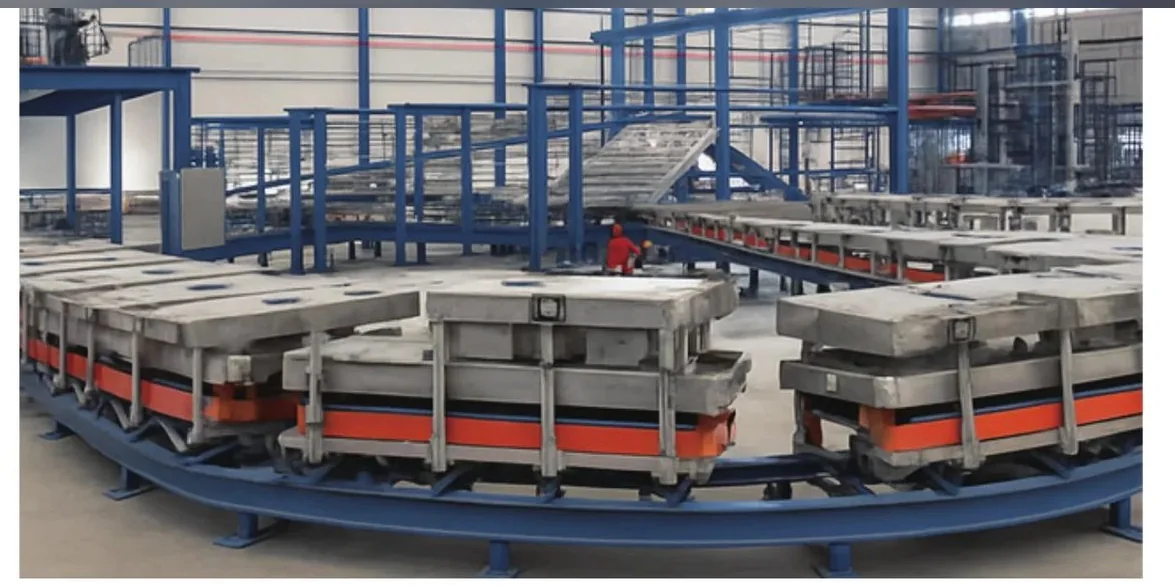
26-Station Ground-Rail Foaming Line Throughput: The Real Math Behind the Numbers
The station count in a foaming line's name is the wrong number to size capacity on. Hourly output is set by takt time and OEE; the 26 stations set curing time and work-in-process. This guide walks the actual throughput math for a closed-loop ground-rail line so you size it against your real production target.
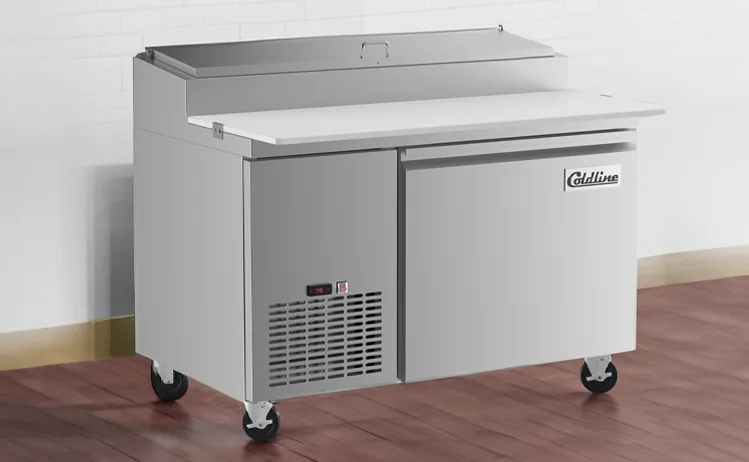
Chef Base PU Foaming, Deep Dive: Why a Load-Bearing Cabinet Is Foamed Differently from a Domestic Fridge
A chef base carries heavy cooking equipment on its top deck, soaks up radiant heat from the cooktop, and is built from two stainless skins — so its PU foam has to be a structural member and an insulator at once. This deep dive walks the engineering that separates chef-base foaming from domestic-cabinet foaming: load-bearing density, k-factor under a hot deck, stainless adhesion, and the defect modes that punish treating the two cabinets the same.

Cigar Humidor Cabinet PU Foam, Deep Dive: Why a Humidity-Holding Cabinet Is Foamed Differently from a Cold-Chain Fridge
A cigar humidor cabinet shares a fridge's two-skin, one-PU-shot construction but not its goal: it holds a narrow 65–72% relative-humidity band at around 18 °C, not a low temperature. This deep dive walks the engineering that makes humidor foaming its own discipline — RH stability, a vapor-tight envelope (ASTM E96 permeance), the condensation a single void causes near saturation, dimensional stability so the door seal stays tight for years, and why it is a precision low-pressure job rather than a high-volume one.