
Icebox Foam: Why the PU Foam Core Is the Whole Cooler
A portable icebox has no compressor, so the icebox foam core is the entire product. How PU foam sets ice-retention hours, load-bearing strength and water resistance — and the defect modes that punish treating a cooler like a fridge.
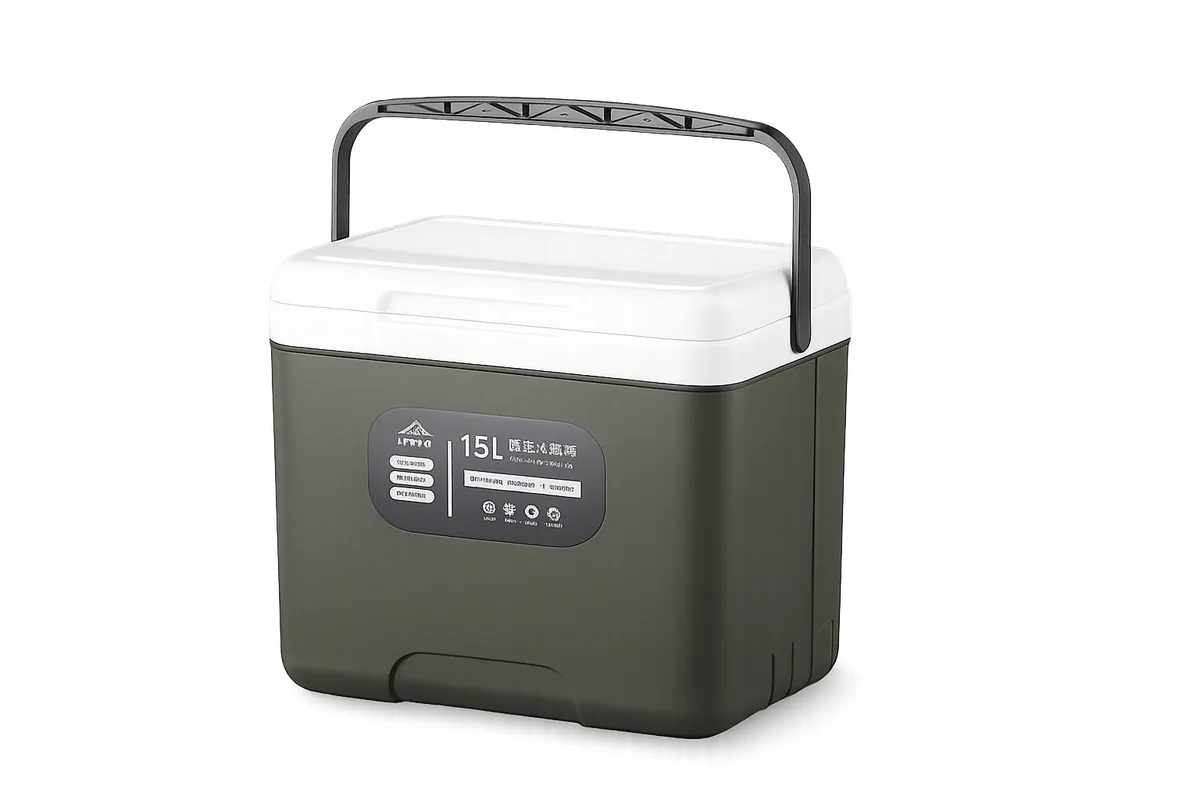
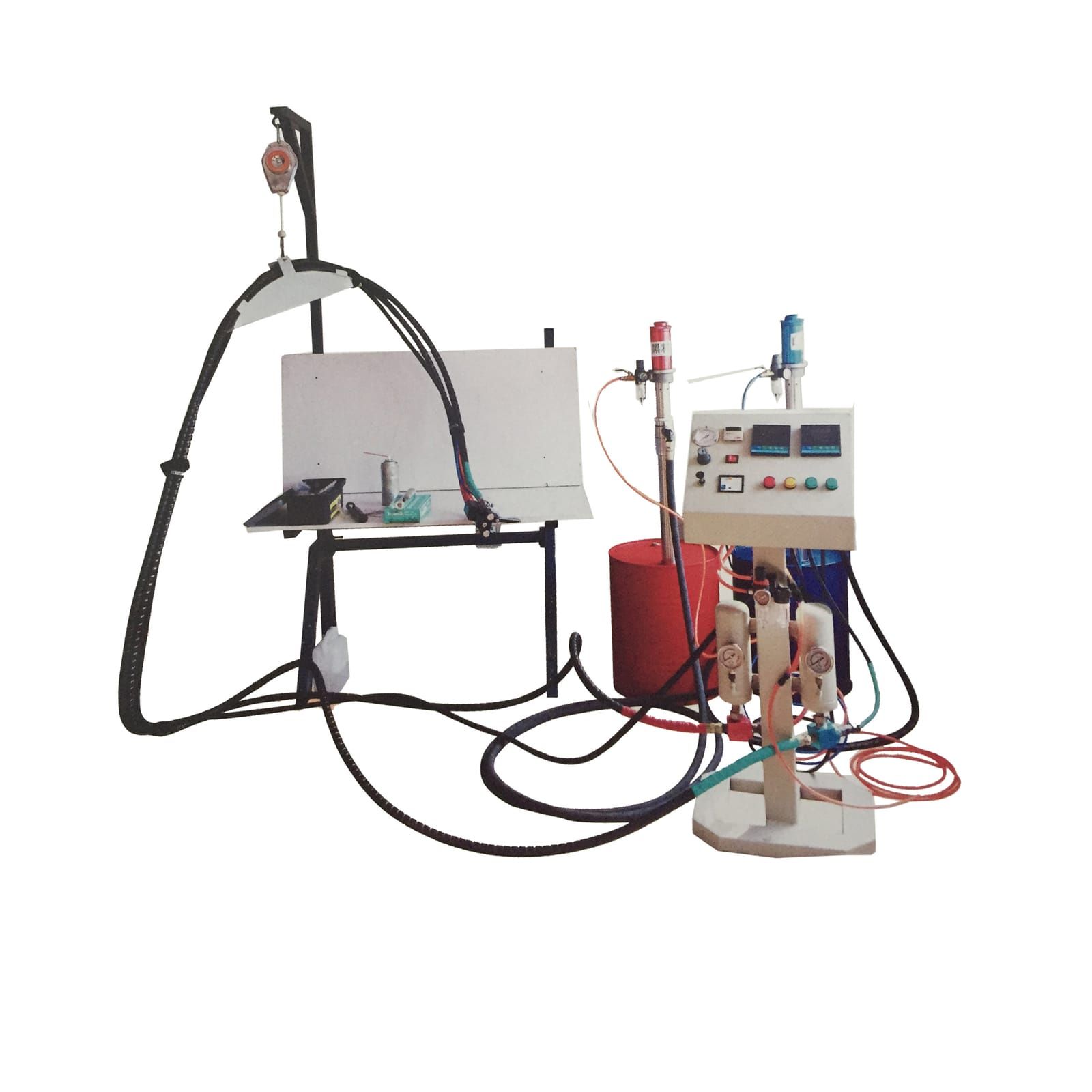
On a portable icebox the PU foam is not a helper — it is the product. There is no compressor to compensate, so ice-retention hours come straight out of wall thickness times a low, uniform k-factor (measured under ASTM C518 / ISO 8301). The same foam has to be load-bearing, because coolers get sat on, stood on and dropped, so density sets compressive strength (per ASTM D1621) and the wall doubles as structure. Because iceboxes live wet — marine, fishery, melt water — closed-cell content matters: an open-cell patch or void waterlogs, loses R-value and gains weight (water absorption per ASTM D2842). The failure modes — a void in the lid, short fill in handle and hinge recesses, cold-bridging at the drain plug, warping that breaks the lid seal — map straight onto those demands, and on a validated vaccine box a single void fails validation, not just performance. It is precision low-pressure foaming with insulation-box tooling. we supply the foaming line, moulds and raw materials only — not finished coolers.
A portable icebox and a household refrigerator can be built from the same idea — two skins with a polyurethane core — but one of them has an engine and the other does not. A fridge has a compressor working around the clock to pull heat out, so a mediocre wall just means the motor runs a little more. A cooler has nothing. Once you close the lid, the only thing standing between the ice and a hot dock, a fishing boat deck or the back of a delivery van is the PU foam in its walls. That single fact — no active cooling to fall back on — makes the foam core the entire performance of a portable icebox, and it changes everything about how the cabinet has to be foamed. This deep dive walks that engineering: why ice-retention hours are set directly by the wall, why the same foam has to carry a person's weight and survive a drop, why water absorption is a real specification for anything that lives wet, and the defect modes that punish a line that treats a cooler like a fridge. For the commercial side — line scale, buyer types and output — start from our portable icebox manufacturing solution; this article is about why the foam is specified differently.
What is icebox foam, and how is it different from EPS or XPS?
Icebox foam is the rigid insulation layer poured or injected between the inner and outer shell of a portable cooler. On most mid-range and premium boxes that layer is polyurethane (PU); on low-cost coolers it is often a block of expanded polystyrene (EPS) cut or moulded to shape. Polyurethane is closed-cell and liquid at the point of application, so a metered shot flows into the cavity and fills it completely — no seams, no gaps, and (at a given thickness) a lower k-factor than EPS, with density tunable to the load the box has to carry, using the same ASTM D1621 density basis referenced below. EPS is moulded or cut into blocks first and then fitted into the shell, which is why it is cheap and fast to source, but at the same wall thickness it insulates less well than PU and the joins between blocks are cold-bridge points. XPS is a denser, extruded cousin of EPS — better than EPS panel-for-panel, but still a rigid sheet product, not something that can be poured to fill an irregular cavity, which rules it out for coolers with a molded-in handle, hinge or lid geometry. That difference — foamed in place versus fitted in pieces — is what the rest of this article is about: how wall thickness and k-factor together set ice-retention hours.
Why a cooler is a passive product — and the foam is the engine
Every insulated cabinet on a foaming line has a job, but the portable icebox is the one where the foam has no backup. A refrigerator, a freezer, a beverage cabinet — all of them run a refrigeration circuit that can mask an imperfect wall by simply working harder; the foam sets the energy bill, not whether the box works at all. A cooler inverts that. It is a passive device: no compressor, no power, no thermostat. The ice you load is the entire cold budget, and the walls decide how slowly you spend it. That means every engineering property people usually treat as "efficiency" on a cabinet becomes "does the product do its one job" on a cooler. Over 1,800+ line projects across 40+ countries, the medical cabinet, the chef base and the portable icebox are the three where foam discipline shows up hardest in the finished product — but the icebox is the one where a soft wall does not raise a bill, it melts the customer's ice on day one. So the whole design conversation starts from a different place: the foam is not insulating a machine, the foam is the machine.
Ice-retention hours: wall thickness times a low, uniform k-factor
Because a cooler is passive, its headline number — how many hours it holds ice — comes almost entirely out of two foam variables: how thick the wall is and how low and uniform its thermal conductivity is. Heat leaks in at a rate governed by the wall's k-factor (or lambda) divided by its thickness, so a thicker wall of low-conductivity, fine-celled closed-cell PU foam is what turns a 12-hour box into a multi-day one. This is why premium coolers have such visibly chunky walls — 30 to 75 mm is common — where a fridge gets away with far less, because the fridge has a compressor and the cooler does not. The conductivity itself is a measured property, read for these panels under heat-flow-meter standards such as ASTM C518 or its ISO counterpart ISO 8301; the number a marketer quotes for "ice retention" is really that k-factor and that thickness working together. The catch, exactly as on any foamed cabinet, is uniformity: a thick wall with a low-density shadow behind a rib or an unfilled corner leaks disproportionately through the weak spot, because heat finds the easiest path. On a cooler that weak path is not a rounding error on an electric bill — it is the corner where the ice melts first. So the target is not just "thick and low-k," it is thick, low-k and fully, evenly filled corner to corner.
The lid is the hardest part to foam — and the one that matters most
If there is one place a cooler is won or lost, it is the lid, and it is also the hardest section to foam well. A lid is a shallow, wide cavity crossed by hinge bosses, latch recesses, a gasket channel and often a molded-in handle — exactly the geometry where foam has to flow around obstructions and still fill every corner before it cures. Get a void in a side wall and you lose some hours; get a void in the lid and you have put a thermal hole in the one panel that has to seal against warm air every time someone opens the box. The lid also carries the gasket that closes the cabinet, so it has to stay flat and dimensionally true, not bow as the foam sets. This is where fixture-mould discipline and metered fill earn their keep: the mould has to hold the lid flat and support its complex face through the full cure dwell, and the shot has to be metered and placed so the foam reaches the far corners and around every boss without trapping air. A line tuned to blow a plain rectangular cabinet will leave lid voids unless the tooling and the shot are designed for that awkward, obstruction-filled cavity — which is one more reason a cooler program is its own setup, not a fridge line running a different mould.
Density: the cooler has to be sat on, stood on and dropped
A refrigerator lives a gentle life indoors; a portable icebox gets abused. People sit on them, stand on them to reach a shelf, drop them off a tailgate, strap them under cargo and slide them across concrete and boat decks. That means the foam is not only an insulator — it is the structure that lets the cabinet take those loads without crushing or cracking, exactly the dual role a chef-base top deck plays but under impact and point loads instead of a steady deck weight. The lever for that is density: the compressive strength and stiffness of rigid polyurethane scale strongly with density, and compressive strength here is a measured property under ASTM D1621, the standard test for compressive properties of rigid cellular plastics. A cooler that a 100 kg adult can stand on without denting the lid needs a foam core dense and uniform enough to spread that point load, and it needs that density everywhere — a soft, under-filled zone becomes the hinge the wall folds on when someone sits on the corner. The honest trade-off is that density and the lowest possible k-factor pull in slightly different directions, so a cooler is tuned to hit both a structural density target and a uniform insulation value from one metered shot, rather than chasing insulation alone the way a static cabinet can. The relationship between the two is exactly the density-versus-k-factor balance we cover in the PU foam density and k-factor guide.
Water absorption: coolers live wet, and open cells are the enemy
Here is the demand almost no static cabinet faces as hard as a cooler does: it spends its life wet. Marine and fishery coolers sit in bilge water and get hosed down; every icebox holds melt water against its inner wall for days; logistics boxes get rained on. If the PU core is anything less than genuinely closed-cell — if it has an open-cell patch, a void or a diffusion path — it will drink water. A waterlogged foam core loses R-value (water conducts heat far better than trapped gas), gains dead weight, and in a marine cooler quietly destroys the buoyancy the foam was supposed to provide. That is why water absorption is a real, quantified specification for this product, measured under ASTM D2842, the standard test for water absorption of rigid cellular plastics — a number a cooler maker should actually ask about, unlike an indoor cabinet where it rarely comes up. The defence is the same fill discipline that gives you ice-retention hours: a fine, fully closed-cell structure with no voids for water to enter, achieved by correct system chemistry and a metered, complete shot. On a cooler, "closed-cell and void-free" is not just about insulation consistency — it is what keeps the box from turning into a waterlogged sponge over a season on the water.
Where cooler foam fails — and how the line prevents it
The failure modes of a portable icebox are specific, and they map directly onto the four demands above. The most damaging is a lid or corner void: an unfilled pocket in the hardest-to-fill panel that becomes both a thermal hole and a place water and warm air short-circuit the wall. Next is short fill in handle and hinge recesses — the molded-in features where foam has to flow around an obstruction and often does not reach, leaving a soft, cold, weak spot at exactly the points that take handling load. Then cold-bridging at the drain plug and molded hardware, where a metal or thick-plastic insert reaches through the insulation and sweats or leaks cold. Then dimensional bow, where a lid or body that was not held flat through cure sets with a warp that breaks the gasket seal so the cabinet leaks air every cycle. And underlying several of these, open-cell or voided foam that waterlogs in service. The line answers each one structurally rather than by inspection-after-the-fact: tight metering and verified full fill kill the void, short-fill and cold-bridge modes; fixture moulds that clamp the body and lid flat through a fixed cure dwell kill the bow; and closed-cell system chemistry with complete fill kills the waterlogging. Verification is then per-unit — fill, weight and flatness checked on every box as it comes off the line — so a defect is caught at demould, not on a customer's boat.
When the cooler is a validated cold-chain box, a void fails validation
One class of portable icebox raises the stakes further: the insulated shipper that carries vaccines, blood or pharmaceuticals. Here the box is not just expected to hold ice a long time — its thermal performance has to be reproducible unit to unit so a cold-chain qualification can certify that any box off the line will keep its payload in range for the validated duration. That turns foam uniformity from a quality preference into a compliance requirement: a void or a density swing that would merely shorten ice retention on a picnic cooler will make a medical shipper fail its thermal validation, because the box no longer behaves like the one that was qualified. The same engineering that makes a premium cooler good — metered fill, closed-cell structure, tight density tolerance, verified per-unit — is what makes a validated shipper repeatable, which is the property the pharmaceutical buyer is actually paying for. The line discipline does not change; the consequence of missing it does. It is the reason a cold-chain box program should be sized on an insulation-box production line built for consistency, not adapted from a low-control process where every unit comes out a little different.
What this means if you're sourcing a portable-icebox foaming line
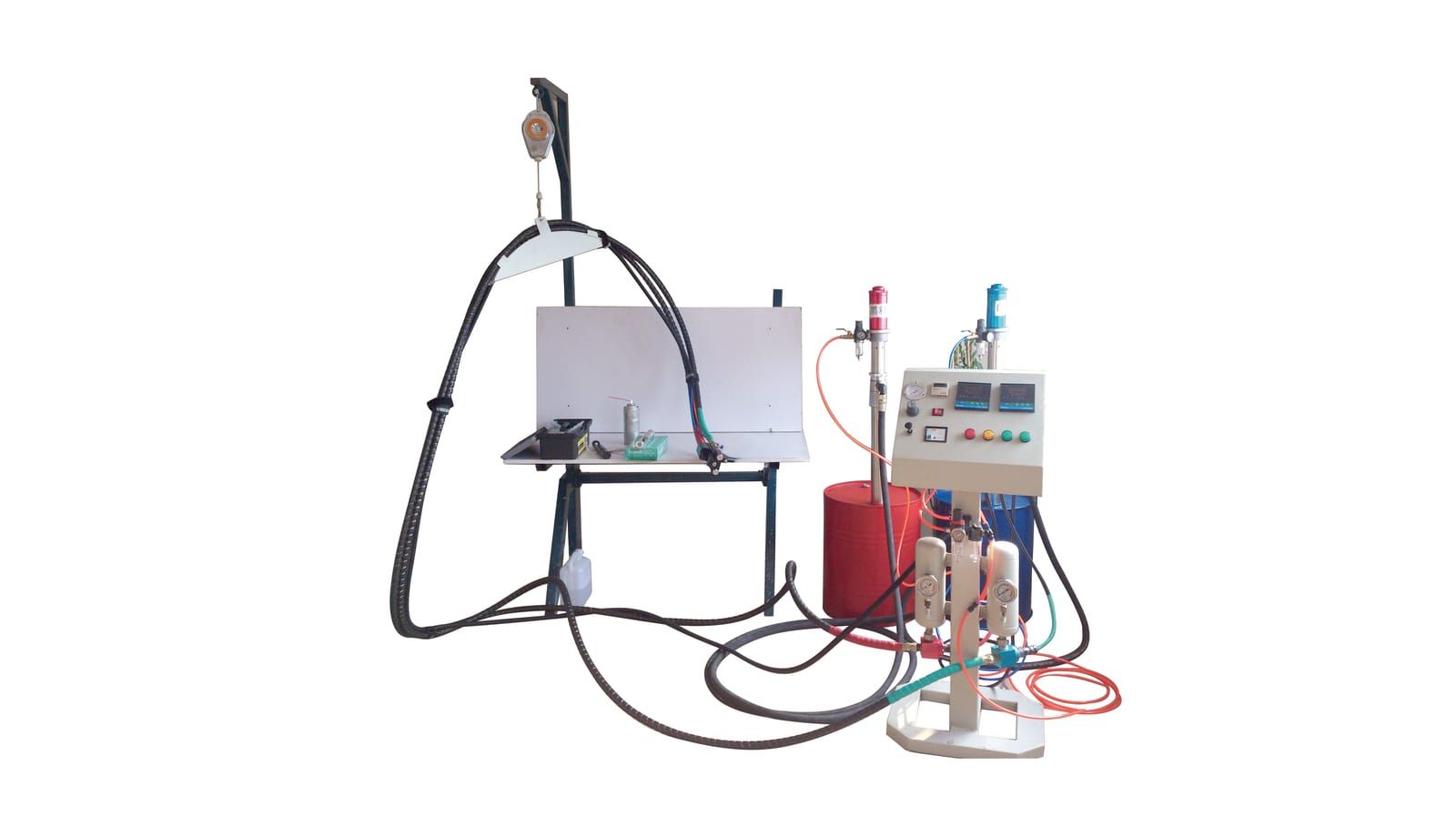
The practical takeaway for a cooler or shipper maker is to spec the foam for the fact that it is the whole product, not a helper to a compressor. Pin down the ice-retention hours you need and let those set wall thickness and the k-factor target together, valuing uniform fill over a headline number you cannot hold in every corner. Tell the line supplier the handling loads the box must survive — the weight it gets sat on with, the drops, the strapping — and let those set a structural density target the foam meets everywhere, not just on average. If the product lives wet, ask specifically about water absorption and closed-cell content, because an open-cell shortcut waterlogs a marine cooler in a season. And if it is a validated shipper, ask how the line holds unit-to-unit repeatability, because that is what a cold-chain qualification certifies. Above all, ask how the supplier fills the lid and molded recesses and how it holds the body flat through cure, because that is where cooler foam is won or lost. we supply the metered low-pressure PU foaming system, the insulation-box production line and the PU raw materials behind portable-icebox, cooler and cold-chain-shipper production — the finished coolers, any drain or latch hardware and any medical or thermal certification belong to the manufacturers who run the line. To size a line to your cooler matrix and volume, start from our portable icebox manufacturing solution and tell us the retention hours, box sizes, handling loads and target output — we will match the foaming system, moulds and assembly layout to the load-bearing, void-free, closed-cell wall a portable icebox has to be.
Building a factory? See our production line guide → For a complete plant, browse our portable icebox manufacturing solutions.
Frequently asked questions
What is icebox foam made of?
Most portable coolers use rigid polyurethane (PU) foam poured or injected between the shells — closed-cell, void-free when properly filled, and lower k-factor than the alternatives at the same thickness. Lower-cost coolers use expanded polystyrene (EPS) blocks fitted into the shell instead, which insulates less well and leaves cold-bridging seams between blocks. Extruded polystyrene (XPS) is a denser panel option but, like EPS, cannot be foamed in place to fill an irregular cavity around a handle or hinge.
Why is a portable icebox foamed differently from a refrigerator?
Because a cooler has no compressor. A refrigerator runs a refrigeration circuit that can compensate for a mediocre wall by working harder, so on a fridge the foam mostly sets the energy bill. A portable icebox is passive — the ice you load is the entire cold budget and the PU foam walls decide how slowly you spend it. That makes the foam the whole performance of the product, which is why coolers use much thicker walls, tighter fill discipline and a foam that is also load-bearing and water-resistant, not just insulating.
What sets how long a cooler holds ice?
Two foam variables, working together: wall thickness and the k-factor (thermal conductivity) of the foam, plus how uniformly the wall is filled. Heat leaks in at a rate governed by conductivity divided by thickness, so a thick wall of low-k, fine-celled closed-cell PU foam is what turns a half-day box into a multi-day one — which is why premium coolers have visibly chunky 30 to 75 mm walls. Conductivity is measured under heat-flow-meter standards such as ASTM C518 or ISO 8301. A void or soft spot leaks disproportionately, so uniform corner-to-corner fill matters as much as the headline number.
Why does water absorption matter for a portable icebox?
Because coolers live wet — marine and fishery boxes sit in water and get hosed down, and every icebox holds melt water against its inner wall for days. If the PU core is not genuinely closed-cell, an open-cell patch or void will drink water, which lowers the foam's R-value, adds dead weight, and in a marine cooler destroys the buoyancy the foam was meant to provide. Water absorption is measured under ASTM D2842, and a fine, fully closed-cell, void-free structure is what keeps the box from waterlogging over a season.
Can a portable icebox foam core be strong enough to stand on?
Yes — that is a density and fill question. The compressive strength and stiffness of rigid PU foam scale strongly with density, measured under ASTM D1621, so a cooler that an adult can sit or stand on needs a foam core dense and uniform enough to spread that point load without denting or cracking. The density has to be present everywhere, because a soft, under-filled zone becomes the hinge the wall folds on. On a cooler the foam is structure and insulation at once, which the line balances by hitting both a density target and a uniform k-factor from one metered shot.
Does UREXCEED build finished coolers or just the foaming line?
Just the production-line equipment. we supply and commission the metered low-pressure PU foaming system, the insulation-box and fixture moulds and the PU raw materials that build portable iceboxes, coolers and cold-chain shippers. The finished coolers, the drain and latch hardware, and any medical, thermal or buoyancy certification belong to the manufacturer who runs the line. We size and tool the line to your box sizes, retention hours, handling loads and target volume, with the closed-cell fill and dimensional discipline a passive cooler needs.
Produits mentionnés dans cet article
Prêt à planifier votre projet frigorifique ?
Indiquez-nous votre objectif de production et votre gamme de produits — notre équipe répond avec un plan de capacité et un devis sous trois jours ouvrés.
Demander un devis techniqueArticles associés
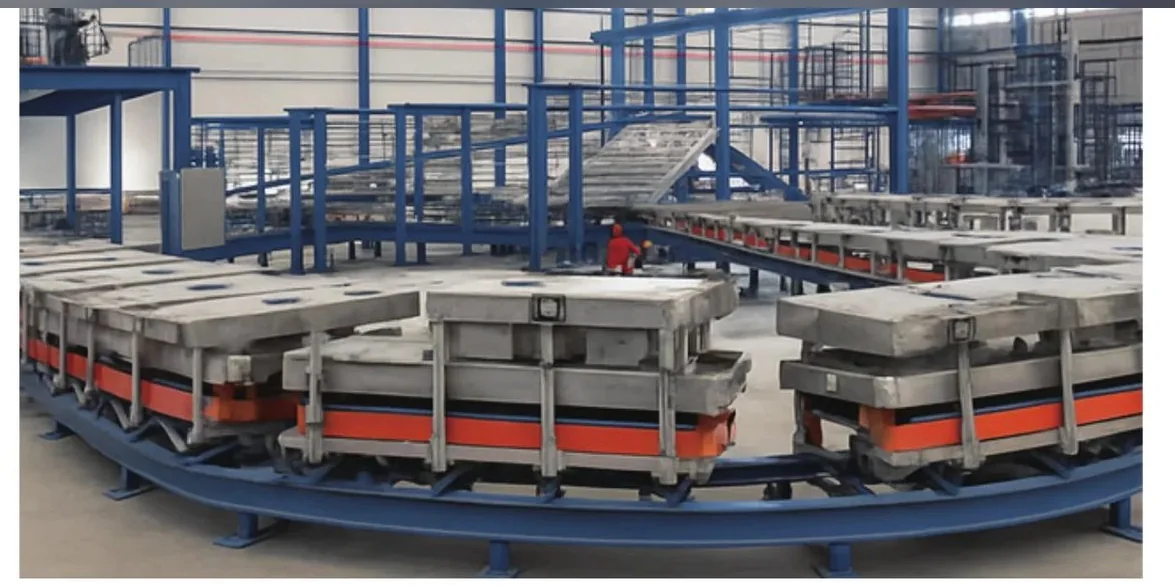
26-Station Ground-Rail Foaming Line Throughput: The Real Math Behind the Numbers
The station count in a foaming line's name is the wrong number to size capacity on. Hourly output is set by takt time and OEE; the 26 stations set curing time and work-in-process. This guide walks the actual throughput math for a closed-loop ground-rail line so you size it against your real production target.
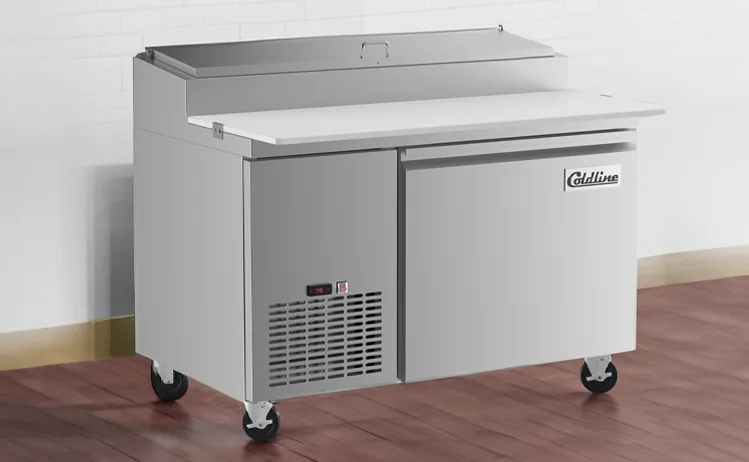
Chef Base PU Foaming, Deep Dive: Why a Load-Bearing Cabinet Is Foamed Differently from a Domestic Fridge
A chef base carries heavy cooking equipment on its top deck, soaks up radiant heat from the cooktop, and is built from two stainless skins — so its PU foam has to be a structural member and an insulator at once. This deep dive walks the engineering that separates chef-base foaming from domestic-cabinet foaming: load-bearing density, k-factor under a hot deck, stainless adhesion, and the defect modes that punish treating the two cabinets the same.

Cigar Humidor Cabinet PU Foam, Deep Dive: Why a Humidity-Holding Cabinet Is Foamed Differently from a Cold-Chain Fridge
A cigar humidor cabinet shares a fridge's two-skin, one-PU-shot construction but not its goal: it holds a narrow 65–72% relative-humidity band at around 18 °C, not a low temperature. This deep dive walks the engineering that makes humidor foaming its own discipline — RH stability, a vapor-tight envelope (ASTM E96 permeance), the condensation a single void causes near saturation, dimensional stability so the door seal stays tight for years, and why it is a precision low-pressure job rather than a high-volume one.