
Планировка завода холодильников: расстановка оборудования, потоки материалов и расчёт мощности
Два завода с идентичным оборудованием могут отличаться по выработке на 40%. Разница в планировке цеха. Руководство охватывает четыре зоны, три принципа потока материалов и расчёт мощности от узкого места.
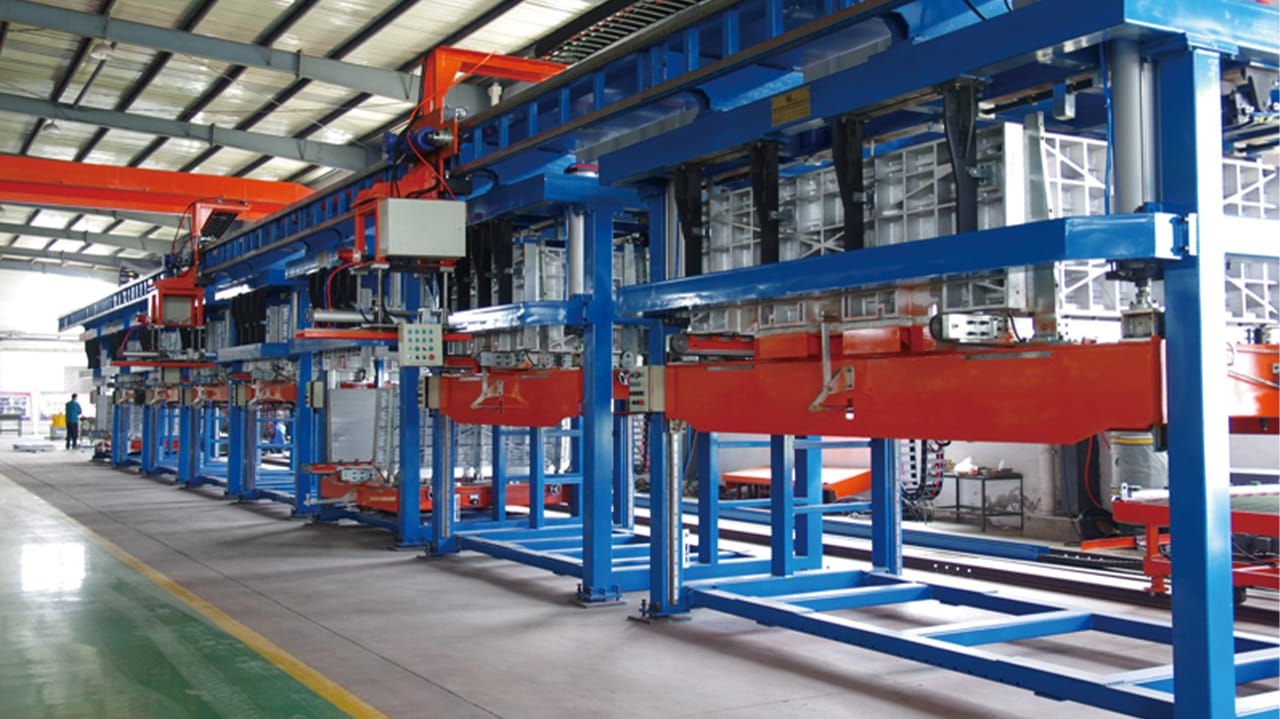
Четыре зоны: подготовка материалов, термоформование, вспенивание/выдержка (узкое место), сборка/тестирование. Три принципа: однонаправленный поток, раздельные проезды сырья и готовой продукции, буферные зоны на каждом переходе. Формула мощности: 500 единиц/день = 6-10 форм на карусели для преодоления 8-12-минутного узкого места выдержки. Интегратор под ключ экономит 15-25% площади.
Why layout determines factory output more than equipment specs alone
A refrigerator factory's daily capacity is capped by its slowest transition, not its fastest machine. Two factories with identical high-pressure PU foaming machines and the same model of vacuum forming moulds can differ by 40% in daily output. The difference comes down to floor layout: how far a partially-assembled cabinet travels between stations, how many times operators cross each other's paths, and whether curing time overlaps with the next foaming cycle or blocks it.
Factory layout planning is not interior decoration. It is a production engineering exercise that locks in your cost structure for 5-10 years. Getting it wrong means living with bottlenecks that no equipment upgrade can fix without tearing up concrete.
Four zones every refrigerator factory floor must define
Before placing a single machine, divide the floor into four zones. Each zone has different ceiling height requirements, floor load capacity, and ventilation needs.
| Zone | Key equipment | Floor requirements | Common sizing mistake |
|---|---|---|---|
| A: Material prep & sheet extrusion | Sheet extruder, ABS/HIPS granule storage, pre-heating station | Floor load 3-5 t/m2, ceiling 6m+, exhaust ventilation for fumes | Underestimating raw material staging area — forces frequent forklift runs that block the main aisle |
| B: Thermoforming & trimming | Vacuum forming machine, trimming press, liner buffer rack | Floor load 2-3 t/m2, ceiling 5m+, compressed air 8 bar | No buffer rack between forming and foaming — one jammed liner halts the entire downstream |
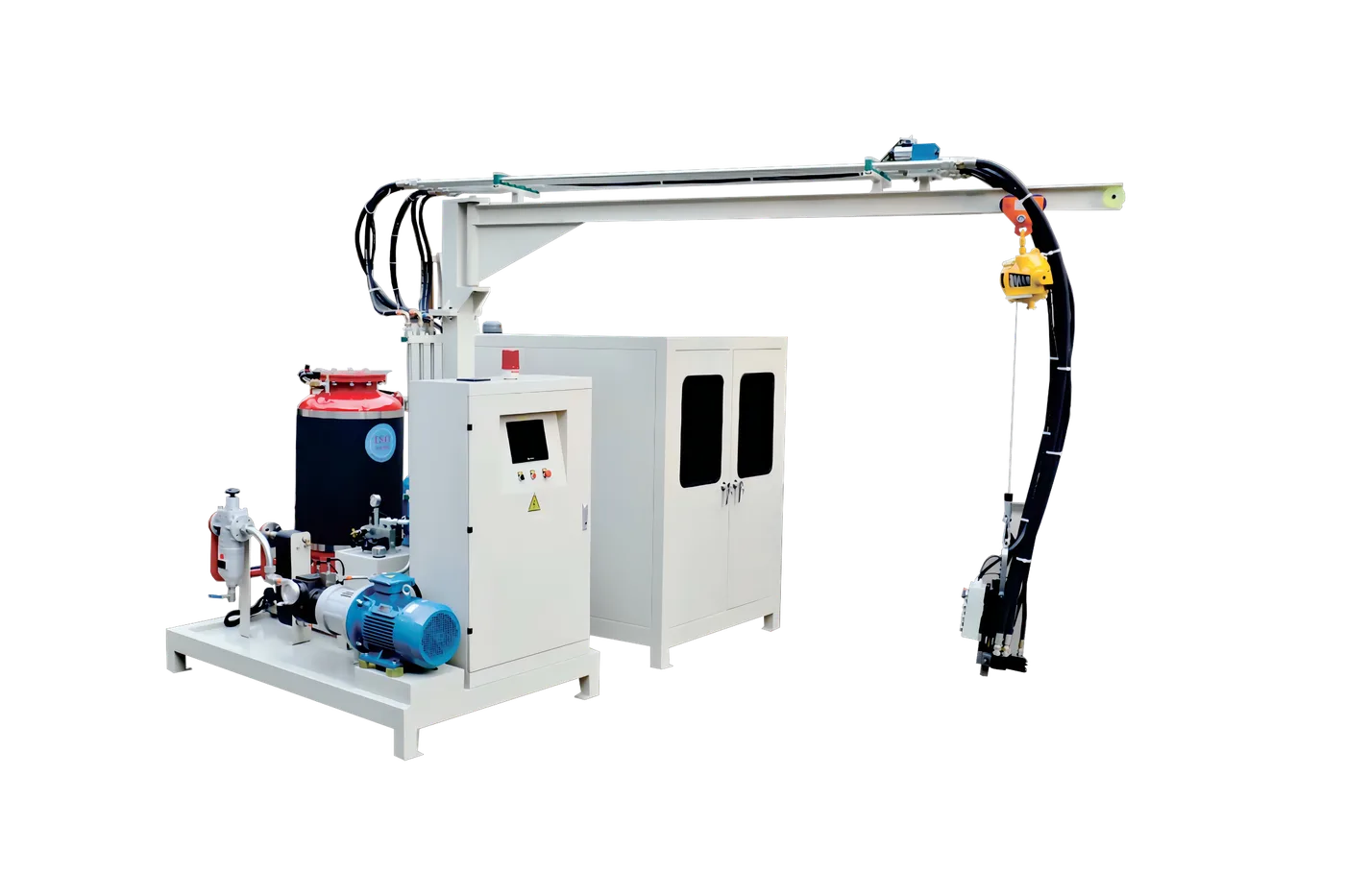
| C: Foaming & curing | High-pressure foaming machine, foaming moulds, curing conveyor | Floor load 5-8 t/m2, temperature-controlled 20-35 C year-round, isocyanate ventilation system | Single foaming station with no parallel jigs — curing time (8-12 min) becomes the bottleneck even if foaming takes only 45 seconds |
| D: Assembly, testing & packing | Door assembly station, compressor brazing, leak test, electrical test, packing line | Floor load 1-2 t/m2, standard ceiling, good lighting 500 lux+ | Packing area too small — finished units stack up, blocking the test station exit |
The ratio between zones depends on your product mix. A factory making only chest freezers needs more Zone C area (larger moulds, longer curing). A factory running 3-4 refrigerator models simultaneously needs more Zone B buffer and Zone D flexibility.
Three material flow principles that prevent cross-traffic
Cross-traffic is the silent killer of factory throughput. Every time a forklift carrying raw materials crosses a pallet of finished goods, both stop. Three principles eliminate most cross-traffic problems:
One-direction flow. Raw materials enter from one end, finished goods exit from the opposite end. The factory floor is a river, not a lake. Zone A sits at the intake end, Zone D at the exit. Never route work-in-progress backward.
Separate raw material and finished goods aisles. The raw material aisle (granules, steel coils, PU chemical drums) runs along one side of the building. The finished goods aisle (packed refrigerators on pallets) runs along the other. The production zones sit between them. Forklifts serving raw materials never enter the finished goods lane.
Buffer zones at every handoff. Between Zone A and B: a liner buffer rack holding 2-4 hours of formed liners. Between Zone B and C: a shell sub-assembly staging area. Between Zone C and D: a post-cure buffer for foam stabilization (30-60 min recommended before door assembly). These buffers let each zone run at its own pace without hard-coupling cycle times.
Capacity sizing: how to calculate daily output from your bottleneck station
Factory capacity is not the sum of each machine's rated speed. It equals the output of the slowest station in the chain, minus changeover time and planned downtime.
Here is the calculation for a typical refrigerator line:
| Station | Cycle time per unit | Units/hour (1 station) | Parallel stations needed for 500/day |
|---|---|---|---|
| Sheet extrusion | Continuous — feeds thermoforming | 50-80 liners/hr | 1 |
| Vacuum forming | 60-90 seconds | 40-60 | 1-2 |
| Foaming injection | 30-60 seconds | 60-120 | 1 |
| Foam curing (bottleneck) | 8-12 minutes | 5-7 | 6-10 jigs on carousel |
| Door assembly | 3-5 minutes | 12-20 | 2-3 |
| Leak + electrical test | 4-6 minutes | 10-15 | 2-3 |
The foam curing step at 8-12 minutes per unit is almost always the bottleneck. That is why production lines use carousel-type foaming jig systems with 6-10 moulds rotating through a single foaming machine: while one jig is being injected, the others are curing. To reach 500 units/day (roughly 30 units/hour at 85% OEE across 20 hours), you need at least 6 curing positions. This single decision — how many foaming jigs — determines your factory's maximum daily output and the floor space Zone C requires.
Five layout mistakes that cost 6-18 months to fix
1. Chemical storage next to the packing area. PU isocyanate drums require ventilated, temperature-controlled storage (15-25 C). Placing them near finished goods risks contamination and violates fire safety codes in most countries. Relocating chemical storage after construction means re-running ventilation ducting and fire suppression — 3-6 months of disruption.
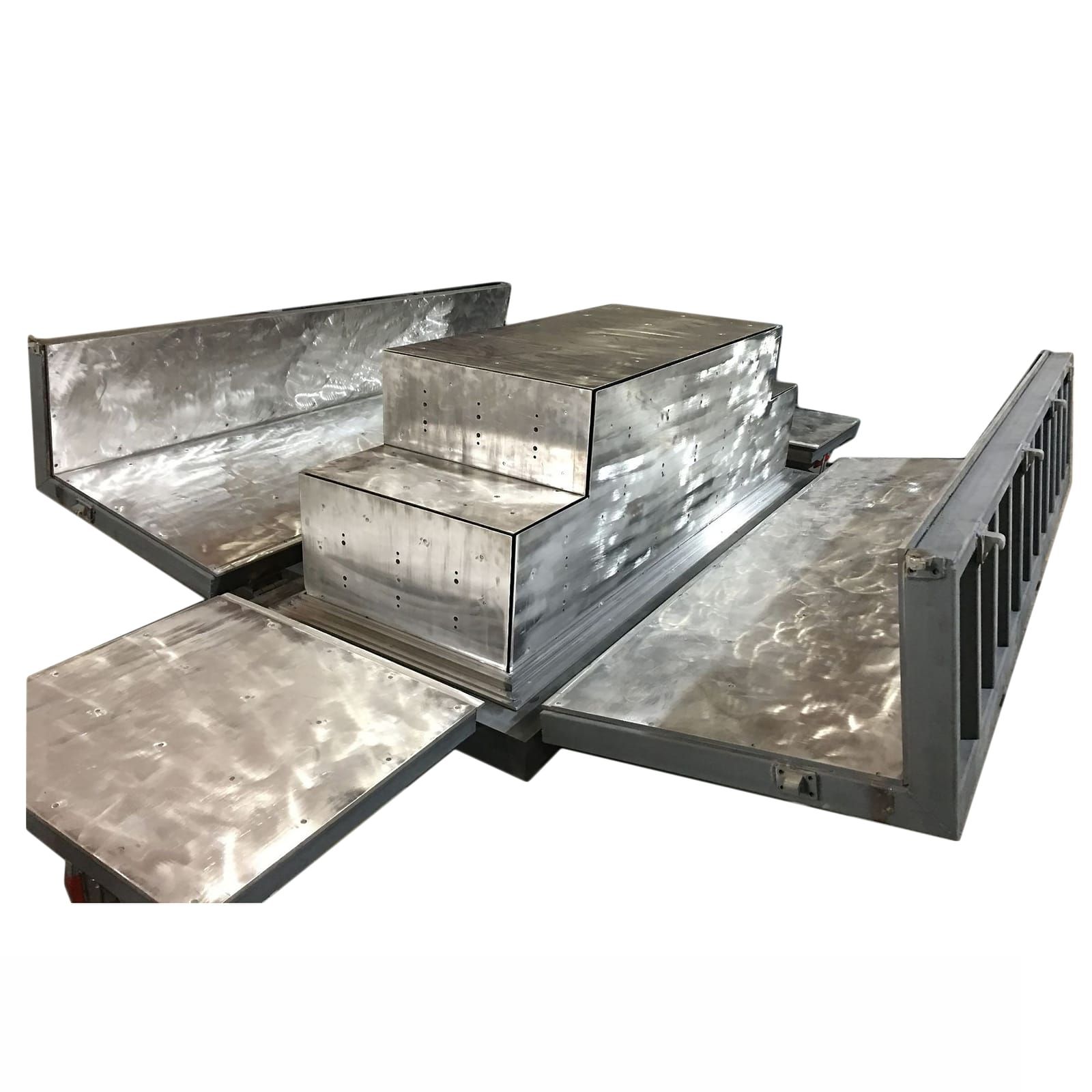
2. No crane coverage over the foaming zone. Foaming moulds weigh 2-15 tonnes. Changing moulds for a different refrigerator model without an overhead crane means bringing in a mobile crane, which blocks the production floor for hours. Install bridge crane rails during construction, not after.
3. Insufficient electrical capacity for future expansion. A high-pressure foaming machine alone draws 80-150 kW. Plan the transformer and bus bar for 130-150% of initial equipment load. Adding transformer capacity later requires a power shutdown affecting the entire factory.
4. Single-aisle layout. All traffic — raw materials, WIP, finished goods, personnel — sharing one central aisle. Works at 200 units/day. At 400+ units/day, the aisle becomes a traffic jam. Design for the capacity you want in 3 years, not the capacity you have on day one.
5. Testing area at the end of a dead-end corridor. Failed units need to go back for rework. If the test station is at the end of a dead-end, rework units travel against the flow through the entire packing zone. Place the test station where failed units can loop back to Zone C or D without crossing the main flow.
Why a turnkey integrator handles layout better than buying equipment piecemeal
Equipment vendors sell machines. They do not sell the space between machines. When you buy a refrigerator production line from five different suppliers, each vendor optimizes for their own machine's footprint and access clearance. Nobody optimizes the transitions: conveyor heights between stations, utility routing, forklift turning radius at handoff points.
A turnkey integrator starts from the production target (units/day, models, floor area) and works backward to the equipment list. The layout comes before the purchase orders, not after. Conveyor heights are unified. Utility drops are planned once, not retrofitted five times. The result is typically 15-25% less floor area for the same daily output compared to a self-assembled layout, and ramp-up from installation to rated capacity takes weeks instead of months.
If you are planning a new refrigerator factory or expanding an existing one, start with the layout consultation before ordering any equipment.
What is the minimum floor area for a 300-unit/day refrigerator factory?
A 300-unit/day refrigerator factory typically requires 4,000-6,000 m2 of production floor area, depending on the product mix (single model vs. multiple models), ceiling height, and whether sheet extrusion is done in-house or outsourced. This does not include raw material warehouse, finished goods warehouse, offices, and utility rooms, which add another 2,000-3,000 m2.
How many foaming jigs do I need for 500 refrigerators per day?
With a typical foam curing time of 8-12 minutes and a target of 30 units/hour, you need 6-10 foaming jigs on a carousel or linear conveyor system. The exact number depends on your specific foam formulation's demoulding time and the planned OEE (overall equipment effectiveness) target. Most factories plan for 85% OEE on a 20-hour production day.
Should I plan the factory layout before or after ordering equipment?
Before. Always before. Equipment dimensions, utility requirements, and access clearances determine the building structure. Ordering equipment first and then fitting it into a building leads to compromised material flow, insufficient crane coverage, and expensive retrofits. A layout plan should be the first deliverable in any factory project, produced after the production target and product mix are defined.
What ceiling height does a refrigerator factory need?
The foaming and thermoforming zones need at least 6 meters clear height to accommodate moulds, crane hook height, and ventilation ducting. The assembly and packing zones can work with 5 meters. If you plan to install a mezzanine for component storage above the assembly zone, add 3 meters. Overall recommendation: 8-9 meters clear height for the main production hall gives flexibility for future equipment upgrades.
Готовы спланировать холодильный проект?
Поделитесь целевым объёмом и номенклатурой — наша инженерная команда ответит с планом мощности и коммерческим предложением в течение трёх рабочих дней.
Запросить инженерное предложениеПохожие статьи
Запуск линии холодильников: планирование мощности, схема цеха и инвестиции
Большинство новых проектов начинаются с таблицы коммерческих предложений на оборудование. Это неправильный порядок. Вот последовательность, которую мы применяем с владельцами первых заводов.
Линия производства панелей для холодильных камер — руководство по монтажу, стоимости и производительности
Полное руководство по инвестициям в линию производства сэндвич-панелей для холодильных камер: 5 ключевых позиций, таблицы планирования производительности, детализация инвестиций USD 450K–1,09M, стандарты качества и проектный календарь 4–6 месяцев.