
Portable Icebox Production Line: Cost & Turnkey Manufacturing Setup (2026 Guide)
The 8-step sequence to enter portable icebox and insulated-box manufacturing, three PU-foaming-module investment tiers from USD 45K to 650K, and exactly what is (and is not) included in a turnkey line — vaccine cold-chain, seafood export and meal-kit segments covered.
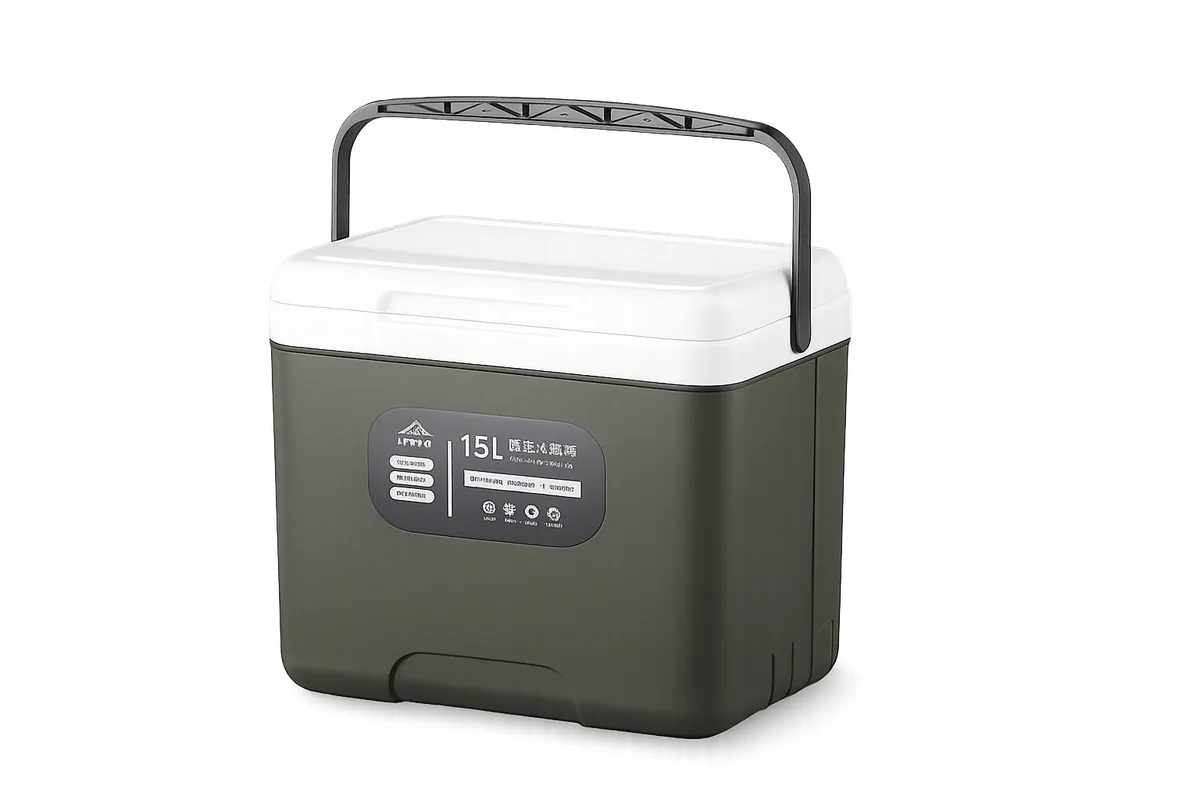
A portable icebox / insulated-box PU foaming module runs USD 45,000-650,000 across three entry tiers (300-3,000 boxes/day), 90-120 days lead time, and covers one PU foaming machine plus box-variant jig tooling across the full 10L-600L range. The decision most first-time entrants get wrong: assuming the foaming line is the whole factory. It is not — vacuum-forming the shells, final assembly (handles, latches, gasket, lid) and QC are a separate build-or-buy decision the buyer owns, and treating that as an afterthought is what delays first shipment, not the foaming equipment itself.
A portable icebox / insulated cold-chain box production line is a PU-foaming-module investment: USD 45,000-650,000 across three entry tiers producing 300-3,000 boxes/day, 90-120 days lead time, sized around one PU foaming machine and a jig set matched to your box-variant mix rather than a full finished-cooler factory. Buyers who scope this project as "buy a machine, start shipping coolers" miss the one fact that actually determines their timeline and total spend: the PU foaming machine and jigs build the insulated box body, but vacuum-forming the inner and outer shells, final assembly (handles, latches, gasket, lid) and QC are a separate stage the buyer sources or builds independently — not part of the foaming-line quote.
First-time insulated-box manufacturers, and existing refrigeration cabinet OEMs diversifying into cold-chain packaging, need the same three pieces in sequence: market sizing and the 8-step setup path, the investment decision with real cost tiers, and the procurement detail — equipment list, line layout and tooling strategy — to build the line.
Market Size and Why Portable Icebox Manufacturing Is a Distinct Entry Point
A portable icebox is not one product — it is four structurally different downstream segments sharing the same PU-foaming process, and the segment mix a buyer chooses drives everything from jig count to certification spend. Vaccine cold-chain boxes (5-25 L, 50-80 mm wall, 5-7 day cold-life at 43°C) sell into government immunization tenders through the WHO PQS catalog at USD 150-500 per box against roughly 15 million boxes/year of global demand. Fresh-food meal-kit and grocery-delivery boxes (30-80 L, 25-40 mm wall, 24-48 hour cold-life) sell to meal-kit brands and last-mile grocery platforms at USD 8-25 per box against a much larger ~500 million boxes/year demand pool, winning on unit cost rather than certification. Seafood and frozen-food export boxes (50-200 L, 40-60 mm wall, 36-72 hour cold-life) sell to exporters in Chile, Norway, Vietnam and Ecuador at USD 20-80 per box against ~100 million boxes/year, with repeat orders driven by export season. Pharmaceutical clinical-trial sample boxes (10-50 L, 60-100 mm wall, 5-10 day multi-temperature cold-life) carry the highest per-box margin at USD 200-1,000 against a smaller ~5 million boxes/year pool, gated by ISO 13485 and pharma cold-chain qualification.
Outdoor gear brands and marine/fishery buyers sit adjacent to these four — consumer coolers and fishing/camping boxes run on the identical PU foaming process and jig tooling, just without a certification gate, which is why they are frequently a first-tier entry point before a manufacturer tools up for vaccine or pharma-grade certification.
Portable icebox manufacturing is structurally different from refrigerator or freezer cabinet manufacturing as a market to enter:
- One PU foaming process, four revenue segments with different entry barriers. The same low-pressure or high-pressure machine and jig tooling produce a USD 10 meal-kit box and a USD 300 vaccine carrier — the difference is the recipe (k-factor target), the wall thickness, and whether a certification body is involved.
- The foaming line is a module, not the factory. Unlike a refrigerator cabinet line where foaming, assembly and QC typically sit on one conveyor, insulated-box production splits into vacuum-forming (shells), PU foaming (the structural and thermal core) and final assembly (hardware, QC) as genuinely separate stages that different suppliers usually own.
- Box volume, not unit count, decides your machine class. A line built for 500 vaccine carriers/day (10-50 L) needs a different PU machine than a line built for 500 seafood export boxes/day (50-200 L) — pressure class follows box size, not just throughput.
Most new entrants underestimate how much of the buying decision is about scoping the foaming module correctly and planning the shell/assembly stage as a parallel, not sequential, workstream. The 8-step sequence below is built around locking in those two decisions before ordering equipment.
The 8-Step Sequence to Start a Portable Icebox Production Line
- Pick your segment matrix first, not your machine. Vaccine, meal-kit, seafood, medical and consumer/outdoor each carry a different wall thickness, cold-life target and certification path — decide which of the four (or five, with consumer) you're launching with before pricing anything.
- Set your box volume range across the 10 L-600 L span early. One PU foaming machine covers the full range, but jig cavity size and machine pressure class change at roughly the 100 L mark — this decision shapes your equipment quote more than daily unit count does.
- Choose low-pressure or high-pressure PU foaming based on box size, not budget. Boxes under 100 L run efficiently on low-pressure (5-100 g/s); boxes over 100 L, or any line targeting 500+ boxes/day, need high-pressure (200-500 g/s) to hold cycle time.
- Size your jig count to your daily-output target and SKU mix. Standard jigs for common box sizes ship in about 4 weeks; custom jigs for unique geometries take 4-6 weeks — decide your SKU count before the mould order, not after.
- Confirm your temperature tier and wall-thickness target. Chilled (+2°C to +8°C, 30-50 mm wall), frozen (-18°C to -25°C, 50-80 mm), deep-frozen (-40°C to -60°C, 80-120 mm) and ultra-low (-70°C to -86°C, PU+VIP hybrid) each need a different foam spec — pick the tier your buyers actually need before locking wall thickness.
- Plan certification in parallel with tooling if you're targeting vaccine or pharma tenders. WHO PQS listing runs 10-12 months end-to-end and roughly USD 25,000-50,000; starting it after the line is commissioned adds a year to your first tender.
- Decide build-or-buy on vacuum-forming and assembly before you sign the foaming-line contract. This is the single biggest scope gap first-time entrants miss — the PU foaming module does not include shell forming, hardware assembly or finished-box QC.
- Scope EU Ecodesign 2027 compliance now if any volume ships to the EU. Recycled-polyol content, disassembly design and cyclopentane-only blowing agents are cheaper to design in at the mould stage than retrofit after the panel line is running.
Three Pitfalls That Delay First Shipment
- Sizing the PU machine by unit count instead of box volume. A buyer who orders a low-pressure machine because "we only need 400 boxes/day" and then discovers half those boxes are 150 L seafood totes ends up re-quoting mid-project — pressure class follows box size, and mixing volumes on the wrong-class machine costs cycle time, not just throughput.
- Treating vacuum-forming and assembly as a later problem. Because these stages sit outside the PU-foaming module's scope, buyers who don't line up a shell supplier or build an assembly station in parallel with the foaming-equipment lead time end up with a finished foaming line and no shells to load into it.
- Starting WHO PQS or ISO 13485 certification after commissioning instead of alongside it. The lab-and-audit path runs 8-12 months regardless of when it starts — starting it the day the line ships rather than the day the contract is signed is the single biggest avoidable delay to first tender revenue.
Reference Configuration — Multi-Segment Entry Line
The following is a typical capability profile for a first-time insulated-box manufacturing line, not a specific client result: a manufacturer entering with a mid-tier jig set covering meal-kit (30-80 L) and seafood-export (50-200 L) box families on a high-pressure PU foaming machine, targeting 600-1,000 boxes/day across both segments from one rotary carousel. This configuration sits inside the middle tier of the three-tier range below — see the portable icebox manufacturing solution page for the full scope-of-supply breakdown. Our broader delivery record spans 1,800+ equipment, mould and production-line projects across 40+ countries — see our case studies for the regional case index across cold-chain and refrigeration categories.
Certification Checklist — What Has to Be in Place Before You Can Sell
- WHO PQS (Performance, Quality and Safety) listing — required to sell vaccine carriers into UNICEF/Gavi tenders and government immunization programs. Lab certification plus factory audit runs roughly USD 25,000-50,000 over 8-12 months; see the WHO Prequalification of Medical Devices catalogue for the current listing process.
- ISO 13485 — the medical-device quality management system standard pharmaceutical clinical-trial cold-chain buyers expect from a box supplier; see ISO's ISO 13485 overview.
- ASTM C518 / ISO 8301 — heat-flow-meter thermal conductivity (k-factor) test methods that back any ice-retention or cold-life claim on a spec sheet; see ASTM C518 and ISO 8301.
- ASTM D1621 — compressive properties of rigid cellular plastics, the standard that backs a load-bearing wall claim (a cooler that can be sat or stood on); see ASTM D1621.
- ASTM D2842 — water absorption of rigid cellular plastics, the standard relevant to marine, fishery and any box that lives wet in service; see ASTM D2842.
- ISTA 7E / ASTM D3103 — thermal-shipping performance validation used to certify a box holds its rated cold-life under a real transport profile, not just in a lab chamber.
Decision: Which Entry Tier Should You Build?
One-line answer: if you're entering with a single box-size family for a meal-kit or seafood-export program, start at Tier 1 (USD 45K-95K PU-foaming-module investment); if you're serving three or more box SKUs across vaccine, seafood and meal-kit segments from one plant, Tier 2 (USD 150K-320K) is the standard first build — this is also where our reference 600-1,000 box/day configuration above sits; Tier 3 (USD 320K-650K) is for manufacturers committing to the full 10 L-600 L range with a WHO PQS-ready recipe and EU Ecodesign-compliant chemistry from day one.
Three-Tier PU-Foaming-Module Investment Comparison
| Tier | Jig configuration | Target output | PU machine | Module investment | Best for |
|---|---|---|---|---|---|
| Tier 1 — Entry | Small jig set, 1-2 box variants | 300-600 boxes/day | Low-pressure (5-100 g/s) | USD 45K-95K | Single-SKU meal-kit or seafood launch |
| Tier 2 — Multi-Segment | Mid jig set + rotary carousel, 3-5 box variants | 600-1,500 boxes/day | High-pressure (200-500 g/s) | USD 150K-320K | Vaccine + seafood + meal-kit from one plant |
| Tier 3 — Full-Range | Custom multi-jig carousel, dual injection head | 1,500-3,000+ boxes/day | High-pressure, dual injection | USD 320K-650K | Full 10L-600L range, WHO PQS + EU Ecodesign from day one |
Payback Period — How Fast the Module Recovers Its Investment
Payback runs roughly 12-24 months for meal-kit and seafood-export programs, where the module is repaying itself against USD 8-80 per-box revenue at volume. Vaccine-tender-focused lines move faster on the certification side specifically — WHO PQS certification spend of USD 25,000-50,000 typically returns 3-5× in first-year UNICEF/Gavi tender revenue once listed, which is why segment sequencing (certify while the line ramps, not after) is the biggest lever on payback speed for that segment.
Hidden Costs First-Time Entrants Miss
- Vacuum-forming shell sourcing — not included in the PU-foaming-module quote. Budget for a separate vacuum-forming machine (or a qualified third-party shell supplier) and run that sourcing track in parallel with the foaming-equipment lead time, not after it.
- Custom jig tooling for non-standard box geometries — standard jigs ship in about 4 weeks; custom jigs for unique box shapes run 4-6 weeks. Decide your SKU list before the mould order to avoid a second tooling run.
- WHO PQS or ISO 13485 certification — USD 25,000-50,000 and 8-12 months if any volume targets vaccine or pharma tenders. This is a parallel-track cost, not a line-commissioning cost.
- Final assembly and hardware — handles, latches, gasket, lid hinges and any drain hardware are sourced separately from the foaming module; budget assembly-station labor and hardware sourcing as its own line item.
- EU Ecodesign compliance documentation — recycled-content declarations, bio-based feedstock certificates and a disassembly SOP if exporting to the EU; the compliance dossier template is supplied with the line, but assembling the buyer-side documentation still takes internal time.
Delivery Timeline — Contract to Line Commissioning
Roughly 90-120 days contract to PU-foaming-module commissioning: Week 1-2 inquiry and segment/box-matrix targeting; Week 2-4 detailed proposal with jig count and PU machine sizing; Week 4-6 contract and jig-geometry design freeze (30% down payment); Month 2-3 jig fabrication (standard box sizes ~4 weeks, custom geometries 4-6 weeks) running in parallel with PU machine build and, on the buyer's side, vacuum-forming and assembly-station setup; Month 3-4 shipment and on-site installation; Month 4 commissioning with 3-5 days of operator training on PU injection, cycle-time tuning and defect identification, plus a one-week pilot production run before acceptance. Vacuum-forming and assembly are a buyer-managed parallel track and are not included in this timeline — sequencing that stage to finish alongside foaming-module commissioning, not after it, is what keeps first shipment on schedule.
Procurement: What the Production Line Actually Needs
Full Equipment List — Our Scope of Supply
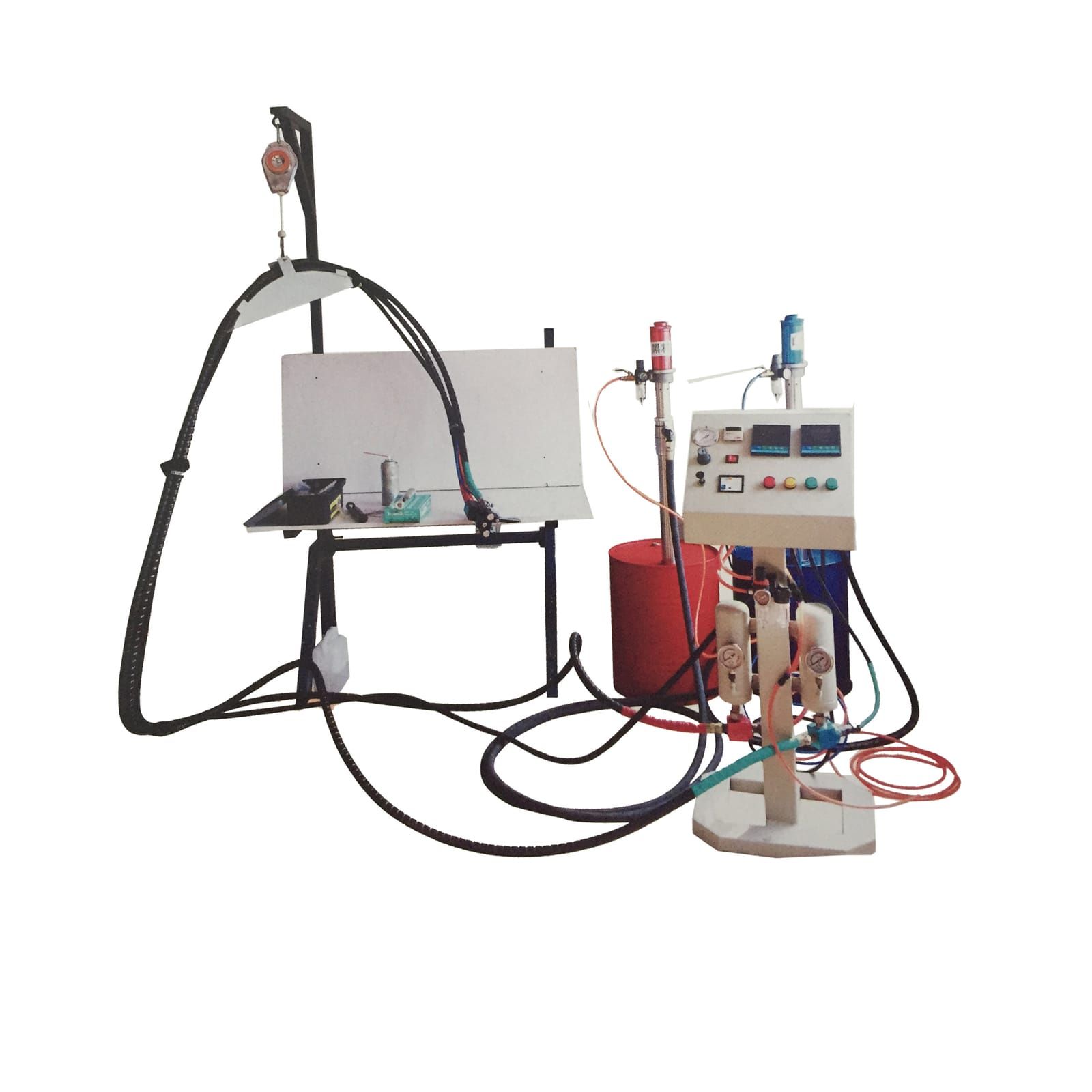
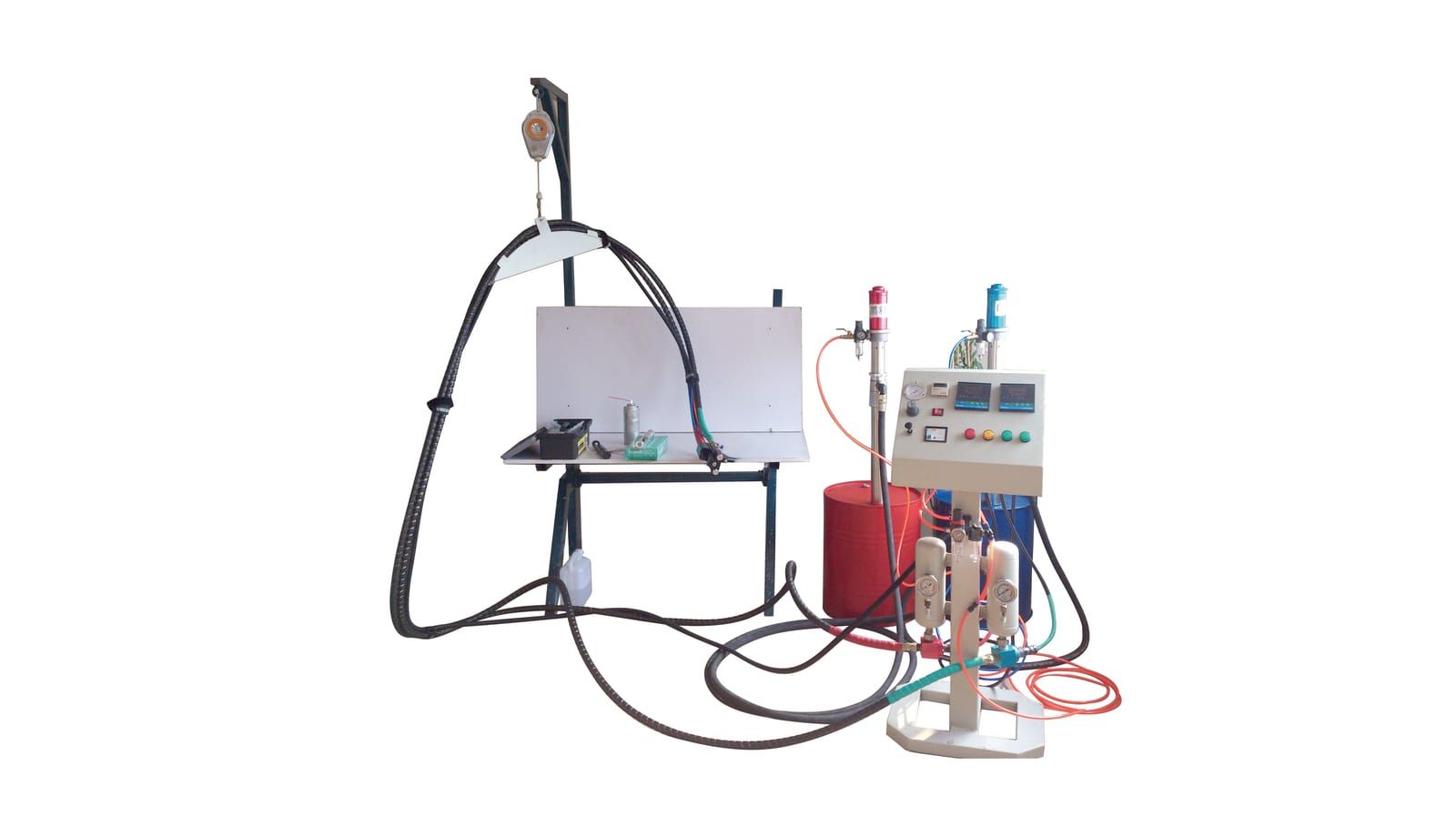
- Low-pressure PU foaming machine (5-100 g/s) for boxes under 100 L, or high-pressure PU foaming machine (200-500 g/s) for boxes over 100 L or 500+ boxes/day
- Cast-aluminium (ZL105 + LY12 reinforcement) foaming jigs, one per box variant, on a welded-steel rotary carousel indexed to ±0.5 mm — supplied as the insulation box production line
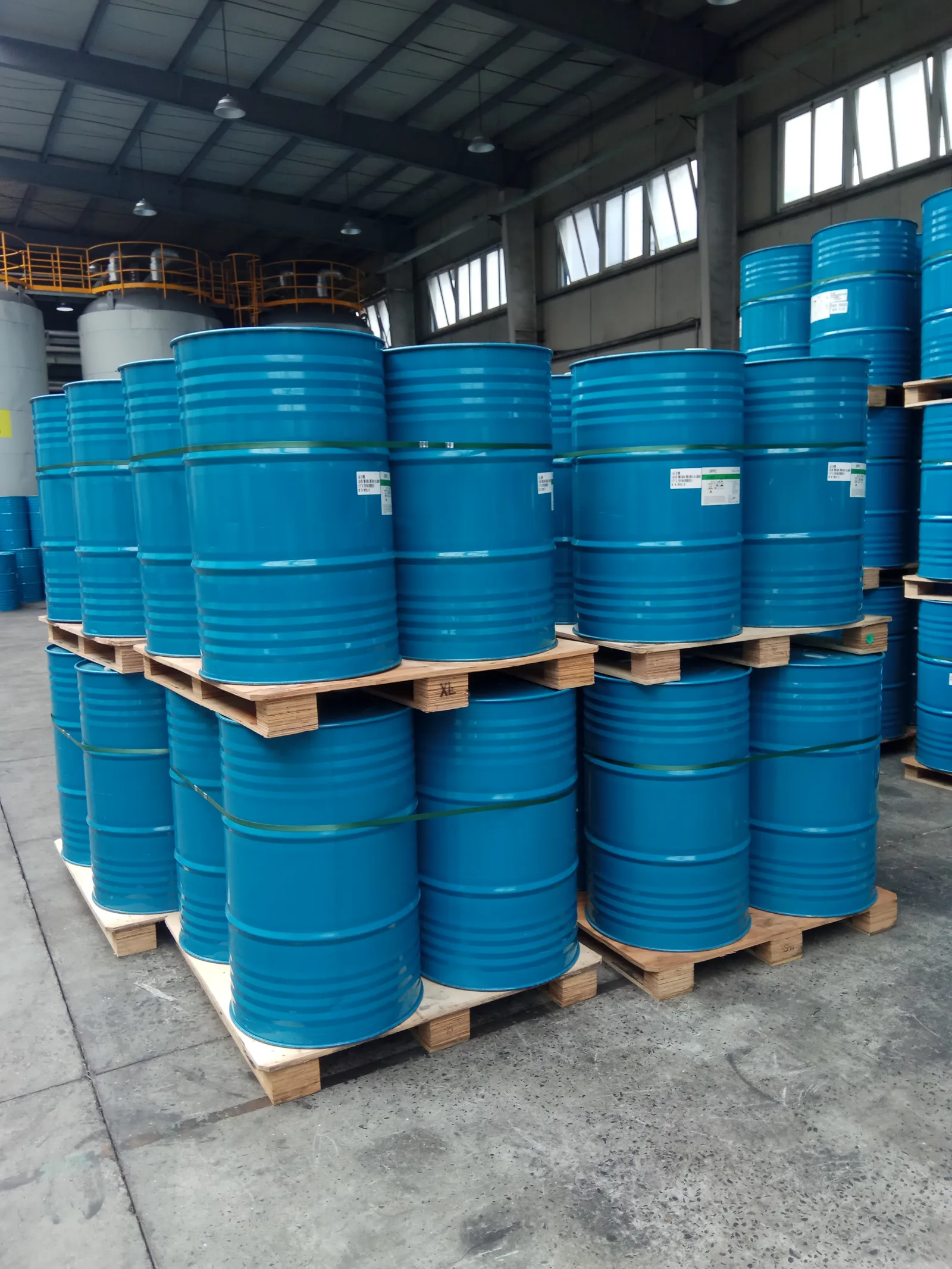
- PU raw materials — POL blend, cyclopentane and ISO, calibrated to your target k-factor and, where relevant, WHO PQS-ready density (40-50 kg/m³)
- Control cabinet with metering and closed-loop pressure control
What's Outside Our Scope — Source or Build Separately
- Vacuum-forming machine for the HIPS/ABS inner-liner and outer-shell (typical suppliers: Brown, Kiefel, Asano, or a qualified regional shell manufacturer)
- Final assembly station — handles, latches, gasket, lid hinge and any drain or brand-printing hardware, available through our hardware and accessories line if sourcing components rather than a full assembly station
- Finished-box QC and thermal validation testing (ISTA 7E / ASTM D3103 cold-life verification, drop test, water-tightness)
Production Line Layout
The PU-foaming module is one stage in a three-stage process: shells arrive pre-vacuum-formed from the buyer's own line or supplier, the foaming module clamps the inner-liner-and-outer-shell sandwich in a jig, injects and cures the PU core (60-180 seconds depending on box size and wall thickness), demoulds and trims — then the box moves downstream to the buyer's assembly station for hardware and final QC. A Tier 3 multi-jig carousel needs proportionally more SKU-changeover buffering (15-30 minutes manual changeover per jig, 3-5 minutes with a quick-change carrier upgrade) rather than more foaming stations.
PU Machine Selection Decision Tree
- Is most of your box volume under 100 L (vaccine carriers, medical samples, small consumer coolers)? → Low-pressure PU foaming machine (5-100 g/s, USD 15K-40K).
- Is most of your box volume over 100 L, or is your target output above 500 boxes/day (meal-kit, seafood export, bulk distribution)? → High-pressure PU foaming machine (200-500 g/s, USD 80K-350K) to hold cycle time.
- Are you running three or more box-size families through one plant? → Multi-jig rotary carousel with a quick-change carrier upgrade, rather than single-jig fixed stations, to keep SKU changeover under 5 minutes.
- Are you targeting vaccine or pharma tenders? → Spec the WHO PQS-ready recipe (density 40-50 kg/m³, k ≤ 0.022 W/m·K) and jig geometry from day one rather than retrofitting after prototype testing.
Raw Material Checklist
- POL blend calibrated to a k-factor of 0.022-0.024 W/m·K for vaccine, fresh-food and seafood cold-chain classes, with up to 30% recycled-polyol content available for EU Green Public Procurement preference
- Cyclopentane blowing agent (GWP 11 versus HFC-245fa's GWP 1,030), the ATEX Zone 1-ready default that meets the EU F-gas Regulation phase-out and US AIM Act schedule without retrofit
- ISO matched to your PU machine's metering system and cycle time
- Optional castor-oil-derived bio-based polyol (60-70% bio-renewable carbon content) for USDA BioPreferred or EU CBAM credit, at roughly a 5% k-factor trade-off
Staffing for the Foaming Module
The PU-foaming module itself runs lean: 1-2 operators per shift handle jig loading, PU injection monitoring and demoulding on a Tier 1-2 line. This is separate from staffing for your vacuum-forming and assembly stations, which sit outside our scope and need their own headcount — a common first-time-entrant miscalculation is budgeting total line labor only against the foaming module's 1-2 operators when the shell-forming and assembly stages typically need more.
After-Sales and Support Plan to Budget For
Standard coverage is a 24-month warranty on the mechanical structure (jig frame, clamps, drive), 12 months on electrical/PLC components and 6 months on wear parts (seals, sensors), with free remote diagnostics for 24 months. Spare parts are stocked in Shanghai, Istanbul and Dammam for 2-5 day shipping to most markets. Commissioning includes 3-5 days of operator training plus a one-week pilot production run, with engineer follow-up at month 3 and month 12 — budget for this training window in your own hiring timeline, since it covers the PU foaming process only, not vacuum-forming or assembly operator training.
FAQ
FAQ
How much does a portable icebox / insulated-box PU foaming line cost?
Entry-tier (single box-size family, low-pressure machine, 300-600 boxes/day) runs USD 45,000-95,000. A multi-segment Tier 2 line (high-pressure machine, 3-5 box variants, 600-1,500 boxes/day) runs USD 150,000-320,000. A full-range Tier 3 line (dual-injection high-pressure, custom multi-jig carousel, 1,500-3,000+ boxes/day) runs USD 320,000-650,000. This covers the PU foaming machine, jigs and first raw-material lot — vacuum-forming and assembly equipment are separate.
What's the difference between low-pressure and high-pressure PU foaming for insulation boxes?
Low-pressure (5-100 g/s, USD 15,000-40,000) suits boxes under 100 L such as vaccine carriers and small consumer coolers. High-pressure (200-500 g/s, USD 80,000-350,000) suits boxes over 100 L or any line targeting 500+ boxes/day, holding cycle time on larger cavities. Box volume, not daily unit count alone, is what decides the pressure class.
Do you supply the vacuum-forming machine and finished coolers?
No. Our scope is the PU foaming module — the machine, cast-aluminium foaming jigs, PU raw-material recipe and commissioning. Vacuum-forming the inner and outer shells, final assembly (handles, latches, gasket, lid) and finished-box QC are sourced or built separately by the buyer. We provide a reference BOM so you can source the rest of the line.
How long does it take from contract to line commissioning?
90-120 days for the PU foaming module: jig fabrication runs 4 weeks for standard box sizes or 4-6 weeks for custom geometries, in parallel with PU machine build. Commissioning includes 3-5 days of operator training and a one-week pilot run. Vacuum-forming and assembly setup is a buyer-managed parallel track outside this timeline.
Can one production line make vaccine, seafood and meal-kit boxes together?
Yes, on a multi-jig rotary carousel — the PU foaming process is the same across segments, with the recipe (k-factor, density) and jig cavity changing per box type. A Tier 2 or Tier 3 line with a quick-change jig carrier keeps SKU changeover to 3-5 minutes between box families.
What's the WHO PQS certification path and cost for vaccine carriers?
Roughly USD 25,000-50,000 and 8-12 months: our scope covers the PU recipe and jig geometry that meet the thermal target (5-day cold-life at 43°C, k ≤ 0.022 W/m·K); the buyer's scope covers lab submission (Intertek, SGS or TÜV Rheinland), the WHO PQS application and hosting the roughly 3-day factory audit. First-year UNICEF/Gavi tender ROI typically runs 3-5× the certification spend.
How many operators does the foaming module need?
1-2 operators per shift for jig loading, PU injection monitoring and demoulding on a Tier 1-2 line. This does not cover staffing for vacuum-forming or assembly, which are separate stages with their own headcount needs outside our scope of supply.
What wall thickness and foam density do I need for a specific ice-retention target?
It depends on the temperature tier: chilled (+2°C to +8°C) needs 30-50 mm wall for 24-72 hour hold; frozen (-18°C to -25°C) needs 50-80 mm for 48-96 hours; deep-frozen (-40°C to -60°C) needs 80-120 mm for 96-160 hours; ultra-low (-70°C to -86°C) needs a 150mm+ PU+VIP hybrid composite. Larger boxes hold longer at the same wall thickness due to a lower surface-to-volume ratio — we co-spec wall and foam density against your target box volume and lane profile.
Is the line EU Ecodesign 2027 ready?
Yes. Recycled-polyol content up to 30%, cyclopentane-only blowing (no HFC, no HFO), and a box design that disassembles in under 60 seconds for end-of-life recycling are all available on the standard recipe and jig spec. We supply the compliance dossier template — recycled-content declaration, bio-based feedstock certificates and disassembly SOP — with EU-bound lines.
Can an existing refrigerator or freezer cabinet foaming line be converted to insulation-box production?
Partially. General PU metering and foaming-process know-how carries over, but insulation-box production needs its own jig tooling sized to 10-600 L box cavities (versus cabinet moulds), a different pressure-class decision based on box volume rather than cabinet size, and — unlike a cabinet line — an explicit hand-off to a separate vacuum-forming and assembly stage that a refrigerator line typically doesn't have. Closer to an added tooling investment than a straight conversion.
Related engineering deep-dives
For the engineering reasoning behind why a portable icebox's PU foam is the entire product rather than a helper to a compressor — ice-retention hours, load-bearing density and water absorption — see Icebox Foam: Why the PU Foam Core Is the Whole Cooler. For the underlying density-versus-k-factor trade-off referenced throughout this guide, see PU Foam Density and K-Factor for Cold-Chain Insulation. For the low-pressure-versus-high-pressure machine-class decision, see High-Pressure vs Low-Pressure PU Foaming Machine.
Ready to scope your portable icebox or insulated-box PU foaming line? Talk to our engineering team with your target segment mix, box-volume range and daily output — we reply with a jig-count recommendation, PU machine sizing and realistic timeline within three business days, or browse the portable icebox manufacturing solution page for the full scope-of-supply breakdown.
Produits mentionnés dans cet article
Prêt à planifier votre projet frigorifique ?
Indiquez-nous votre objectif de production et votre gamme de produits — notre équipe répond avec un plan de capacité et un devis sous trois jours ouvrés.
Demander un devis techniqueArticles associés
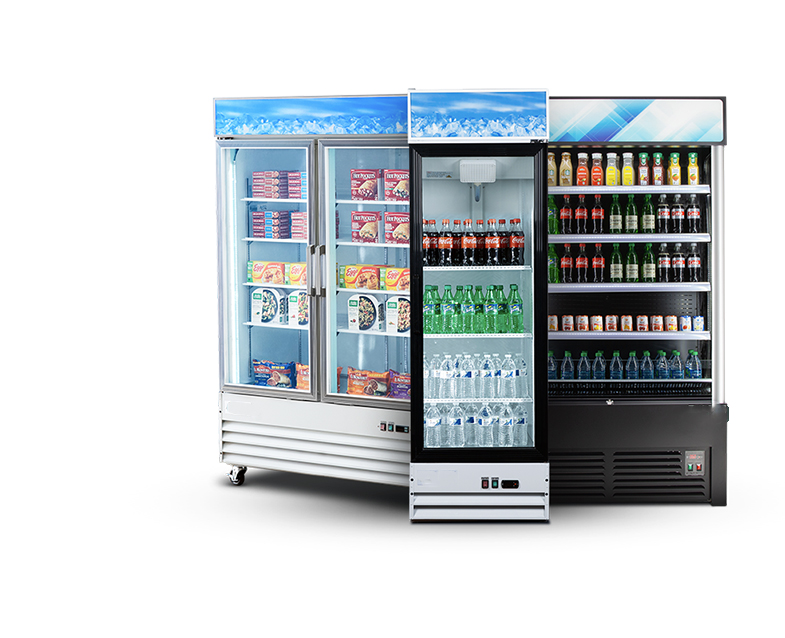
Beverage Cooler Production Line — Cost, Payback & Turnkey Setup (2026 Pillar Guide)
Investment tiers from a single-door entry line to a full bottler-program build, the payback math behind a 3,000-unit/day line, and the complete equipment list and certification checklist a beverage cooler OEM needs to go from contract to first shipment.
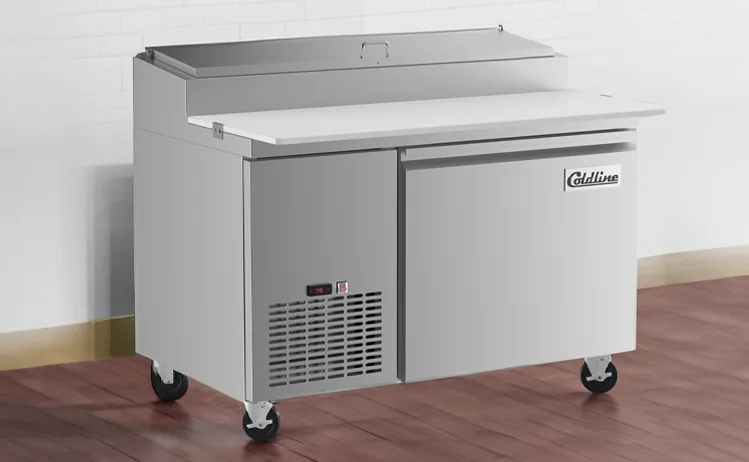
Chef Base Production Line: Cost, Break-Even & Turnkey Manufacturing (2026 Pillar Guide)
Investment tiers, the break-even math behind an 800-unit/day line, and the full equipment list and certification checklist a foodservice OEM needs to start chef base and refrigerated-counter production.
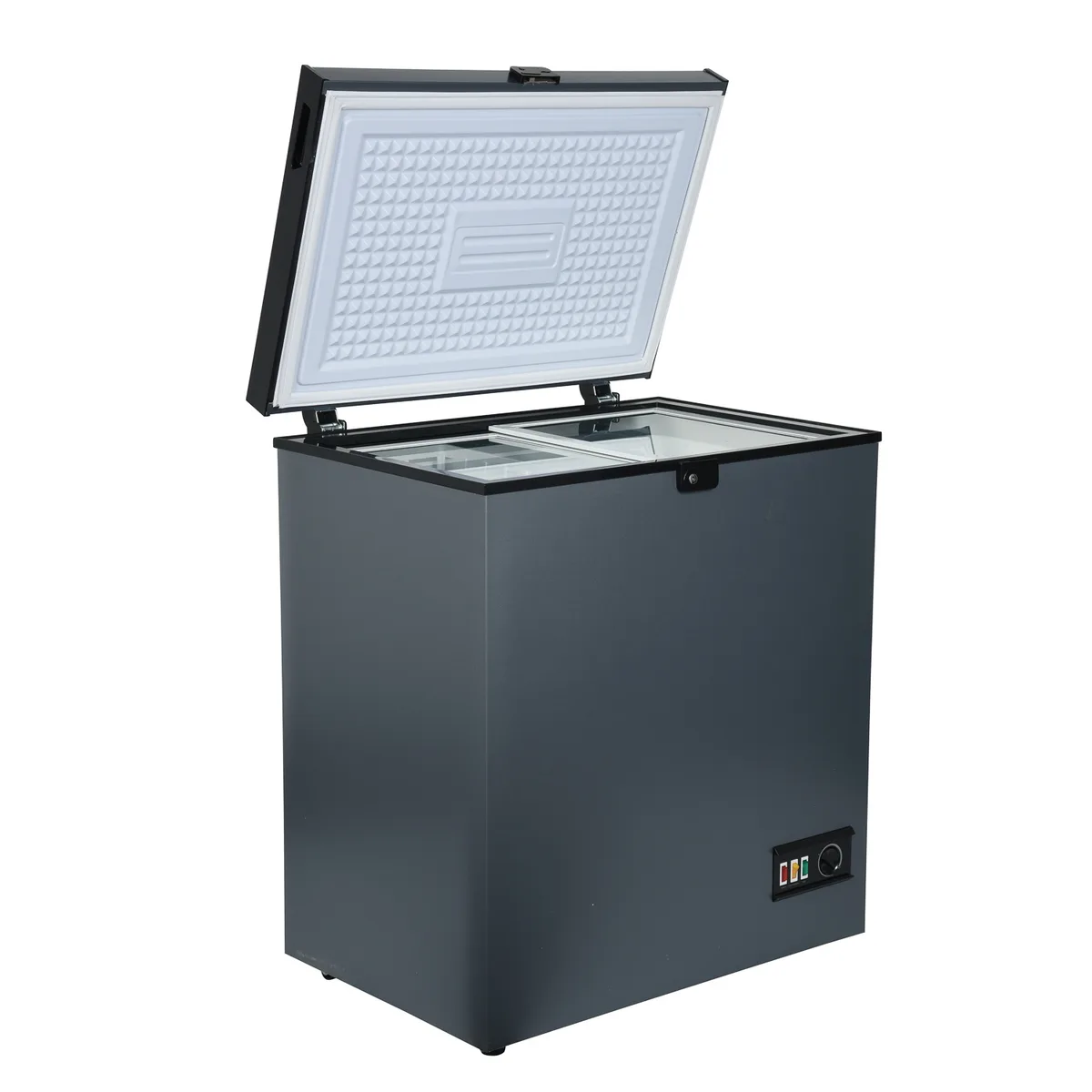
Chest Freezer Production Line — Cost, Capacity & Turnkey Factory Setup (2026 Pillar Guide)
Investment tiers from a 300-unit/day entry line to a 3,000-unit/day ultra-low-temperature build, the ATEX and Ecodesign pitfalls that stall first-time freezer OEMs, and the complete equipment list, mould selection logic and staffing plan needed to go from contract to first accepted cabinet.