
Refrigerator Liner Thermoforming Equipment & Machine [2026]: ABS vs HIPS, 5-Stage Process
Refrigerator thermoforming machine market guide: compare liner equipment options, ABS vs HIPS materials, 5-stage process, and USD costs for 2026 buyers.
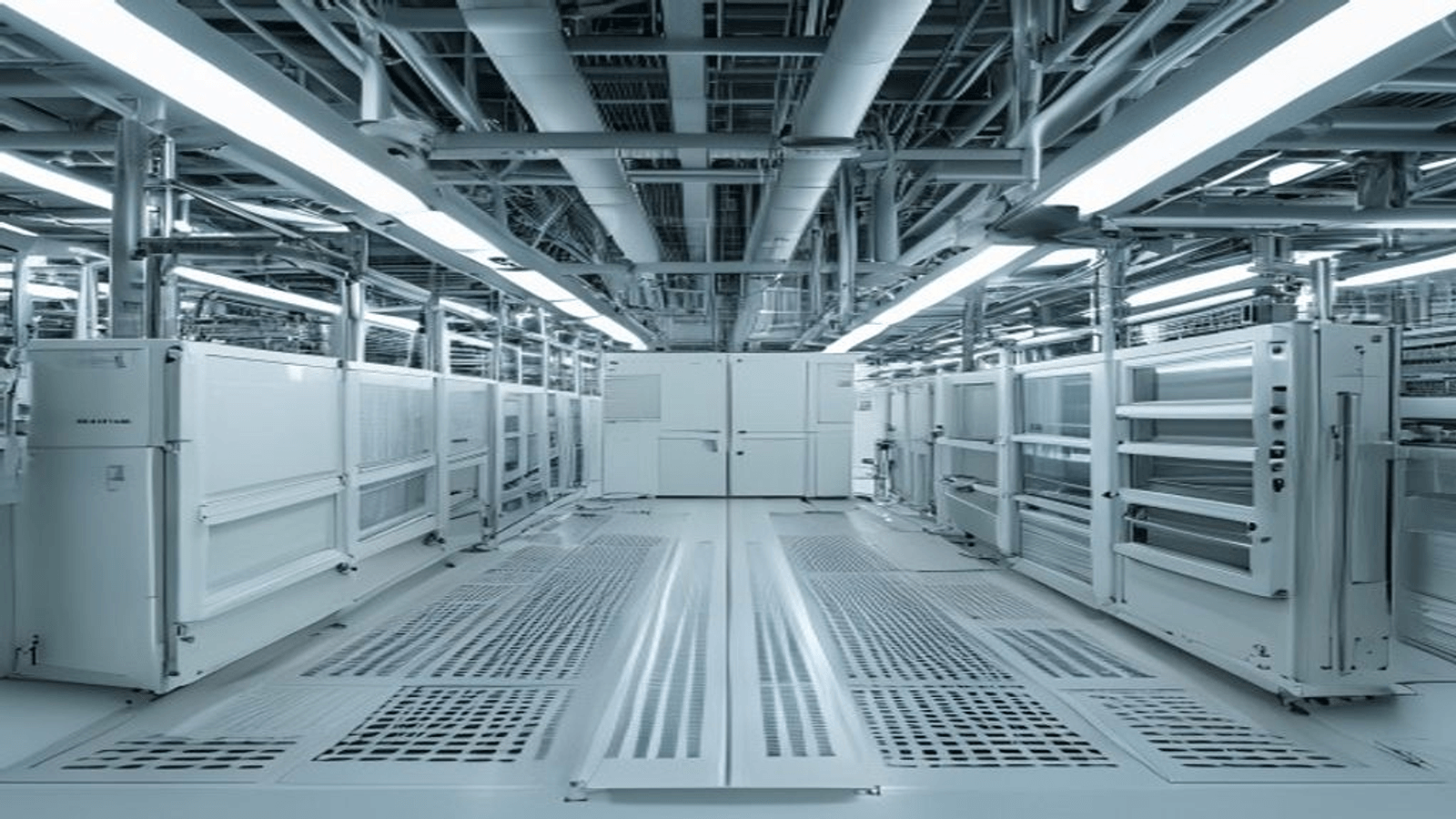
ABS (USD 1.8–2.5/kg, HDT 90–105 °C) is mandatory for commercial and premium domestic refrigerators — 2.5× the impact strength and superior chemical resistance vs HIPS (USD 1.2–1.6/kg, HDT 75–85 °C). The 5-stage process: sheet extrusion → IR heating → vacuum forming (20–40 s/cycle) → cooling & CNC trimming → QC (ultrasonic wall thickness ≥ 60 % of original). Twin-station semi-auto thermoformer (USD 80K–150K) suits 300–500 units/day. Keep regrind ≤ 20 % ABS / 25 % HIPS; pre-dry ABS at 80 °C if RH > 60 %.
Refrigerator thermoforming machine market: who's buying and why (2026)
Buyers researching the refrigerator thermoforming machine market fall into three groups: refrigerator and freezer OEMs adding or upgrading liner-forming capacity for a new model line, regional assembly plants integrating a complete cold chain production line rather than sourcing liners from a third party, and factories replacing an aging single-station machine to raise output past 300–500 units/day. This is a production-line equipment market, not a market for finished liner parts — buyers are evaluating machines, moulds and tooling as a capital purchase, not sourcing components. For a broader view of demand across the cold chain sector, see our cold chain equipment market outlook. The rest of this guide covers the equipment selection details: ABS vs HIPS materials, the 5-stage process, and machine specifications.
Why the inner liner determines refrigerator quality
The thermoformed liner is the first component a consumer touches when opening a refrigerator door. It defines shelf layout, interior volume utilisation and perceived build quality — yet it receives far less engineering attention than compressors or insulation foam. Getting the liner wrong causes three costly problems:
- Warping after foaming — if the sheet cannot withstand PU foam exotherm (60–80 °C peak), the liner deforms and the door gasket no longer seals. Warranty return rates jump 3–5 × on affected batches.
- Stress cracking — cheap HIPS cracks at hinge mount points after 2–3 years. Premium ABS resists cracking 5 × longer under the same cyclic stress.
- Chemical attack — the liner must resist prolonged contact with food acids, cleaning agents and PU blowing agent residues. Material selection must meet ISO 23953 refrigerated display cabinet standards and relevant ASTM optical/mechanical testing requirements — it is an engineering decision.
ABS vs HIPS: the two dominant liner materials compared
| Property | ABS | HIPS |
|---|---|---|
| Tensile strength | 40–55 MPa | 20–35 MPa |
| Impact resistance (Izod) | 200–400 J/m | 80–150 J/m |
| Heat deflection (HDT) | 90–105 °C | 75–85 °C |
| Chemical resistance | Good (resists food acids, detergents) | Moderate (sensitive to fats, oils) |
| Thermoforming window | 150–180 °C | 130–160 °C |
| Sheet cost (per kg) | USD 1.8–2.5 | USD 1.2–1.6 |
| Typical application | Premium domestic, all commercial | Economy domestic, single-door |
Rule of thumb: if the refrigerator retails above USD 300 or serves a commercial environment, use ABS. For economy models in price-sensitive markets (South Asia, Africa), HIPS offers 30–40 % sheet cost savings while meeting basic performance requirements.
Some manufacturers use ABS/PMMA co-extruded sheet — a 0.1 mm PMMA skin gives a high-gloss finish without the full cost of solid ABS. This is increasingly common in side-by-side models where interior aesthetics drive purchase decisions.
5-stage thermoforming production process
- Sheet extrusion — a single-screw or twin-screw extruder melts ABS/HIPS pellets into continuous sheet (1.5–3.0 mm thick, 600–1200 mm wide). Co-extrusion adds a surface layer in-line. Sheet is calendered to ± 0.05 mm thickness tolerance and wound onto rolls or cut to blanks.
- Sheet heating — infrared ceramic heaters or quartz halogen heaters bring the sheet to forming temperature. ABS needs 150–180 °C; HIPS needs 130–160 °C. Heating uniformity (± 3 °C across the sheet) is critical — hot spots cause thin spots in the final part.
- Vacuum forming — the heated sheet is stretched over a vacuum forming mould while vacuum (0.06–0.09 MPa) pulls it into every detail. Plug-assist is used for deep draws (depth-to-width ratio > 0.5) to prevent excessive thinning at corners. Typical cycle: 20–40 seconds per cavity.
- Cooling and trimming — compressed air or water-cooled mould channels cool the formed liner below HDT within 15–25 seconds. A CNC router or die-cut press trims the flange to final dimensions (± 0.3 mm). Scrap rate target: ≤ 8 % (scrap is re-ground and blended back at 15–20 % ratio).
- Quality inspection — each liner undergoes wall thickness measurement (ultrasonic gauge, minimum at deepest draw point must be ≥ 60 % of original sheet thickness), visual defect check and dimensional verification against the mould master.
Refrigerator liner thermoforming machine specifications
A refrigerator liner thermoforming machine is classified by station count and forming area — the table below groups the three machine classes a liner factory typically evaluates, from single-station manual to rotary 3-station auto.
| Machine type | Forming area | Cycle time | Budget (USD) |
|---|---|---|---|
| Single-station manual | 1200 × 800 mm | 60–90 s | 25,000–50,000 |
| Twin-station semi-auto | 1500 × 1000 mm | 35–50 s | 80,000–150,000 |
| Rotary 3-station auto | 2000 × 1200 mm | 20–35 s | 200,000–400,000 |
For a factory producing 300–500 refrigerators per day, a twin-station semi-automatic thermoformer paired with two sets of vacuum forming moulds (one for fresh-food compartment, one for freezer) is the most cost-effective setup. The moulds need replacement every 80,000–120,000 cycles — plan mould changeover into your production line capacity model.
Whether you call it thermoforming equipment or a thermoforming machine, buyers evaluating either term are asking about the same production asset. A complete unit is not a single machine but a set of subsystems: the IR/quartz heating bank, the forming station with vacuum/plug-assist tooling, and the cooling and CNC trimming station downstream. When you request a quote for this equipment, ask your supplier to itemise all three subsystems plus the mould set — sourcing them as a single production-line package avoids interface mismatches between heater output, forming cycle time and mould cavity count. The specification table above covers the parameters that matter regardless of which term you search for.
4 mistakes that raise liner reject rates above 10 %
- Uneven sheet heating — replacing burned-out heater elements one at a time instead of in zones creates 10–15 °C variation. Solution: map heater output with an IR camera monthly and replace in complete zones.
- Wrong regrind ratio — exceeding 20 % regrind in ABS or 25 % in HIPS degrades impact strength below spec. Track regrind by weight, not volume.
- Skipping plug-assist calibration — plug temperature and travel speed must be re-calibrated whenever sheet thickness or material grade changes. A cold plug sticks; a hot plug marks the surface.
- Ignoring ambient humidity — ABS absorbs moisture (0.2–0.4 % by weight). Sheet stored > 48 hours without dehumidification shows bubbles during heating. Pre-dry at 80 °C for 2–4 hours if ambient RH > 60 %.
For a detailed comparison of vacuum forming moulds and foaming moulds used in refrigerator production, see our Vacuum Forming vs Foaming Mould guide. If you are evaluating the PU foam system that bonds to the thermoformed liner, understanding the liner's heat resistance is essential to avoiding deformation.
Building a factory? See our production line guide → For a complete plant, browse our refrigerator manufacturing solutions, or send us your liner specification for a thermoforming mould quote.
What is the difference between ABS and HIPS for refrigerator liners?
ABS (Acrylonitrile Butadiene Styrene) offers superior impact resistance, chemical resistance and surface gloss, making it the standard for household refrigerator liners. HIPS (High Impact Polystyrene) costs 15–25% less and is easier to thermoform, making it suitable for commercial display cabinets and cost-sensitive markets. ABS dominates in premium and export models; HIPS is common in budget and commercial applications.
What sheet thickness is standard for refrigerator liner thermoforming?
Standard refrigerator liner sheet thickness is 1.5–2.5 mm before forming. After thermoforming, wall thickness at corners and deep-draw areas reduces to 0.6–1.0 mm. Thicker starting sheets (2.0–2.5 mm) are used for larger cabinets and deep-draw designs where corner thinning is more severe.
How fast can a thermoforming machine produce refrigerator liners?
A single-station vacuum forming machine produces 30–60 liners per hour depending on sheet size and forming depth. Twin-sheet thermoforming machines or multi-station rotary machines can reach 80–120 liners per hour. For a 1,000 unit/day factory running two shifts, one high-speed machine or two standard machines typically provide sufficient capacity.
What's included in a complete refrigerator liner thermoforming equipment package?
A complete package covers four items: the thermoformer itself (heating bank, forming station, cooling/trimming station), a matched set of vacuum forming moulds for the compartments you produce, plug-assist tooling sized to your deepest draw, and CNC trimming fixtures for the flange profile. Buyers who source only the base machine and add moulds separately often hit cycle-time mismatches between the two. Send us your liner specification and we will quote the full package.
What causes reject rates above 10% in liner thermoforming?
The four most common causes are: uneven sheet heating (10–15 °C variation across heater zones), excessive regrind ratio (above 20% for ABS or 25% for HIPS), incorrect plug-assist calibration after material grade changes, and moisture absorption in ABS sheet stored above 60% relative humidity without pre-drying. Monthly IR camera mapping of heater zones and strict regrind tracking by weight prevent most quality issues.
Can regrind material be reused in refrigerator liner production?
Yes, within strict limits. ABS regrind should not exceed 20% of the total sheet blend, and HIPS should not exceed 25%. Beyond these ratios, impact strength drops below specification. Regrind must be tracked by weight (not volume), dried before re-extrusion, and tested for melt flow index consistency. Many factories maintain separate regrind silos per material grade to prevent cross-contamination.
Готовы спланировать холодильный проект?
Поделитесь целевым объёмом и номенклатурой — наша инженерная команда ответит с планом мощности и коммерческим предложением в течение трёх рабочих дней.
Запросить инженерное предложениеПохожие статьи
Cold Room Panel Manufacturers in the UAE: Why "Civil Defence Approved" Is Not One Question
In the UAE, a panel's paperwork has to satisfy a federal code, a product certification scheme, and an emirate-level listing — and Abu Dhabi has just formalised 54 local amendments of its own. A brochure line reading "Civil Defence approved" answers none of those three. Here is what to ask instead, why a European supplier's fire pack is the wrong currency here, and what a 45°C ambient does to the thickness you thought you needed.
Converting a Refrigerator Foaming Line to Cyclopentane: Retrofit vs New Machine, Cost and Timeline
Switching from HFC-245fa to cyclopentane is an equipment and safety-infrastructure project, not a raw-material swap. Here's how to decide between retrofitting an existing foaming machine and buying a new cyclopentane-ready one, what the safety infrastructure actually costs, and a realistic project timeline.
Freezer Mould Selection Guide: Chest vs Upright vs Display Cabinet
A freezer mould is not one product — chest (horizontal), upright and display (island / glass-door) freezers each need a different mould geometry, clamping load and cure schedule. This guide picks the right freezer mould family by cabinet size, volume and operating temperature.