
Vacuum Forming vs Foaming Moulds for Refrigerator Production — a Practical Comparison
Two very different moulds, one production line. Here is how we help factory owners choose between them — with precision specs, lifespan, lead time and typical budget.
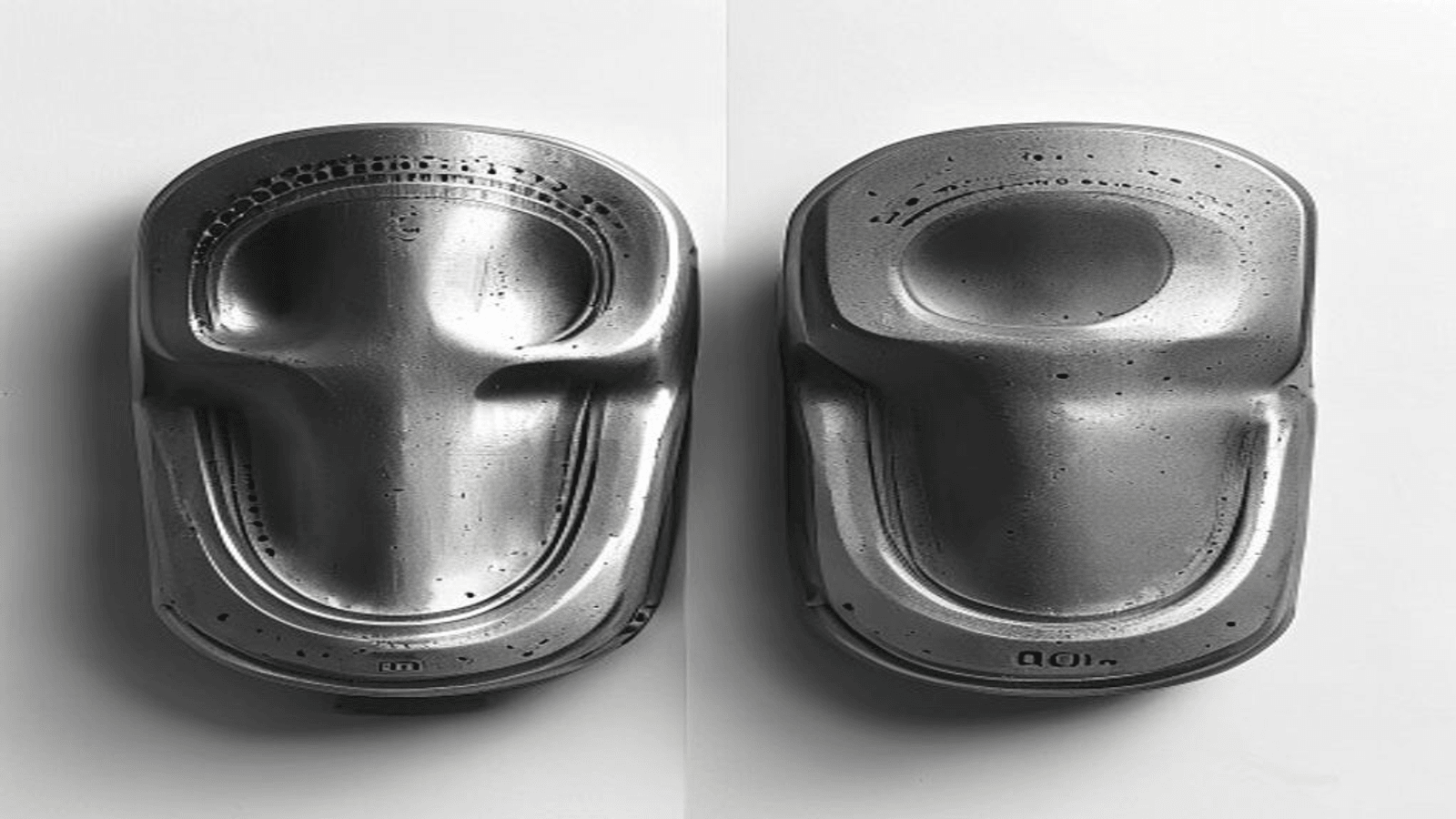
Vacuum forming moulds shape the visible plastic liner at ±0.05 mm precision with 1M+ cycle lifespan. Foaming moulds are Q345 steel structures that clamp the cabinet during PU cure. For a mid-range line, combined tooling budget is USD 130K–370K. Aluminium vacuum moulds fit volumes under 300K units/year; P20 steel for higher output.
Two mould types, one production line
A refrigerator body looks simple from the outside, but under the laminated skin there is a dance between two very different moulds. Vacuum forming moulds shape the thin thermoplastic liner that becomes the inner compartment, and foaming moulds hold the cabinet in place while polyurethane foam cures inside the wall cavity. The two operations happen on the same production line, often minutes apart, yet buyers repeatedly confuse what each mould does, what precision class they need, and how much to budget for each.
This guide is written for factory owners, plant engineers and OEM project managers preparing to quote a new refrigerator, freezer or commercial cooler line. We cover the physical differences, typical precision tolerances, lifespan, and the decision tree we walk through with clients before we issue a quote.
What a vacuum forming mould actually does
Vacuum forming moulds take a pre-heated ABS or HIPS sheet and pull it over the mould cavity under negative pressure. The liner takes its shape in 30–60 seconds, depending on sheet thickness and mould temperature. The finish of the liner — its texture, gloss, and dimensional accuracy — is entirely determined by the mould surface.
- Material: Aluminium alloy (A7075 or similar) for fast heat transfer, or P20 tool steel for high-cycle production. We usually recommend aluminium for volumes under 300,000 units per year and P20 for higher output.
- Typical precision: ±0.05 mm on cavity dimensions; surface finish polished, sandblasted or etched-texture depending on the refrigerator brand's design language.
- Temperature management: integrated oil channels or electric heaters keep the mould in the 60–90 °C range.
- Typical lifespan: 1,000,000+ cycles with scheduled polish re-work every 200,000 cycles.
A vacuum forming mould for refrigerator liner is typically the slowest-to-design part of a new line because the inner geometry — shelf rails, evaporator pocket, bottle racks — is brand-specific and rarely reusable across models.
What a foaming mould does (and why it is different)
Once the liner is bonded to the outer steel cabinet, the cavity between them needs to be filled with rigid polyurethane foam for insulation — its thermal performance is tested per ASTM C518 (the foam specification is covered in our PU foam density and K-factor guide, and the choice of blowing agent — cyclopentane, HFC-245fa or HFO — each regulated under US EPA SNAP — also affects cure time and mould temperature settings). The foaming mould clamps the cabinet from all sides during injection and cure, preventing the cabinet from bowing outward under 5–50 tons of foam expansion pressure.
- Material: Welded Q345 steel structure. Unlike vacuum forming moulds, foaming moulds do not need a mirror finish — they never touch the visible surface.
- Clamping force: 5–50 tons hydraulic or pneumatic, depending on cabinet size.
- Temperature control: the platen is held at 40–55 °C ± 2 °C to accelerate cure and maintain consistent foam density.
- Cycle time: 4–8 minutes per cabinet, dominated by foam demould time rather than mechanical motion.
A foaming mould for refrigerator cabinet is a much heavier, more industrial-looking tool than a vacuum mould, and typically occupies a larger footprint — the structural frame alone can weigh 3–8 tons for a standard 200 L refrigerator.
Side-by-side: the decision table
Here is the comparison we run with clients on day one of a quotation:
| Dimension | Vacuum Forming Mould | Foaming Mould |
|---|---|---|
| Purpose | Shape the plastic liner | Clamp cabinet during PU cure |
| Precision | ±0.05 mm | ±0.5 mm on cabinet geometry |
| Typical material | Aluminium A7075 / P20 steel | Q345 welded steel |
| Surface finish | Polished / textured | Not visible, no polish required |
| Cycle time | 30–60 seconds | 4–8 minutes |
| Lifespan | 1,000,000+ cycles | 300,000+ cycles |
| Lead time | 45–75 days | 60–90 days |
How to choose: a practical decision tree
If you are buying only one mould first (because you already have the other somewhere in your supply chain), here is a quick decision tree:
- Is the product volume known? Under 50,000 units/year, start with aluminium vacuum forming to keep investment low. Above 300,000 units/year, invest in P20 steel for the vacuum mould — it will outlast 3–5 cheaper moulds.
- Is the cabinet geometry standardised or custom? Standardised sizes (household 180 L, 200 L, 250 L) often have off-the-shelf foaming moulds with 30-day lead times. Custom sizes push foaming mould lead time to 90 days.
- Do you own the inner liner design IP? If yes, the vacuum forming mould is the more critical tool — it defines your visible product. If your design is supplier-provided, the foaming mould becomes the main bottleneck for line throughput.
- How much floor space do you have? Foaming moulds are heavy and require reinforced foundation. Plan 30–40 m² per foaming station.
What to ask a mould supplier before committing
- Exact alloy specification for aluminium moulds (A7075 vs A6061 — the 7xxx series is significantly more durable).
- Heat-treatment record for steel mould bases.
- FAT (Factory Acceptance Test) protocol and sample part approval before shipment.
- Spare parts availability (heating elements, seals, hydraulic pistons — 5-year minimum).
- On-site installation and first-production support (typically 5–10 engineer-days).
Budget reality check
For a mid-range refrigerator line producing 500–2,000 units/day, clients typically invest:
- Vacuum forming mould set (liner + door + shelf insert): USD 45,000 – 120,000
- Foaming mould set (cabinet + door): USD 80,000 – 250,000
- Combined tooling budget: USD 130,000 – 370,000
This excludes the vacuum forming machine itself, the high-pressure PU foaming machine, conveyor systems, and the balance-of-plant. Not sure whether high-pressure or low-pressure foaming suits your line? See our high-pressure vs low-pressure PU foaming machine comparison. For full-line planning and investment breakdown, see our refrigerator production line setup guide, or contact our engineering team with your target daily output and cabinet size range.
Building a factory? See our production line guide → For a complete plant, browse our refrigerator manufacturing solutions, or talk to our mould engineers about your cabinet spec.
What is the difference between vacuum forming moulds and foaming moulds?
Vacuum forming moulds shape heated plastic sheets (ABS or HIPS) into refrigerator inner liners using vacuum suction, while foaming moulds hold the liner-shell assembly in place as PU foam is injected between them. One shapes plastic, the other shapes insulation — both are required for a complete refrigerator production line.
How long does a refrigerator vacuum forming mould last?
A well-maintained aluminium vacuum forming mould (A7075 alloy) typically lasts 300,000–500,000 cycles. At 1,000 units per day, that is roughly 1–1.5 years before rework or replacement is needed. Steel-base foaming moulds last significantly longer at 500,000–1,000,000+ cycles.
Can one factory use both vacuum forming and foaming moulds on the same line?
Yes — and virtually every refrigerator factory does. The vacuum forming station and foaming station are separate stages on the same production line. We supplies both as part of a turnkey package, ensuring dimensional compatibility between the liner mould and the cabinet foaming mould.
What materials are used for refrigerator moulds?
Vacuum forming moulds are typically machined from A7075 aluminium alloy for thermal conductivity and precision (±0.05 mm). Foaming moulds use P20 or S50C tool steel for the base frame and aluminium inserts for the cavity. Higher-volume lines may use beryllium copper inserts for faster heat dissipation.
How much does a complete refrigerator mould set cost?
A mid-range mould set for a 500–2,000 unit/day refrigerator line typically costs USD 130,000–370,000 for the combined tooling (vacuum forming moulds USD 45,000–120,000 plus foaming moulds USD 80,000–250,000). This excludes the forming machines, foaming machines and balance-of-plant.
Ready to plan your refrigeration project?
Share your target output and product mix — our engineering team replies with a capacity plan and quote within three business days.
Get an engineering quoteRelated articles
Cold Room Panel Manufacturers in the UAE: Why "Civil Defence Approved" Is Not One Question
In the UAE, a panel's paperwork has to satisfy a federal code, a product certification scheme, and an emirate-level listing — and Abu Dhabi has just formalised 54 local amendments of its own. A brochure line reading "Civil Defence approved" answers none of those three. Here is what to ask instead, why a European supplier's fire pack is the wrong currency here, and what a 45°C ambient does to the thickness you thought you needed.
Converting a Refrigerator Foaming Line to Cyclopentane: Retrofit vs New Machine, Cost and Timeline
Switching from HFC-245fa to cyclopentane is an equipment and safety-infrastructure project, not a raw-material swap. Here's how to decide between retrofitting an existing foaming machine and buying a new cyclopentane-ready one, what the safety infrastructure actually costs, and a realistic project timeline.
Freezer Mould Selection Guide: Chest vs Upright vs Display Cabinet
A freezer mould is not one product — chest (horizontal), upright and display (island / glass-door) freezers each need a different mould geometry, clamping load and cure schedule. This guide picks the right freezer mould family by cabinet size, volume and operating temperature.