
Refrigerator Foaming Mould Case Study: Why a Russian Cabinet Maker Did Not Choose the Lowest Quote
A refrigerator and freezer manufacturer running European foaming equipment renewed its cabinet-foaming tooling from China. Midway through it received a cheaper quotation for a comparable mould. It signed with us anyway — here is the seven-month decision, with the original correspondence.
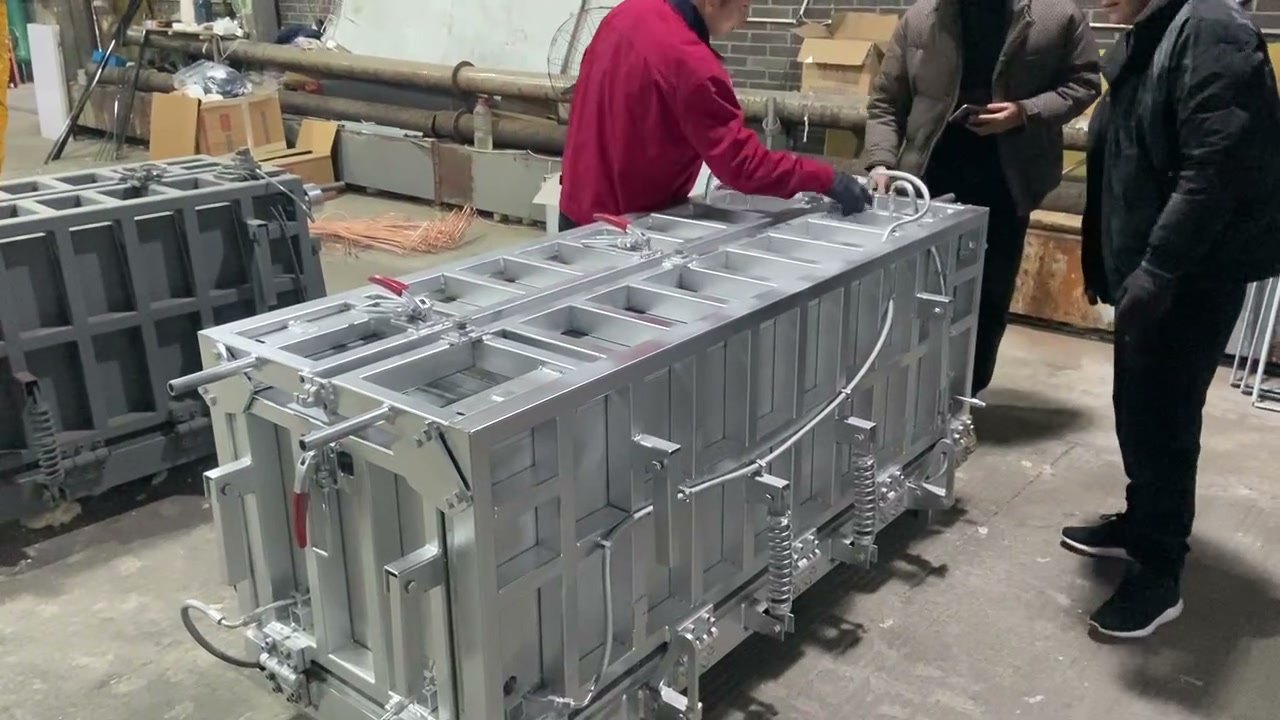
A Russian refrigerator/freezer maker on a European-brand foaming line bought a custom cabinet-foaming mould from us after a seven-month cross-border evaluation — and chose it over a lower quotation for a comparable mould. What decided it: a design built from the customer's own 3D drawing, a retractable inner-panel structure that frees demoulding clearance, a complete delivery package (lead time, packing, weight, HS code), a one-minute first reply with workshop video, and a project kept alive through a 40-day silence. Contract signed 5 May 2026; 30-working-day production cycle; 24-month warranty. Customer identity withheld by contract.
A refrigerator and freezer manufacturer in Russia, operating its own production line on European-brand foaming equipment, set out in late 2025 to renew its cabinet-foaming tooling through a cross-border purchase of PU foaming moulds from China. The procurement ran about seven months and ended with a contract signed on 5 May 2026. The option the buyer chose was not the lowest-priced one.
Project at a glance
| Customer | Refrigerator & freezer manufacturer, Russia (identity confidential) |
| Application | PU foaming of refrigerator / freezer cabinets |
| Existing line | European-brand foaming equipment |
| Product purchased | Refrigerator foaming mould with a retractable inner-panel structure |
| Project duration | About 7 months |
| Contract signed | 5 May 2026 |
| Contracted production cycle | 30 working days |
| Contracted warranty | 24 months |
For this manufacturer the decision hinged on three questions, and price was not one of them: is the supplier trustworthy, will the mould fit the existing line and reduce interference when the cabinet is demoulded, and can the purchase and delivery be kept under control.
Sourcing across borders: building trust sight unseen
For a buyer, trusting an overseas factory it has never worked with — thousands of kilometres away — is the first hurdle of any cross-border purchase.
We answered it with transparency and speed from the first contact: the buyer received a reply within one minute of its inquiry, together with the company, brand, name and title of the person it was dealing with. Before quoting, we asked for the 3D drawing of the product in production, so that the solution would start from the buyer's actual cabinet rather than a generic specification.
The quotation went out with two videos from our own workshop showing mould assembly and adjustment on the floor. For a buyer sourcing across continents, seeing the production floor is a far better basis for judging real manufacturing capability than adjectives.
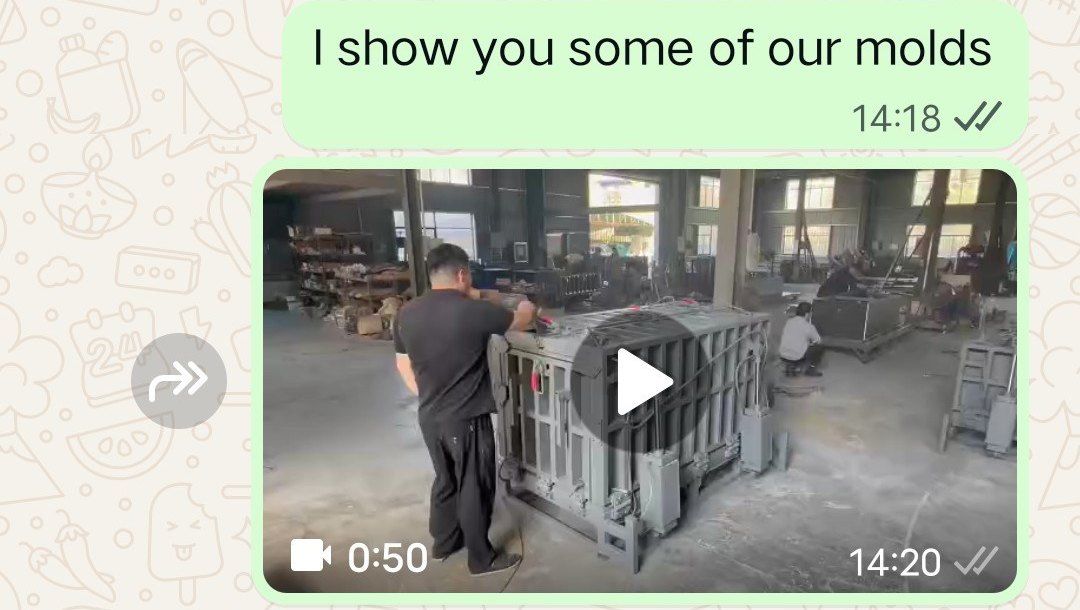
Restarting the project after a 40-day silence
Cross-border procurement cycles are long and depend on the buyer's internal scheduling. In this case communication lapsed for about 40 days.
We sent one short message to ask whether the project was still moving. The buyer replied, brought in its procurement manager with an updated requirement, and the project entered the buyer's formal purchasing process. The thread continued instead of starting over.

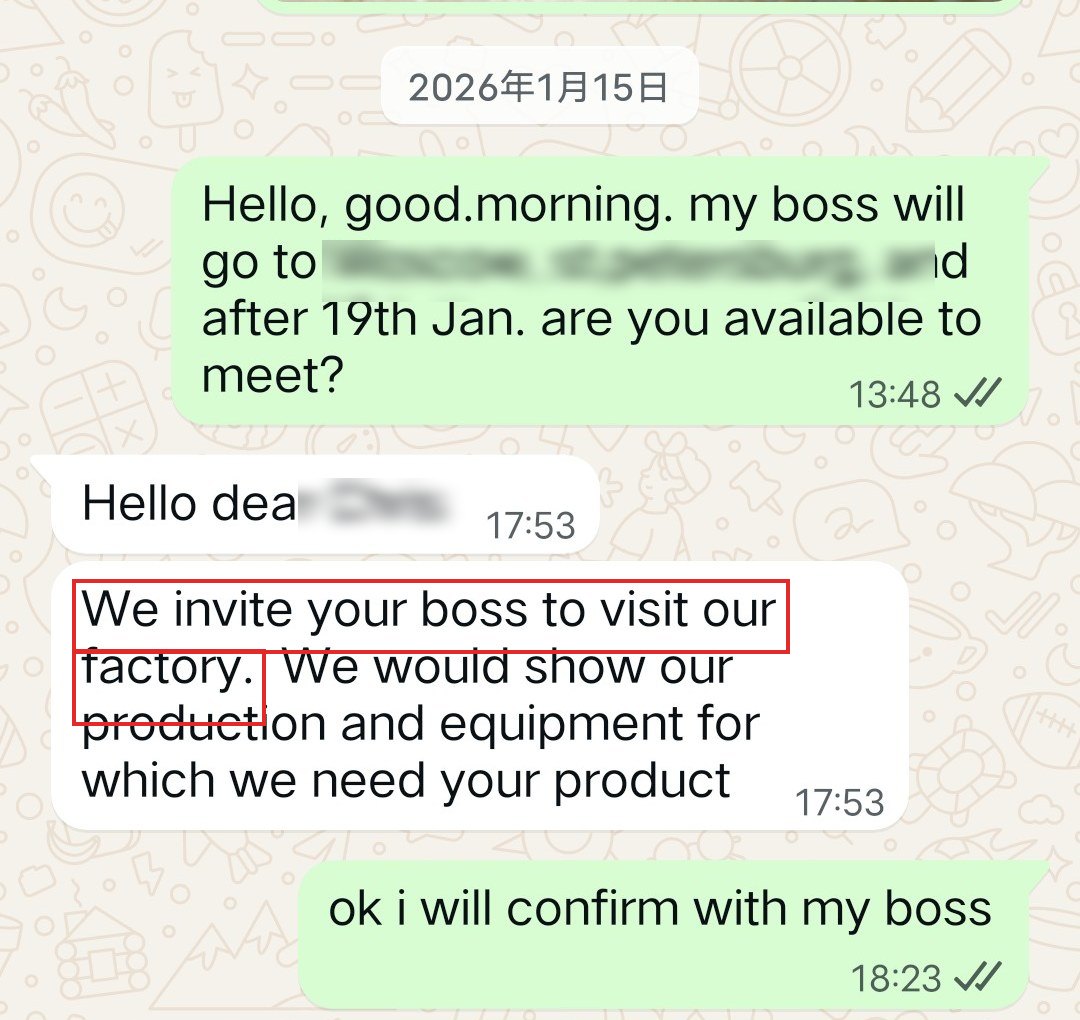
As the exchange deepened, the buyer extended an invitation of its own:
"We invite your boss to visit our factory. We would show our production and equipment for which we need your product." — the buyer
Technical selection: from "compare the price" back to "compare the structure"
Midway through, the buyer obtained a lower quotation for a comparable mould from another supplier. The two sides did not confine the conversation to unit price. They compared mould structure, the demoulding method, how the design would meet the interface and process requirements of the existing European-brand foaming equipment, and how each option would affect production rhythm and ease of operation.
The mould we offered uses a retractable inner-panel structure: after the part has foamed and cured, the inner panel retracts inward to free space for demoulding the cabinet. That reduces interference between part and mould and lets operators demould with less effort. Around this structure, our email also set out the lead time, packing dimensions, volume, weight and customs code, so the buyer could assess the complete offer.
Design objective: free demoulding clearance through a retractable inner panel, reduce interference between cabinet and mould, and support a steadier production rhythm. Actual demoulding convenience and cycle time are subject to the buyer's on-site data after commissioning.

Having assessed the structure and the fit, the buyer wrote back:
"Hi. We are ready to cooperate with you." — the buyer

The buyer weighed mould structure, line fit, supplier responsiveness and delivery control together — rather than deciding on the lowest quote alone.
From supplier selection to the start of a working relationship
In the contracting phase the parties confirmed, item by item, the technical specification, delivery method, payment arrangement, warranty period and packaging. The contract was signed on 5 May 2026: a refrigerator foaming mould with a retractable inner-panel structure, a contracted 30-working-day production cycle and a 24-month warranty.
Project status (updated August 2026): following contract signature the moulds entered the contracted 30-working-day production cycle, with factory inspection, packing and shipment following in sequence. On-site figures — actual demoulding time, output per shift, cabinet surface quality, changeover time, operator feedback — will be added after commissioning, subject to the customer's authorization.
Why the customer chose us and not the lowest quote
The outcome did not come from a lower price. It came from four things demonstrated repeatedly through the project — and they are where the real long-term cost of a mould is usually decided.
1. The mould starts from your product and your line, not a catalogue. We requested the 3D drawing of the cabinet before quoting and designed around the interface and process of the customer's existing European-brand foaming equipment. For a mould that has to join a running line, fit is designed in, not assumed.
2. Price competition gets an engineering answer, not a discount. When the lower quote appeared we re-explained how the retractable inner panel frees clearance before demoulding. That moved the decision from unit price back to engineering, and let the customer compare a complete solution rather than a single figure.
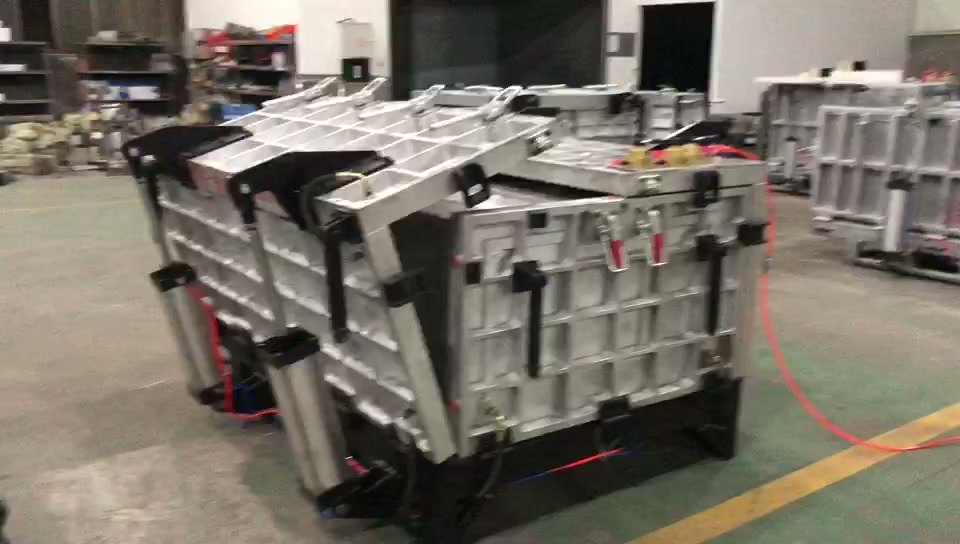
3. Capability you can verify, not claims. A one-minute reply, identity shown upfront, workshop footage sent with the quotation — a buyer thousands of kilometres away could judge manufacturing capability on evidence. The photos below are our own production floor: refrigerator foaming moulds of the same type, with ribbed side panels, cylinder-driven opening and wheeled bases.
4. Complete delivery, a controllable process, a manageable timeline. Lead time, packing dimensions, weight and customs code were given together, and the project stayed continuous through a 40-day pause, so procurement did not have to restart when it resumed. For cross-border, long-cycle industrial purchasing, that control is itself part of the value.
Put those four together and "lowest quotation" and "lowest long-term cost" stop being the same question.
Sourcing a new foaming mould for an existing refrigerator or freezer line?
Based on your cabinet 3D drawings, existing foaming equipment, demoulding method and output requirement, we can propose a customized refrigerator or freezer foaming mould. A technical assessment can start once you send:
- Cabinet 3D drawings or detailed dimensions
- Brand and model of your existing foaming equipment
- Injection method and injection-port position
- Current mould opening/closing and demoulding method
- Foaming cycle and target daily output
- Current demoulding or dimensional problems in production
- Requirements for automation, pneumatic opening and changeover
This project was handled by Chris Hu, Regional Manager. Reach the team at info@urexceed.com or WhatsApp +86 13656166310, or use the contact form. See also the structured summary on our case studies page.
Case note: at the customer's request this case withholds the customer's name, people, contact details, contract number, amounts, drawing numbers and dimensions, and the other supplier's name and quotation; the customer's market is stated as Russia. Workshop photographs are our own production floor. Quotations in English are taken from the parties' actual messages and emails; the demoulding benefit is stated as a design objective, not a verified post-commissioning result. Timeline and contract figures are customer-reported / contract terms.
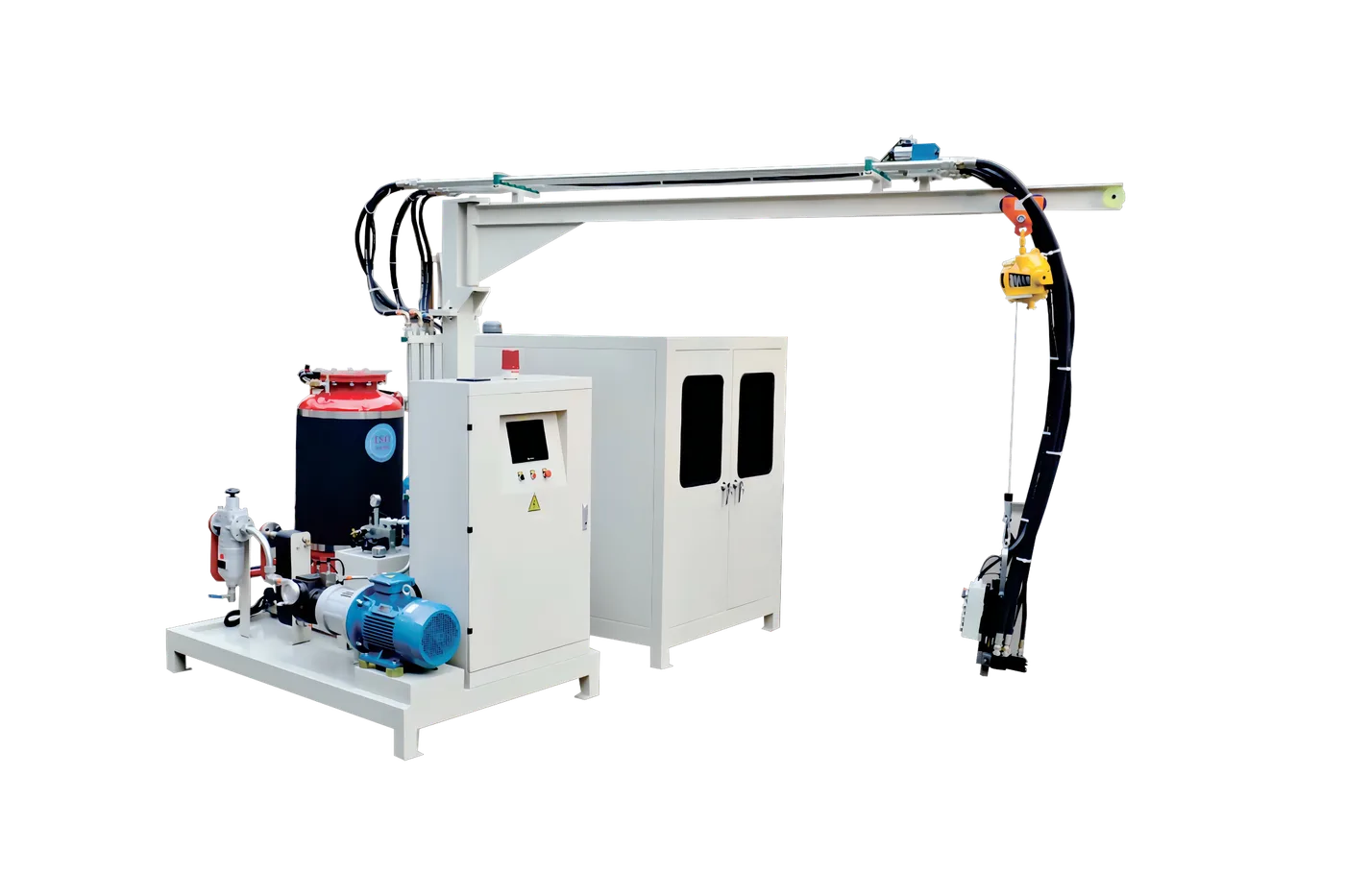
Products Mentioned in This Article
Ready to plan your refrigeration project?
Share your target output and product mix — our engineering team replies with a capacity plan and quote within three business days.
Get an engineering quoteRelated articles
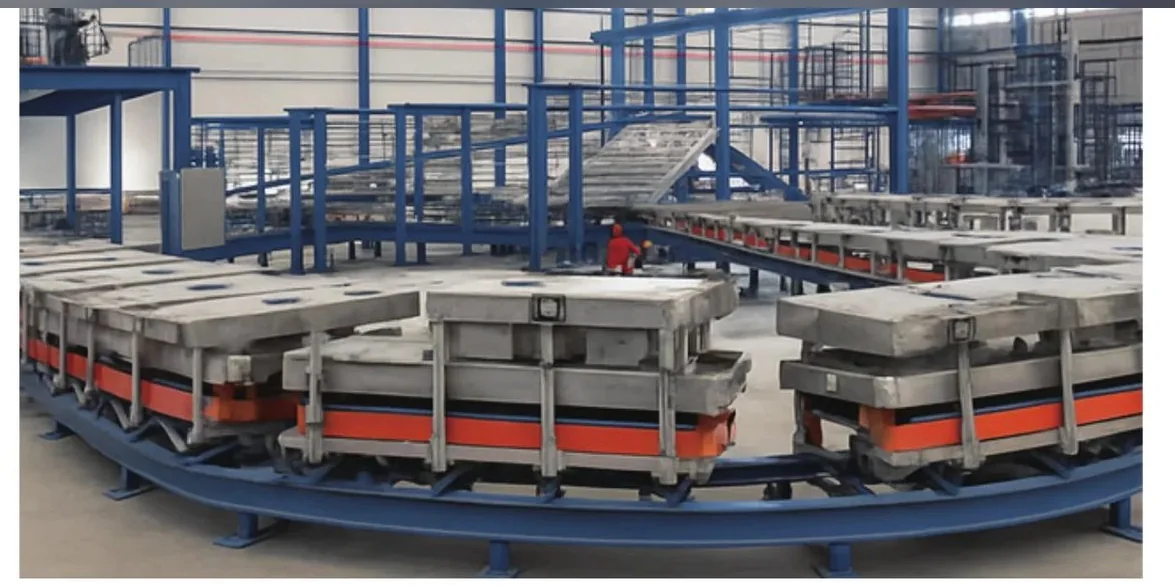
26-Station Ground-Rail Foaming Line Throughput: The Real Math Behind the Numbers
The station count in a foaming line's name is the wrong number to size capacity on. Hourly output is set by takt time and OEE; the 26 stations set curing time and work-in-process. This guide walks the actual throughput math for a closed-loop ground-rail line so you size it against your real production target.
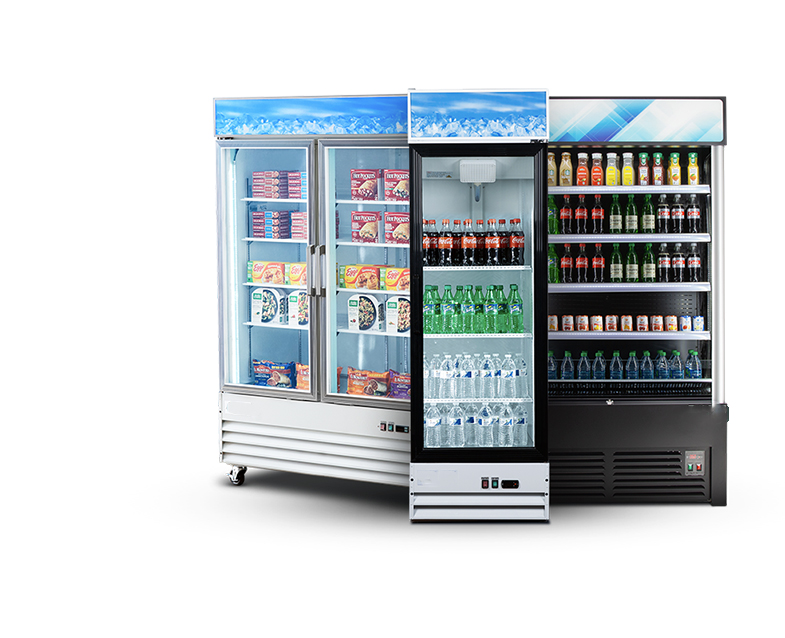
Beverage Cooler Production Line — Cost, Payback & Turnkey Setup (2026 Pillar Guide)
Investment tiers from a single-door entry line to a full bottler-program build, the payback math behind a 3,000-unit/day line, and the complete equipment list and certification checklist a beverage cooler OEM needs to go from contract to first shipment.
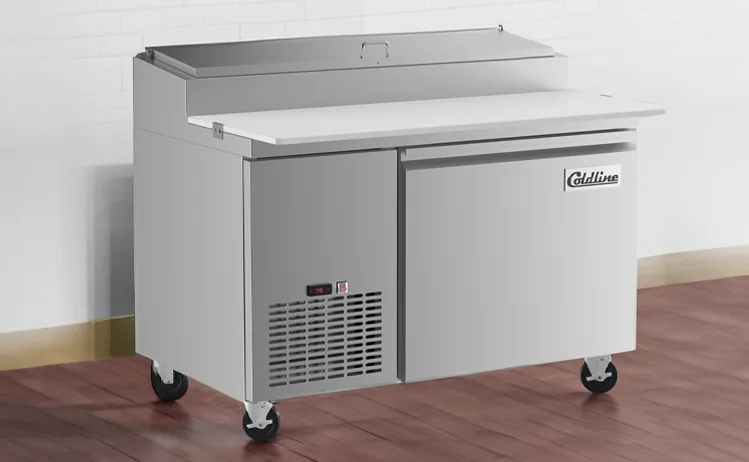
Chef Base Production Line: Cost, Break-Even & Turnkey Manufacturing (2026 Pillar Guide)
Investment tiers, the break-even math behind an 800-unit/day line, and the full equipment list and certification checklist a foodservice OEM needs to start chef base and refrigerated-counter production.