
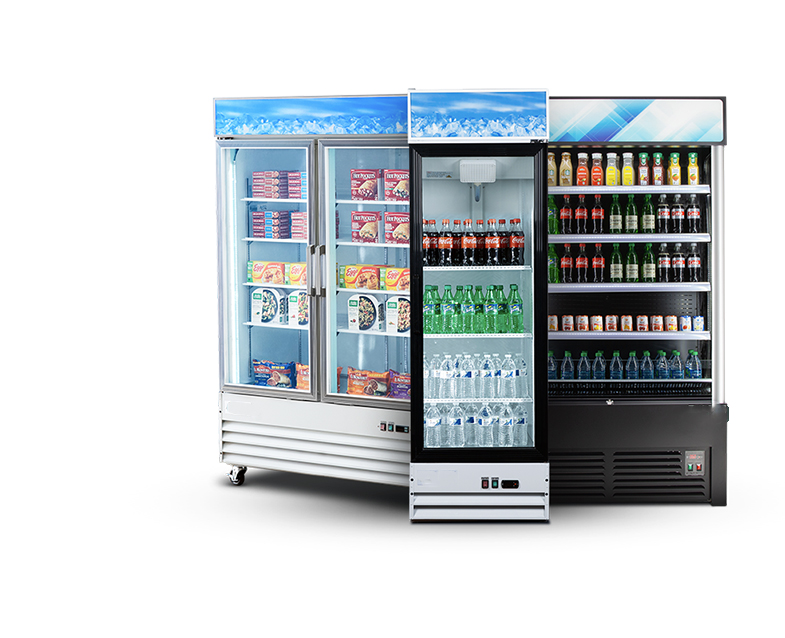
Production line for
Beverage Cooler Production Line Manufacturer
We manufacture beverage cooler production lines to bottler spec — single to triple-door, 200 to 1,500 L, up to 8,000 units/day.
Investment Range
USD 700K – 3M · 200 to 2,000 units/shift
Who Buys This Line
Bottler-grade cooler OEMs, brewery & soft-drink merchandiser makers
Certification Ready
IEC 60335-2-89 · Coca-Cola KO Spec · CE ready
In one line
Fast-cycle foaming moulds reduce door production time by up to 30%.
Who We Supply. Beverage cooler OEMs supplying bottler programmes (Coca-Cola, PepsiCo, AB InBev, Heineken, Danone) and private-label commercial refrigeration brands. Confirmed installations in Mexico, Brazil, Turkey, Nigeria, Egypt and Vietnam producing branded upright coolers for retail placement, single-door personal-use coolers, glass-door display units for beer and beverage retail.
What we deliver. Foaming moulds for standard bottler cabinet dimensions (Coca-Cola RM-200/300/500/750, Pepsi CE-360/840, AB InBev standard footprint), high-pressure PU foaming machine (48 – 55 kg/min for large-shot capacity supporting 8,000 units/day), visual door moulds with anti-condensation glass integration, LED illumination assembly, condensing unit drop-in tooling, brand-graphics application station, running-load QA station (24-hour thermal cycling test). Compatible with bottler spec sheets from all major global programmes.
Cabinet spec range. Height 900 – 2,100 mm. Width 500 – 1,500 mm (single, double or triple bay). Depth 500 – 700 mm. Internal volume 200 – 1,500 L. Temperature +2 to +7°C standard, +2 to +12°C for beer serve-cold, chilled. Wall thickness 40 – 60 mm. Foam density 32 – 38 kg/m³. Door: single-pane tempered, double-pane low-E for high-humidity markets. Refrigerant R290 (mainstream 2026 per bottler programme requirement), R600a (legacy Coca-Cola CE range).
Certification support. Bottler-specific test protocols (Coca-Cola Freestyle spec, PepsiCo Global Refrigerator spec, EPA ENERGY STAR for US bottler placements). CE (Europe), CB Scheme, IEC 60335-2-89. Refrigerant-specific certifications for R290 markets. Reference project index by bottler programme.
Deep-dive engineering references — Refrigerator Production Line Setup, 26-Station Ground-Rail Line Throughput, High Pressure PU Foaming Machine, and PU Foam Density & K-Factor.
What You Need
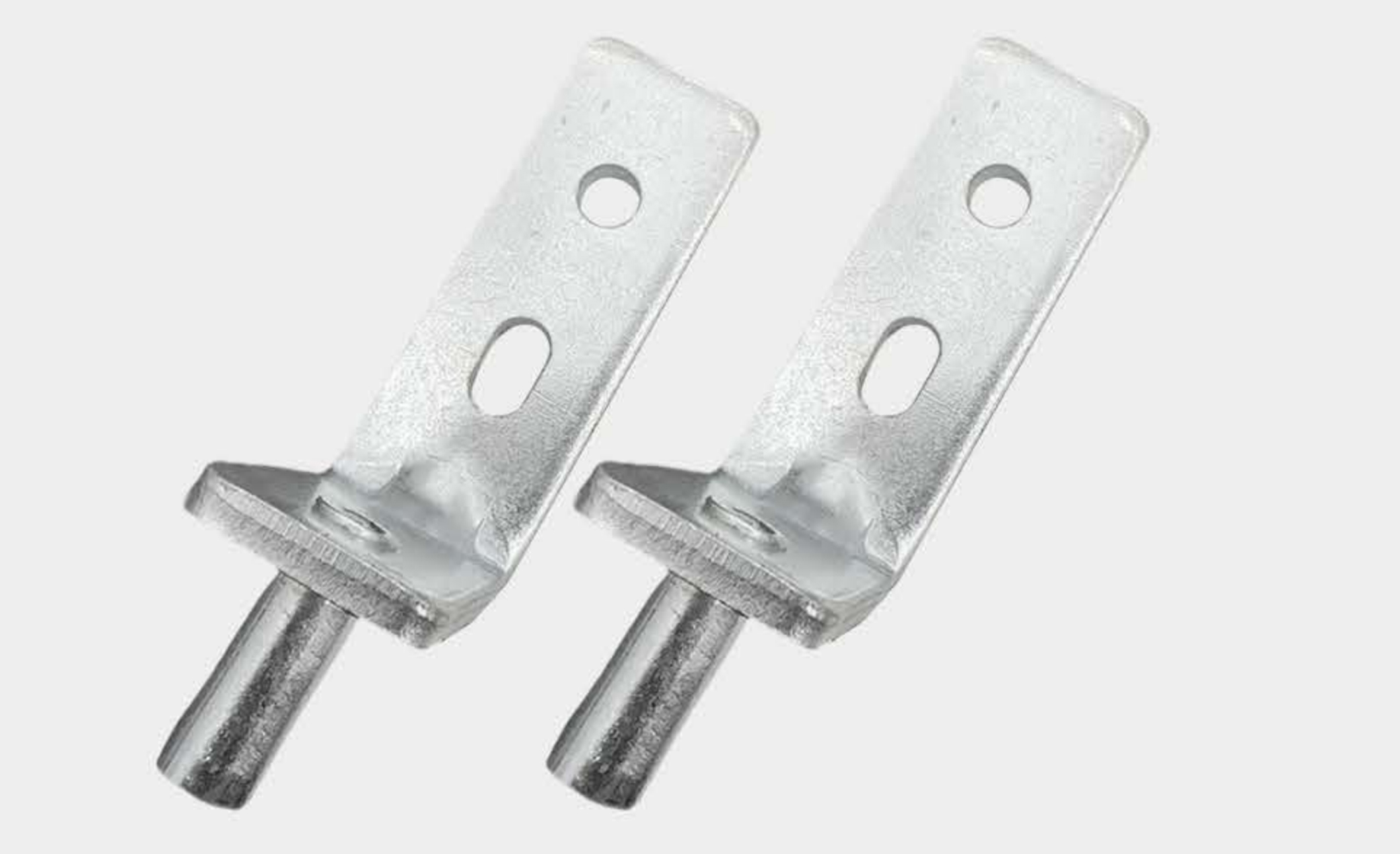
Hardware & Accessories — Bundled with Main Equipment Orders
Complementary hardware fabrication service — supplied alongside our main equipment orders (moulds / PU foaming / production line). Custom-fabricated per your drawings: 5 categories — hinges, brackets, rails & ladders, wire shelves & baskets, grid panels. Not a standalone product line. Consolidated into your main shipment.
Learn More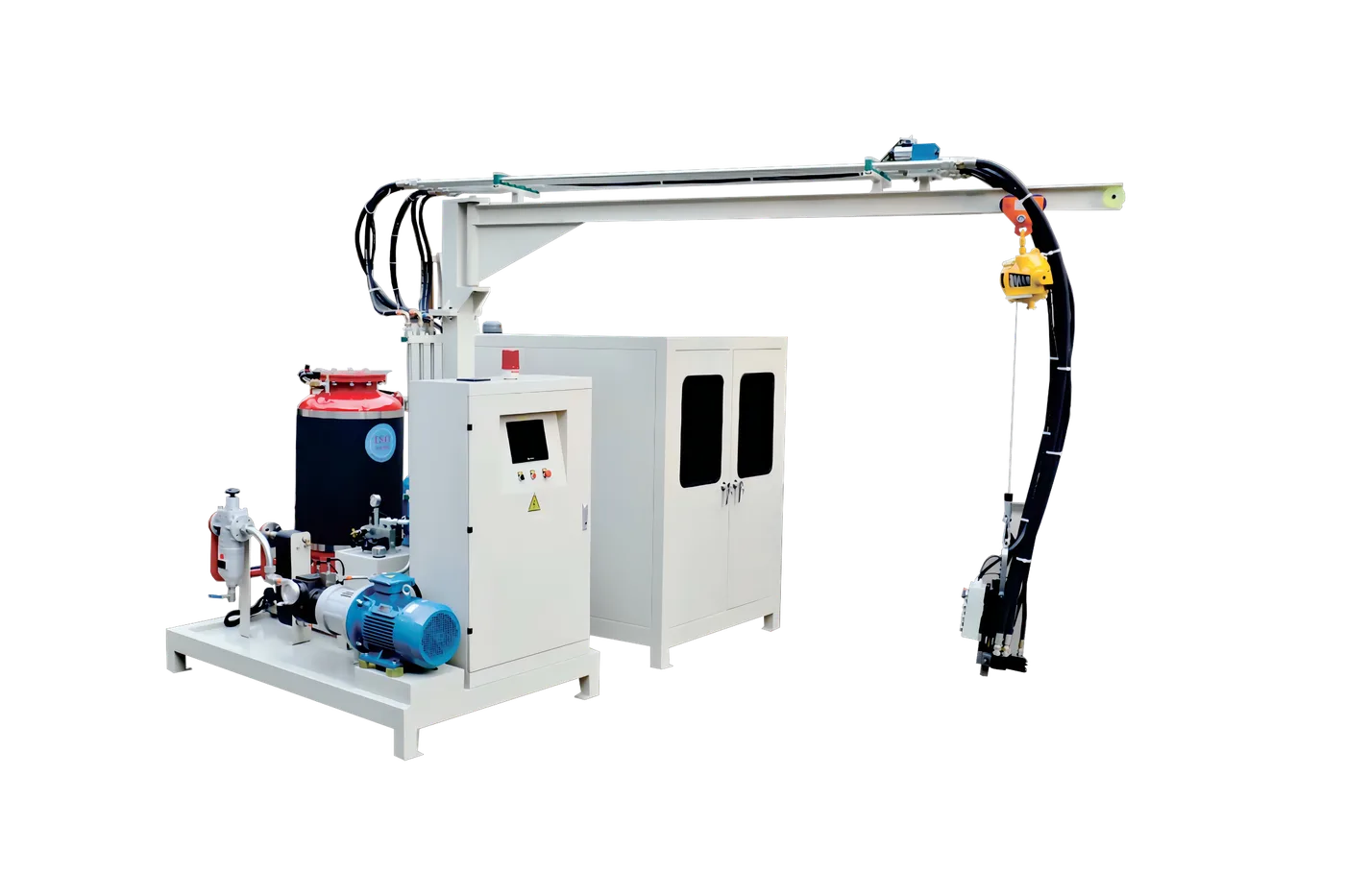
Cyclopentane High-Pressure PU Foaming Machine
Our flagship — purpose-built for refrigerator factories chasing the top EU energy classes (B–C on the 2021 A–G label, formerly A+++). Cyclopentane-ready out of the box with full ATEX Zone 1 safety package. Three sizes covering 500 to 8,000 cabinets a day.
Learn More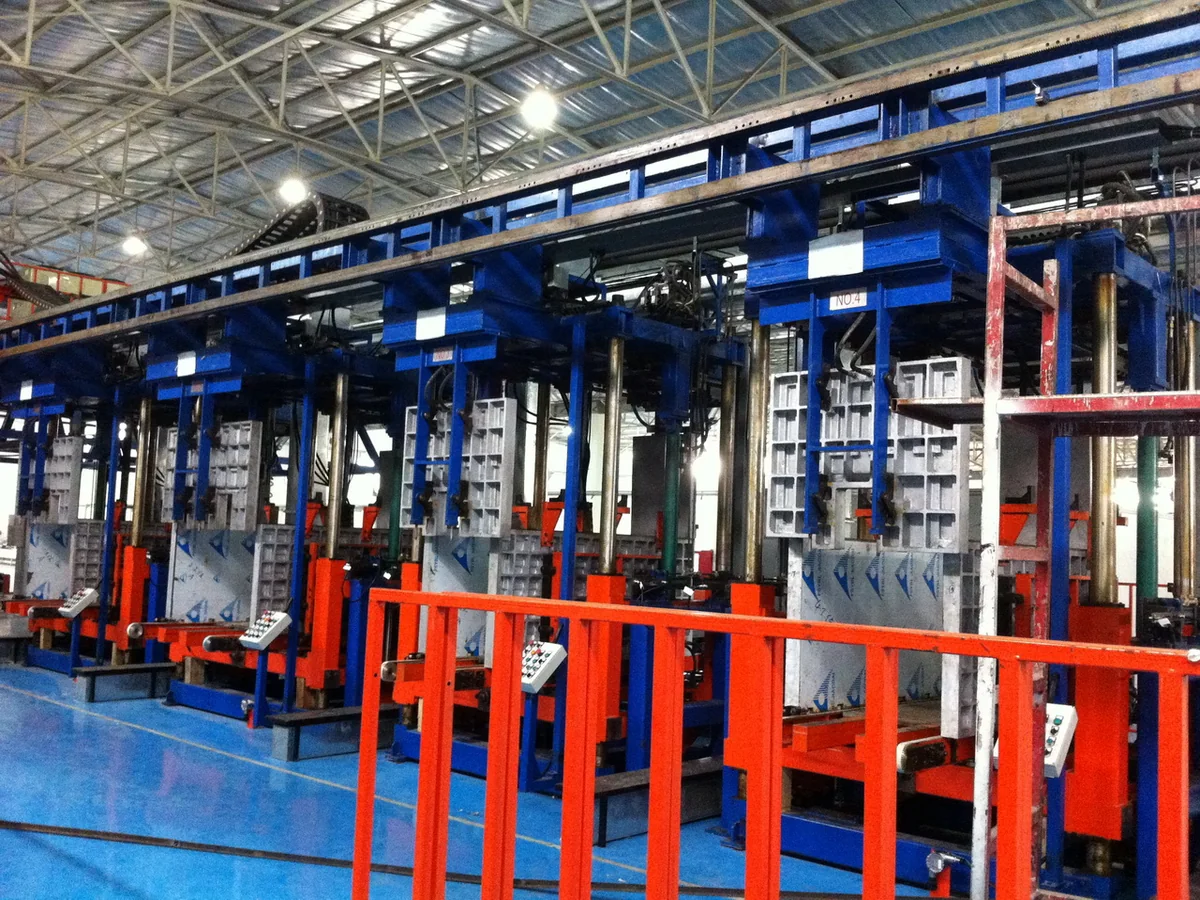
Linear Cabinet PU Foaming Line — 6 / 8 / 11 Stations Configurable
Linear in-line PU foaming for refrigerator cabinet body. Scalable from 6-station motor-driven (~800–2,500 cabinets/shift, small-medium factories) to 11-station hydraulic (~4,000–6,000 cabinets/shift, mainstream OEM). Multi-spec mixed-line production. Cabinet size 800–2,000 mm L × 450–2,000 mm W × 450–900 mm H. Water-heated, PID-controlled.
Learn More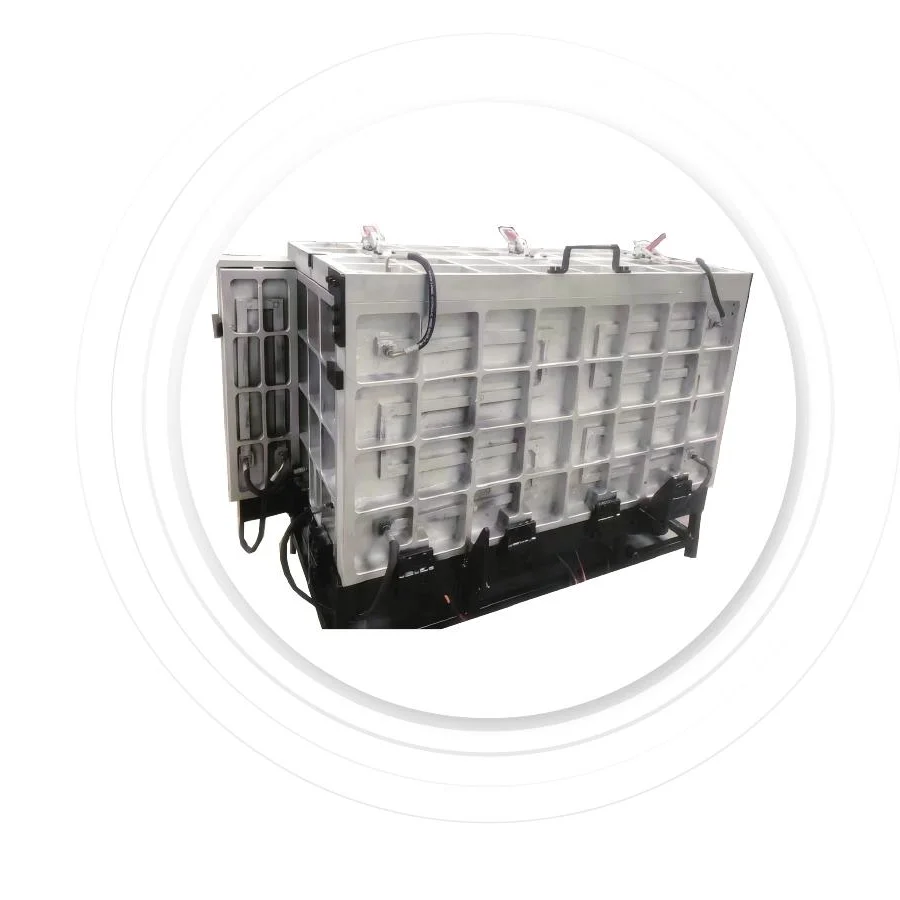
Mold for Upright Glass-Door Display Cabinet
Refrigerator mould (mold) for display cabinets — cast aluminium PU foaming mould for single / double / triple glass-door beverage display cabinets and supermarket display refrigerators. Up to 1,900 × 700 × 1,300 mm, ~30 s/shot.
Learn More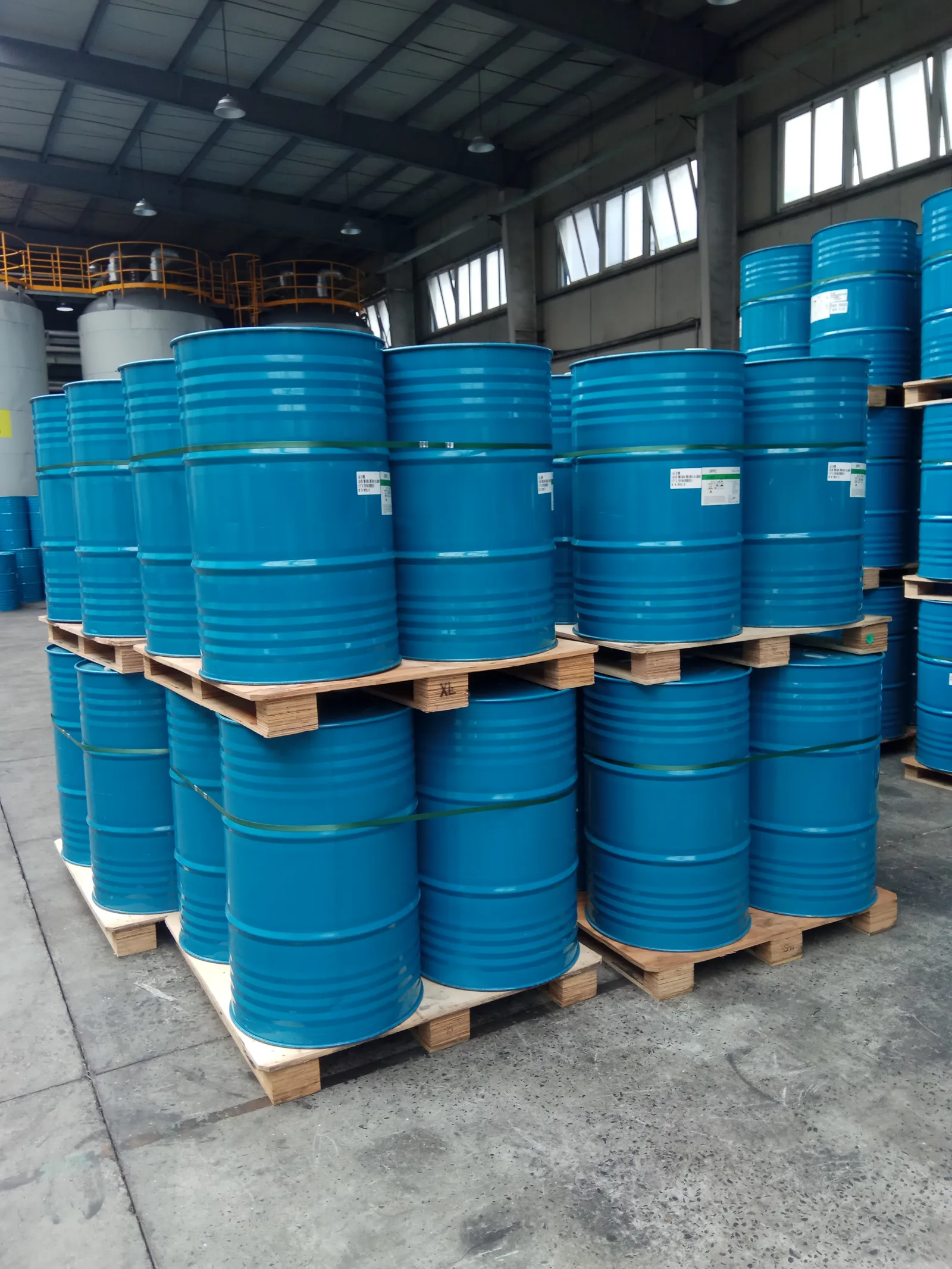
PU Raw Materials System
We make refrigerator-grade PU systems — polyol blend, MDI, blowing agent, all formulated in our own plant. k-factor down to 0.018, density customizable, tuned to your cabinet and your line.
Learn MoreCabinet models you can produce on this line
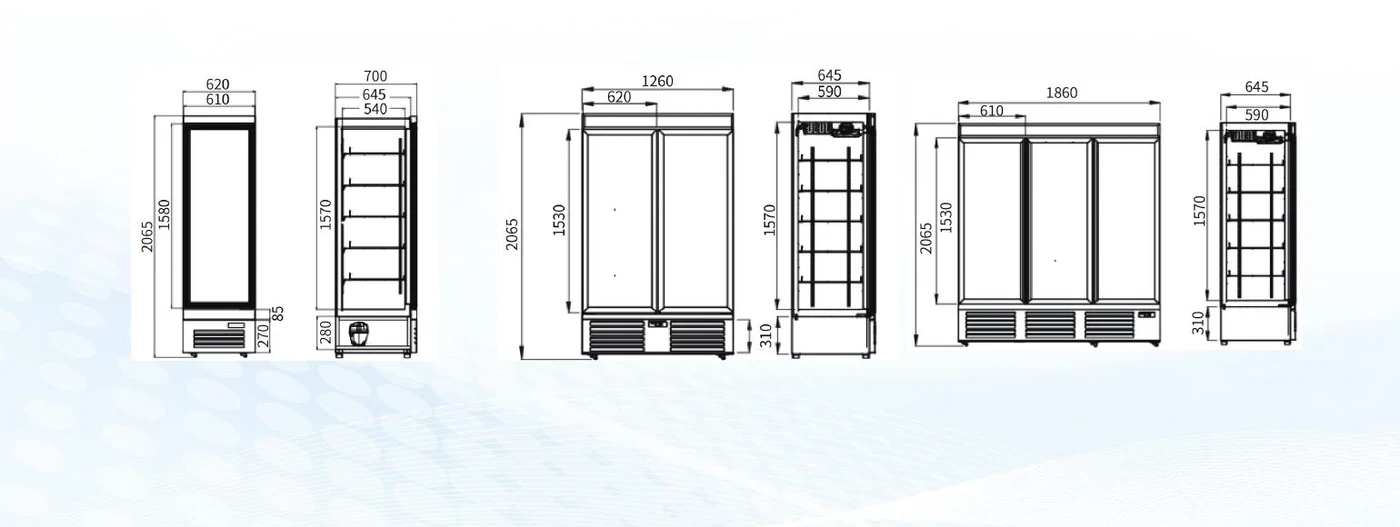
Every row below is a real cabinet SKU that customers already produce using the moulds in this line — temperature class, capacity, compressor, refrigerant and overall dimensions are field-tested. Use the matrix to match your target cabinet to the right mould configuration.
| Cabinet model | Variant | Temperature (°C) | Volume (L) | Power (W) | Weight (kg) | Compressor | Refrigerant | Size (mm) | Source mould |
|---|---|---|---|---|---|---|---|---|---|
| LC-620FX | Single-door refrigeration | -2–8 | 620 | 262 | 75 | DONPER / WANBAO | R290 | 620 × 725 × 2065 | Mold for Upright → |
| LC-1260FX | Double-door refrigeration | -2–8 | 1113 | 374 | 145 | DONPER / WANBAO | R290 | 1260 × 725 × 2065 | Mold for Upright → |
| LD-1260FX | Double-door freezing | ≤-18 | 1066 | 911 | 200 | DONPER / WANBAO | R290 | 1260 × 725 × 2065 | Mold for Upright → |
| LC-1860FX | Triple-door refrigeration | -2–8 | 1685 | 583 | 200 | DONPER / WANBAO | R290 | 1860 × 725 × 2065 | Mold for Upright → |
| LD-1860FX | Triple-door freezing | ≤-18 | 1670 | 1395 | 260 | DONPER / WANBAO | R290 | 1860 × 725 × 2065 | Mold for Upright → |
Source: UREXCEED catalog §07 OEM/ODM cabinet series, cross-referenced to the mould that produces each SKU. Custom cabinet sizes outside this range supported — send us your cabinet drawing for a 7-day quote.

Why This Line Works — Backed by the Real Specifications
Built for high-throughput bottler programs where every door must look identical to the brand standard.
Door cosmetic precision matched to bottler brand specs
Vacuum-formed inner doors hold ±0.3 mm tolerance on glass-ledge alignment — critical when Coca-Cola or Carlsberg brand teams audit cooler aesthetics across 50,000+ deployed units.
Foaming cycle 90 s for single-door, 180 s for triple-door
High-pressure PU foaming machines (UPM-HP-1500) with optimized injection paths cut door foaming cycle by 25–30% vs. conventional setups, letting a 10,000-unit annual program ship in 6–8 months instead of 9–12.
Capacity 500 to 8,000 units/day on the same backbone
Modular line layout starts at 500 units/day for new bottler programs and scales to 8,000 units/day without redesign. Bottlers piloting in one country can replicate the same line in 3 more without re-engineering.
Energy-efficiency rating support for EU & EAEU markets
Foaming density 35–45 kg/m³ tuned for EU Energy Label class C+ on standard glass-door coolers — the threshold most major bottlers now require for retail placement.
Beverage program engineering
Bottler-Program Cabinet Configuration
Bottler programs (Coca-Cola, Pepsi, Heineken) are 100% spec-driven. 4 axes calibrated to bottler spec sheets.
Brand spec match
Cabinet RAL color (Coca-Cola Red 484C, Pepsi Blue 287C), door curve radius ±0.3 mm, decal placement jig calibrated to bottler audit.
Door config
Single / double / triple door variants on snap-in divider modular mould. Capex drops from USD 280K → USD 95K per variant.
Tropical / temperate spec
Standard 21°C / tropical 43°C ambient (SASO / DEWA). Tropical-spec uses 60 mm wall foam (vs 45 mm), 4–6 W/m heated door perimeter.
Burst capacity
Steady 3K/day → peak 8K/day for 60-day bottler rollouts. Second high-pressure station add-on (+USD 280K) doubles burst.
Shared engineering reference
PU foam quality, testing and acceptance
Closed-cell ratio, density uniformity and thermal testing are documented once in our quality center.
Questions factory owners ask us
What's the typical investment for a 3,000 units/day beverage cooler line?
Can you supply lines compliant with Coca-Cola or PepsiCo cooler programs?
How do you handle door-foaming defects on glass-door coolers?
What is the lead time from contract to first shipment?
Do you support tropical-spec coolers for Middle East and Southeast Asia?
Service & Support
Warranty & Service
On-site intervention available in every region where we have delivered projects.
On-Site Installation
Our engineers fly to your factory to supervise installation, layout verification, and first-run production.
Commissioning + Tuning
Trial run + parameter tuning to your local raw material, climate, and target product spec — until throughput meets contract.
Operator Training
5-10 day on-site training for production team, QC, and maintenance — bilingual manuals + video tutorials provided.
3-Year Warranty + Spares
Core equipment 3-year warranty, electrical 2-year. Spare parts in stock with global express shipment 24h dispatch.
Cross-Sell · One-Partner Synergy
Pair this line with the rest of the factory
The product groups our refrigerator-factory customers buy alongside this line — for full-line synergy and one-partner accountability.
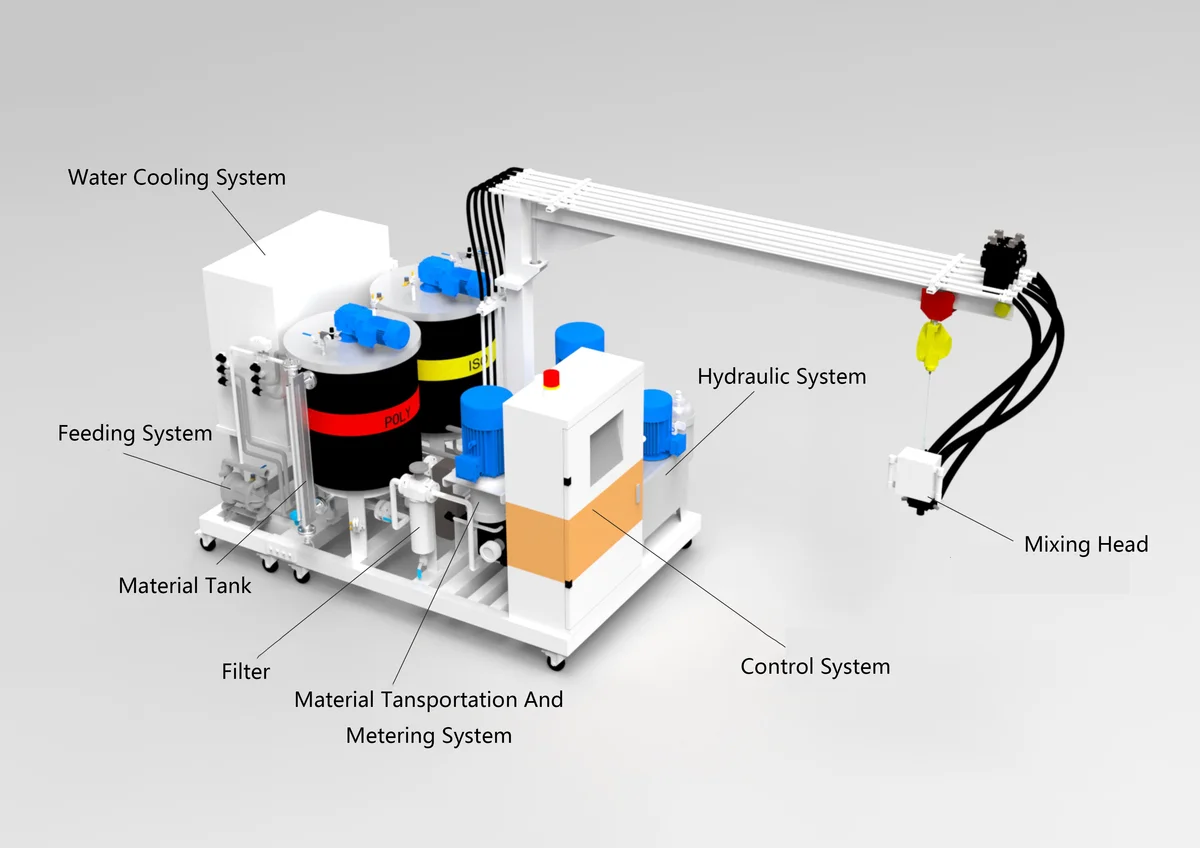
High-Pressure PU Foaming Machines
Cyclopentane / 2-component / 3-component models. Cyclopentane is the refrigerator industry standard.
Learn more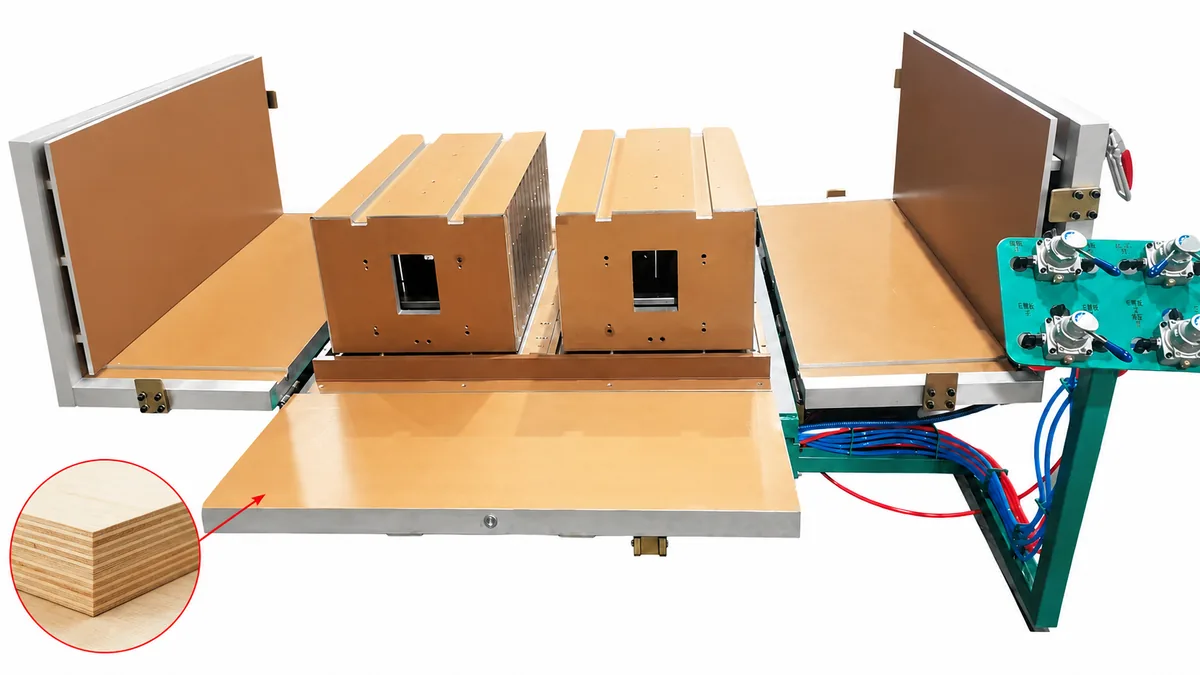
Refrigerator-grade Moulds
Vacuum-forming moulds for inner liners + foaming moulds for cabinet/door. 30-year mould-cluster network.
Learn more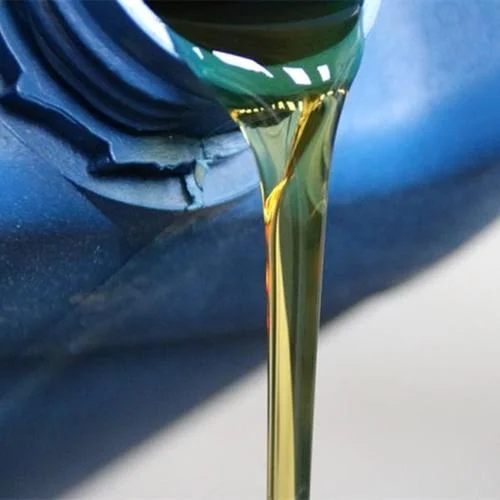
PU Raw Materials System
BASF / Covestro / Wanhua MDI + Polyol — calibrated to your climate, foam density, and cycle time.
Learn more