
6-Station Servo-Motor Rotary Door Foaming Line — -certified production lines by UREXCEED, manufactured under an ISO 9001-certified quality management system. Lead time 90 – 130 days, MOQ 1 line.
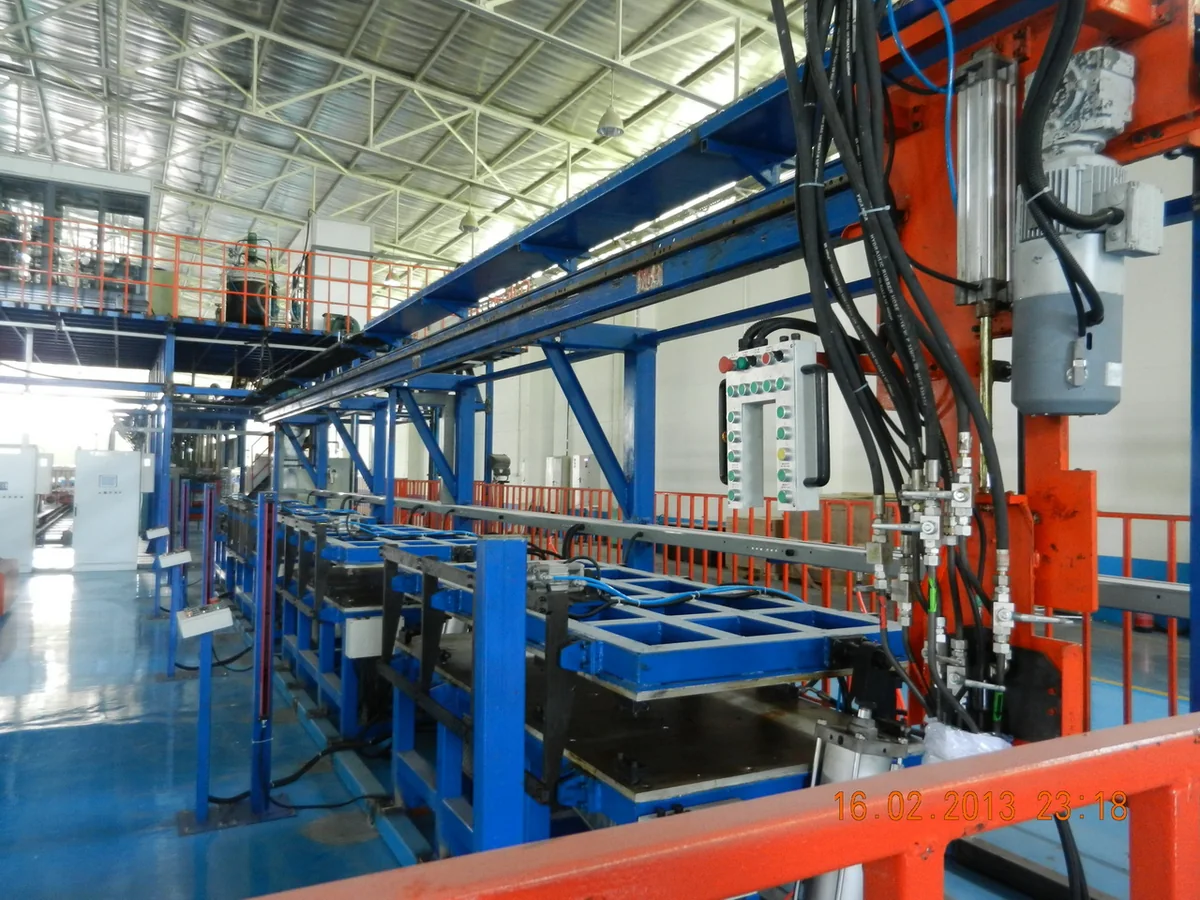
6-Station Servo-Motor Rotary Door Foaming Line
6-station servo-motor-driven rotary door foaming line for premium / high-end refrigerator OEM. Servo precision ±0.1 mm rotation, 50-second cycle, supports door panels up to 2,100 × 1,000 mm with 380 mm clamp height. 500–800 doors/shift sweet spot for multi-variant precision door manufacturing.
Engineering reply within 24 hours
Quote + spec sheet + tailored sizing recommendation. WhatsApp answered 9 am–6 pm Beijing time.
Specifications
- Layout Form
- 6-station rotary (hub-type) door foaming line, servo-motor driven
- Drive Method
- Servo motor (precision-driven rotation + clamping)
- Heating Method
- Water heating via mold temperature controller
- Number of Stations
- 6
- Fixture Template Size (L×W)
- 2,100 × 1,000 mm (≤ 2,100 × 1,000 mm cabinet door panels)
- Mold Closing Height
- Up to 380 mm
- Production Cycle Time
- ~50 seconds per door
- Foaming Material
- POL + Cyclopentane + ISO / POL + HCFC-141a + ISO / POL + HCFC-245fa + ISO
- Voltage / Frequency
- 380V · 50 Hz · Control voltage 24V
- Total Power
- Approx. 415 / 50 / 50 (peak / running / idle) kW
- Compressed Air Requirement
- 0.5 MPa
- Best Fit Capacity
- ~500 – 800 doors per shift (precision + variant-mix friendly)
- Lead Time
- 90 – 130 days
- MOQ
- 1 line
Applications
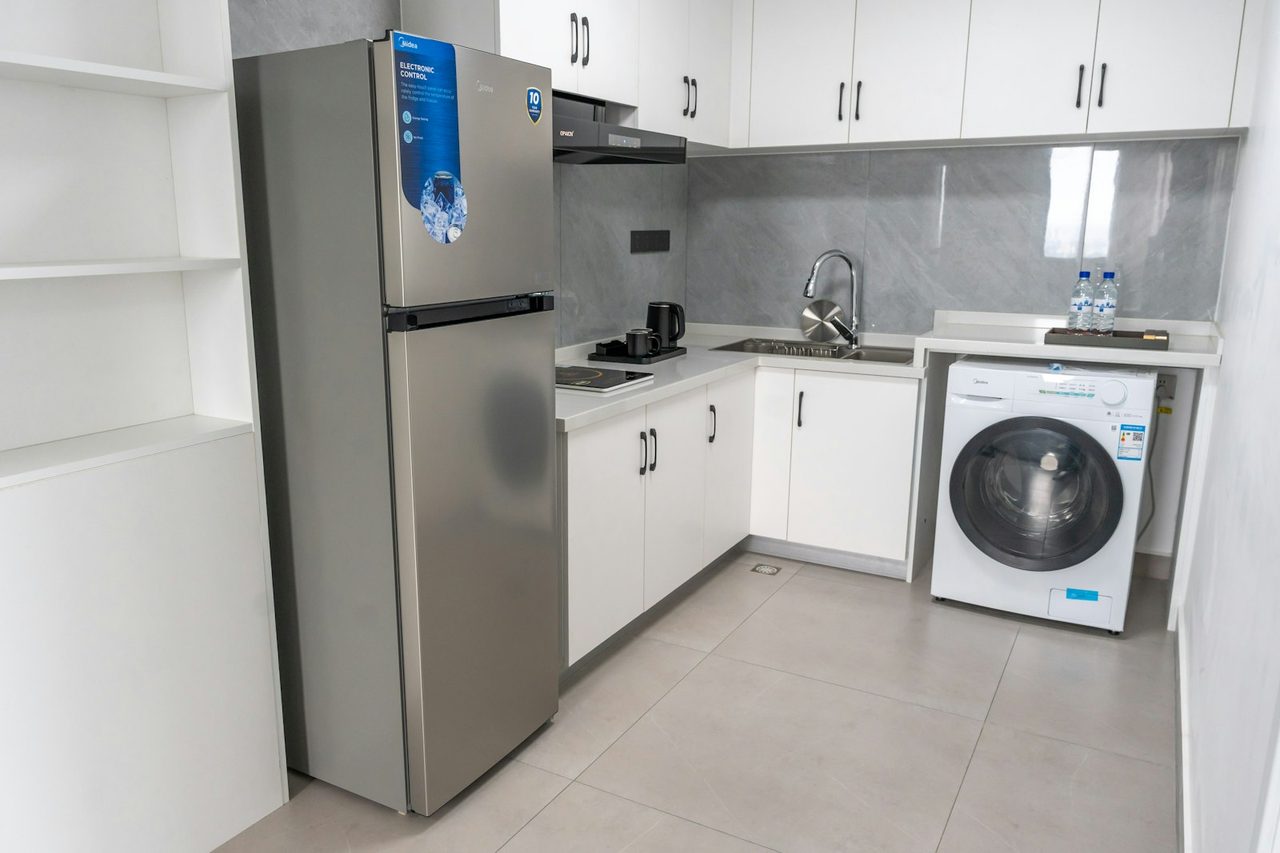
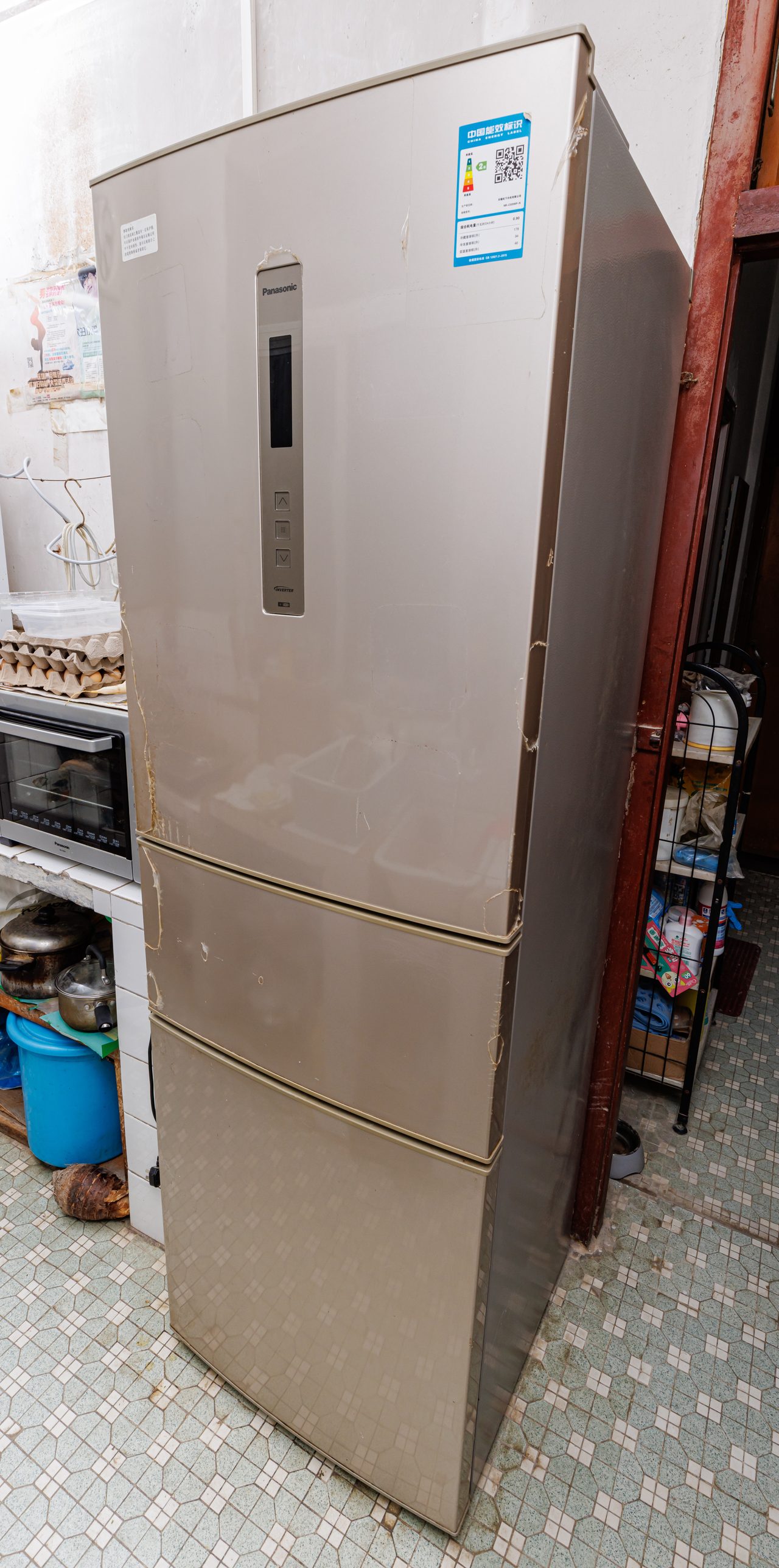
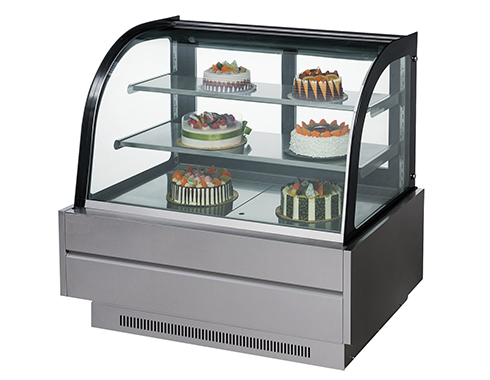
- Refrigerator door foaming with servo-grade positioning precision (±0.1 mm rotation)
- Multi-variant door mix (rapid changeover via servo-controlled mould lock)
- Premium / high-end refrigerator OEM (cosmetic-grade door tolerance)
- Glass-door display cabinet foaming (precision-mounted glass + frame)
- Mid-volume specialty door factory (500–800 doors/shift sweet spot)
The 6-station servo-motor rotary door foaming line is the precision-tier choice for refrigerator OEMs that need sub-millimetre door dimensional control + rapid variant changeover. Servo-driven rotation locks each station at ±0.1 mm — a 5–10× improvement over hydraulic rotary lines, at the cost of ~30% higher capex and a 500–800 doors-per-shift sweet spot (vs 600–1,000 for hydraulic 7/8-station).
When the 6-station servo line wins over hydraulic 7/8-station rotary
Pick this line if your downstream cabinet assembly is sensitive to door fit (premium refrigerators, glass-door display, multi-door variants where any misalignment shows). Pick hydraulic 7/8-station if you run a single high-volume cabinet SKU and throughput beats precision. We frequently sell the servo line as a SECOND door line (cosmetic / premium SKU specialty) alongside an existing ground-rail or 7/8-rotary for the volume backbone.
Why the servo rotary beats hydraulic rotary on door-quality factories
Four data-driven advantages of the 6-station servo configuration vs the conventional 7/8-station hydraulic rotary line.
Door positioning precision ±0.1 mm (vs ±0.5 mm hydraulic)
Servo motor with absolute encoder lock-positions each station to ±0.1 mm rotational accuracy. Hydraulic rotary drifts ±0.3–0.5 mm over a shift as oil warms. Translates to door-cabinet fit gap variance dropping from ±1.5 mm to ±0.4 mm — the difference between visible misalignment and a clean line.
Door panel up to 2,100 × 1,000 mm + 380 mm mould height
Larger fixture template than 7/8-station hydraulic (typical 2,000 × 900 mm × 200 mm) — accommodates oversize French-door panels, 2.1 m commercial display doors and 380 mm-thick deep-foam vaccine refrigerator doors on the same line.
50-second cycle with multi-variant changeover < 8 min
Servo-controlled mould lock + PLC-recipe storage cuts variant changeover from 25–40 min (manual hydraulic) to under 8 min. For 6–8 variant mix that means ~2 hours/shift more productive time — the throughput gap with hydraulic narrows significantly in mixed production.
6 stations + 50-sec cycle = 500–800 doors/shift sweet spot
Capacity tuned for mid-volume premium / variant-mixed door factories. Below 500 doors/shift, the servo capex doesn't pay off (use manual 4-station instead). Above 800 doors/shift single-SKU, hydraulic 7/8-station throughput per dollar wins.
How the 6-station servo cycle runs — 50 seconds station-to-station
One full rotation of the hub through 6 stations takes 5 minutes. Each door spends ~250 seconds total in the line (~4 min curing across 5 stations + injection at station 1).
- 1
Station 1 (Load + Position) — operator loads pre-skinned door panel + inner liner onto mould fixture. Servo lock confirms ±0.1 mm position. ~30 sec.
- 2
Station 1 (Inject) — PU mix-head descends, dispenses 0.8–1.4 kg cyclopentane-blown POL+ISO into door cavity. Mould closes hydraulically. ~20 sec.
- 3
Station 2–5 (Cure) — hub rotates 60° between stations. Cabinet panel cures while inside heated fixtures (45–55°C platen, water-circulated). ~200 sec (50 sec × 4 stations).
- 4
Station 6 (Demould) — servo lock holds position while operator opens mould, lifts cured door panel out. ~25 sec.
- 5
Station 6 (Cool + Send Downstream) — door cools 15 sec on take-off conveyor, then enters downstream gasket-fitment / hinge-mounting / final assembly. ~20 sec.
FAQs — 6-station servo rotary door foaming line
How long does the servo line take to commission?
Typical investment for a 6-station servo door line?
Can it run alongside an existing ground-rail or 7/8-station hydraulic line?
What door panel sizes and thicknesses fit?
Operators per shift + skill level?
What's the catch — when does servo NOT make sense?
Related Products
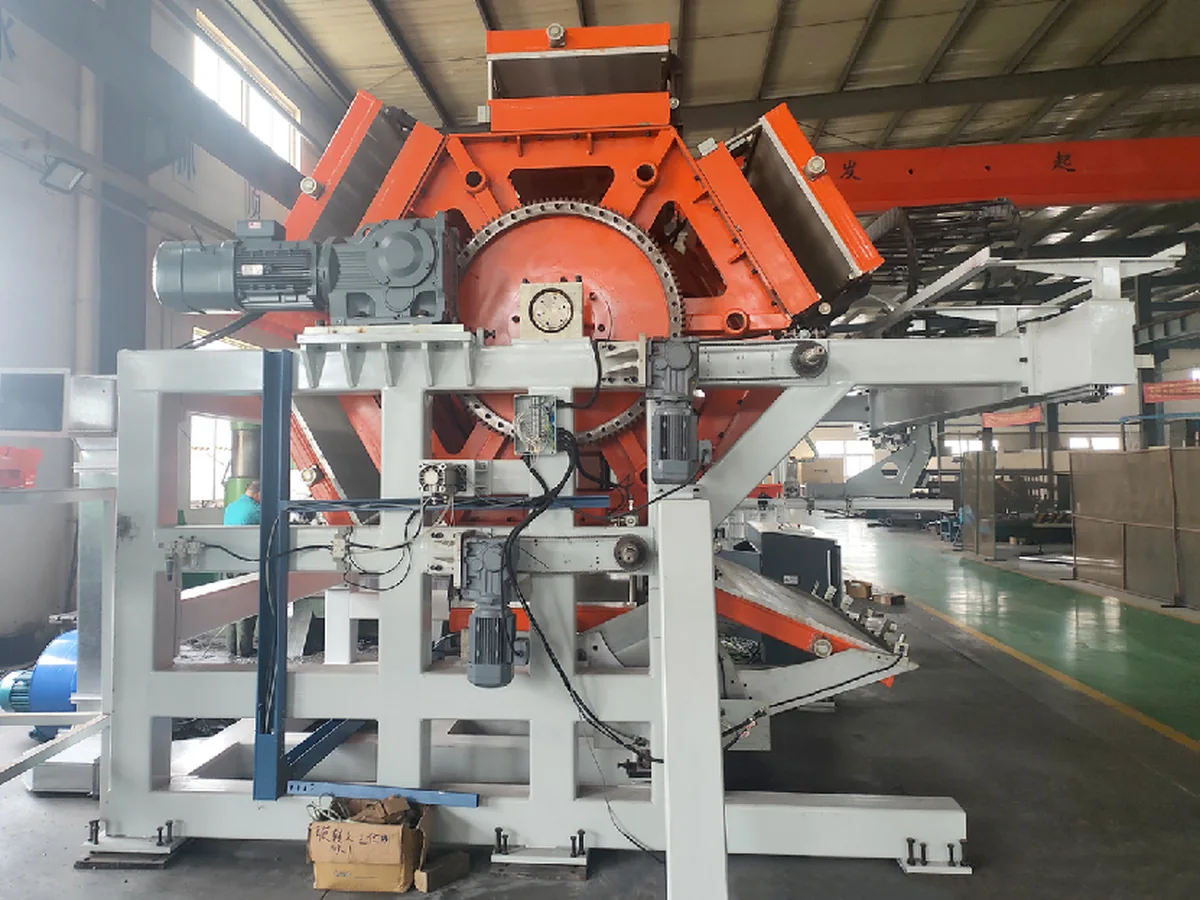
4-Station Hydraulic Air-Curtain Cabinet Foaming Fixture
4-station hydraulic foaming fixture for air-curtain refrigerated display cabinets (open-front merchandisers up to 4 × 1.8 × 0.55 m). Top/bottom flat-pressing clamp, water heating, 50 kW, 80–200 cabinets/shift.
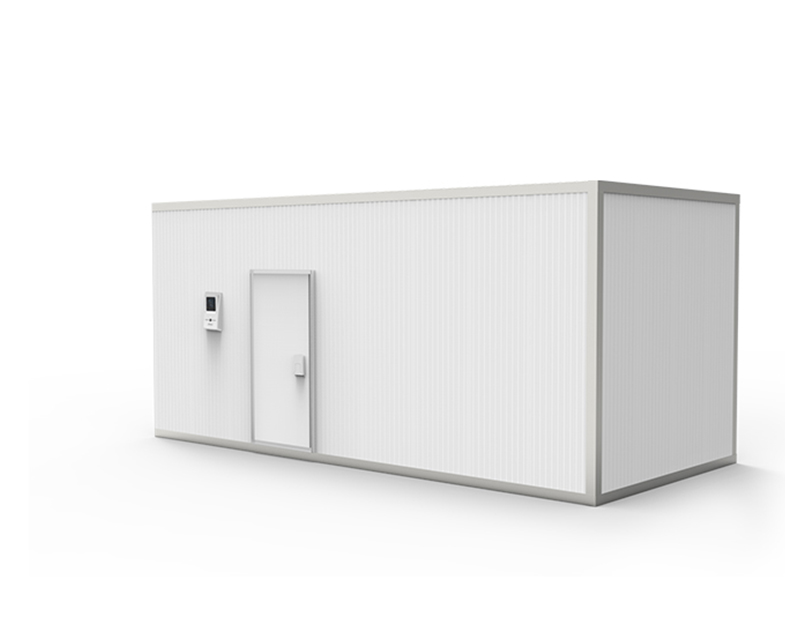
Discontinuous Cold Room Panel Production Line — 1.2 m × 3/6/9/12/18 m PU Sandwich Panels
Discontinuous (intermittent press) PU sandwich panel machine — the complete press + PU foaming line — for steel / PU / steel cold-room panels. Panel width 1.2 m (industry standard). Five standard lengths: 3 / 6 / 9 / 12 / 18 m. Daily output 200–500 m²/shift per press. EN 14509 / ASTM E72 compliant. Best fit for factory owners building a new modular-cold-room or commercial cold-storage panel plant — not for high-volume continuous-belt operations.
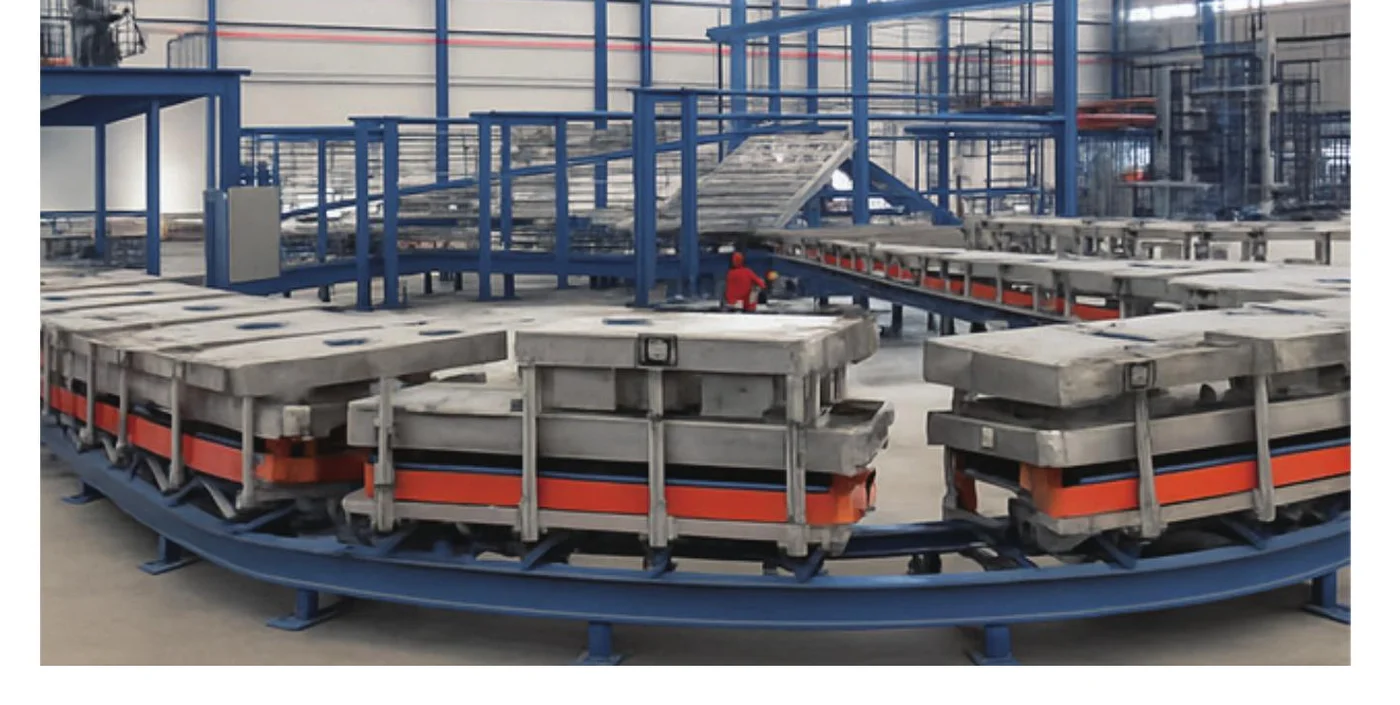
26-Station Ground-Rail PU Foaming Line for Refrigerator Doors — Closed-Loop Track Layout
Closed-loop ground-rail PU foaming line dedicated to refrigerator and cabinet DOOR foaming. 26 single-cavity fixture stations on a continuous steel track, 20-sec takt, ~1,200 doors per 8-hour shift (~2,450/day on two shifts) at 85% line efficiency. 2,000 × 900 mm fixture × 200 mm closing height — sized for door panels. Cyclopentane + ATEX Zone 1, steam or oil heating.
Cross-Sell · One-Partner Synergy
Match Your Production Line With Factory Solutions
Pick the factory type that matches your buyer market — we engineer the complete production line for that vertical.
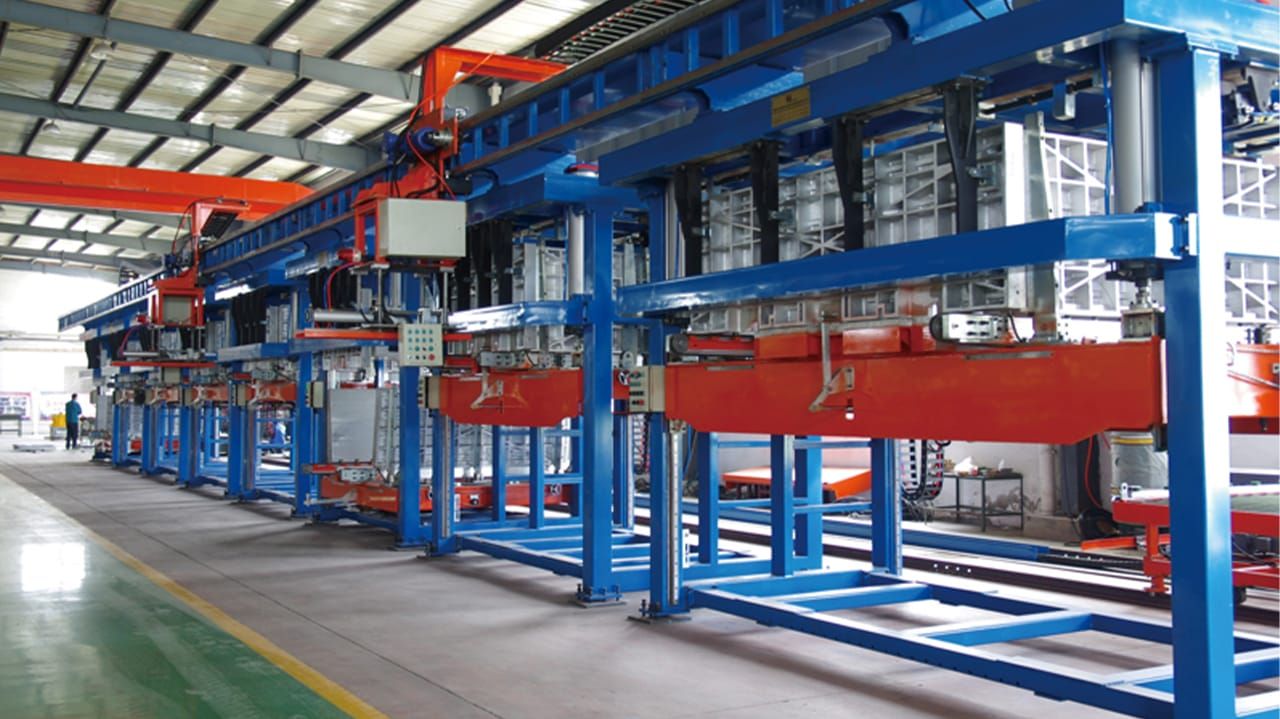
Browse 13 Factory Solutions
Refrigerator / Chef Base / Freezer / Display Cabinet / Commercial Freezer + 8 specialized markets.
Learn more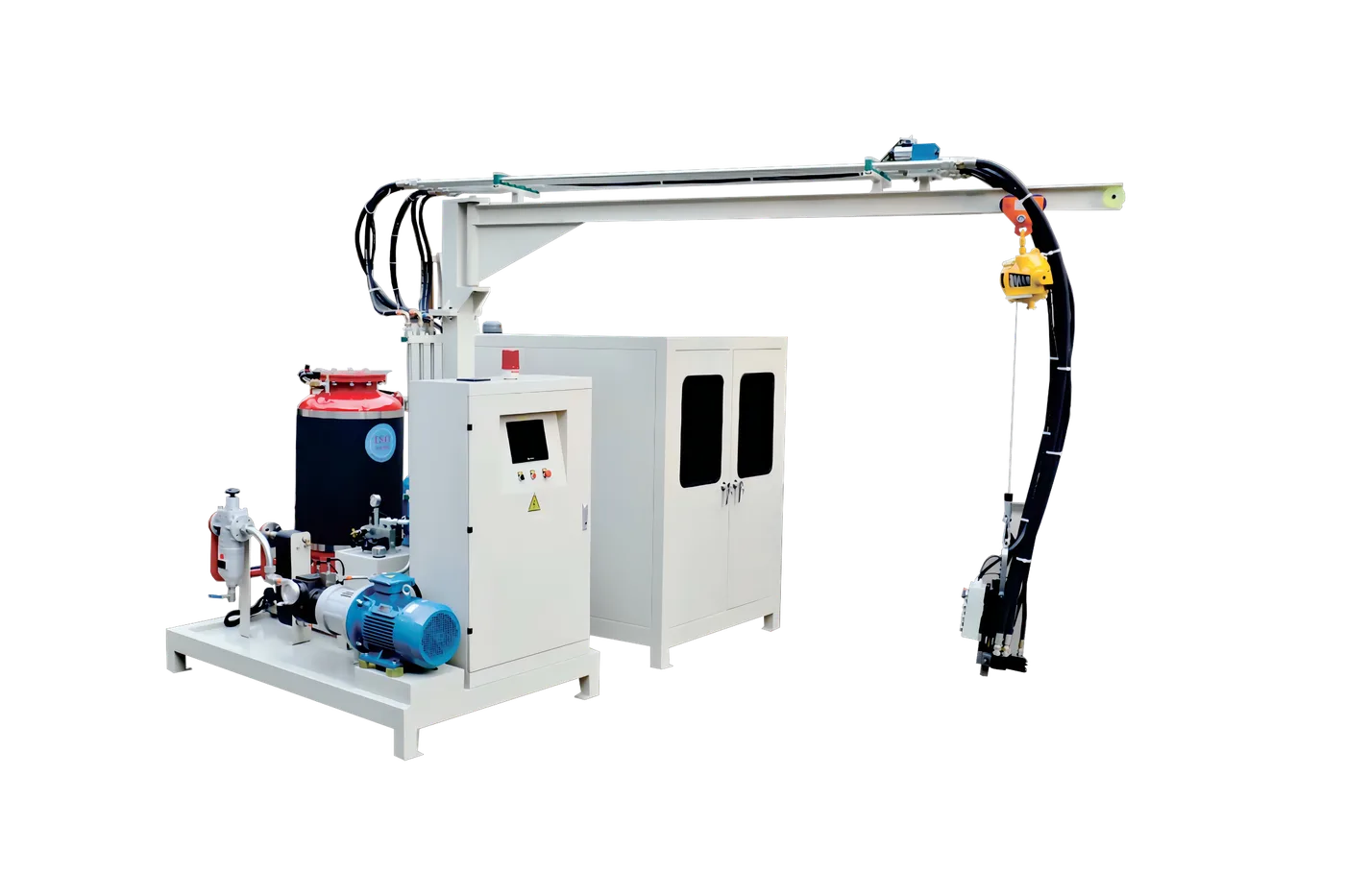
PU Foaming Machines
High-pressure (cyclopentane / 2C / 3C) + low-pressure + spray-foam — pick the foaming line that matches your factory.
Learn more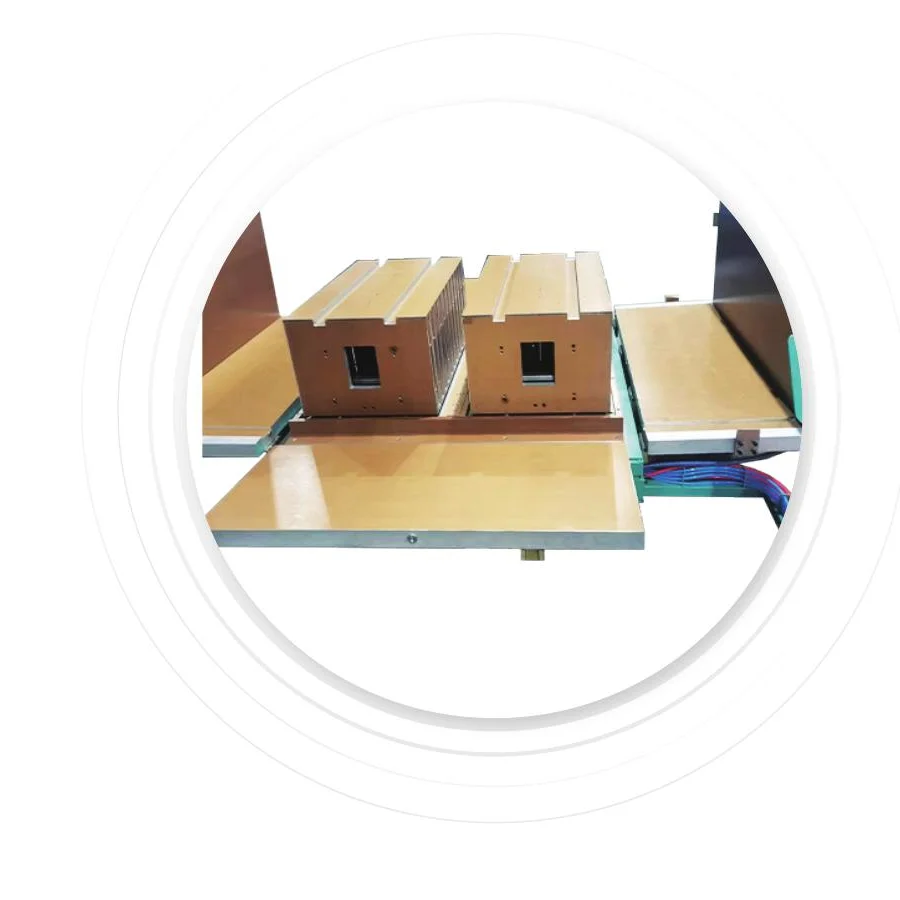
Refrigerator-Grade Moulds
Vacuum-forming + foaming moulds engineered to your cabinet/door geometry. Custom mould design service available.
Learn moreService & Support
Warranty & Service
On-site intervention available in every region where we have delivered projects.
On-Site Installation
Our engineers fly to your factory to supervise installation, layout verification, and first-run production.
Commissioning + Tuning
Trial run + parameter tuning to your local raw material, climate, and target product spec — until throughput meets contract.
Operator Training
5-10 day on-site training for production team, QC, and maintenance — bilingual manuals + video tutorials provided.
3-Year Warranty + Spares
Core equipment 3-year warranty, electrical 2-year. Spare parts in stock with global express shipment 24h dispatch.
Frequently Asked Questions
What is the typical lead time?
What is the minimum order quantity?
Do you offer customization and OEM / ODM?
What certifications does this product have?
Need a Full Refrigeration Solution?
we integrates moulds, foaming machines, production lines and materials across 6 partner factories. Tell us your capacity target and we will reply with a configuration and quote within 24 hours.