
Refrigerator Punching & Cutting Die: Types, Materials & Production Line Integration
Progressive punching and cutting dies deliver +/-0.02 mm accuracy at 20-40 strokes per minute — replacing manual trimming that produces 3-8% scrap. This guide covers die types, steel grades, three key refrigerator applications, and how to position the die station in your turnkey line.
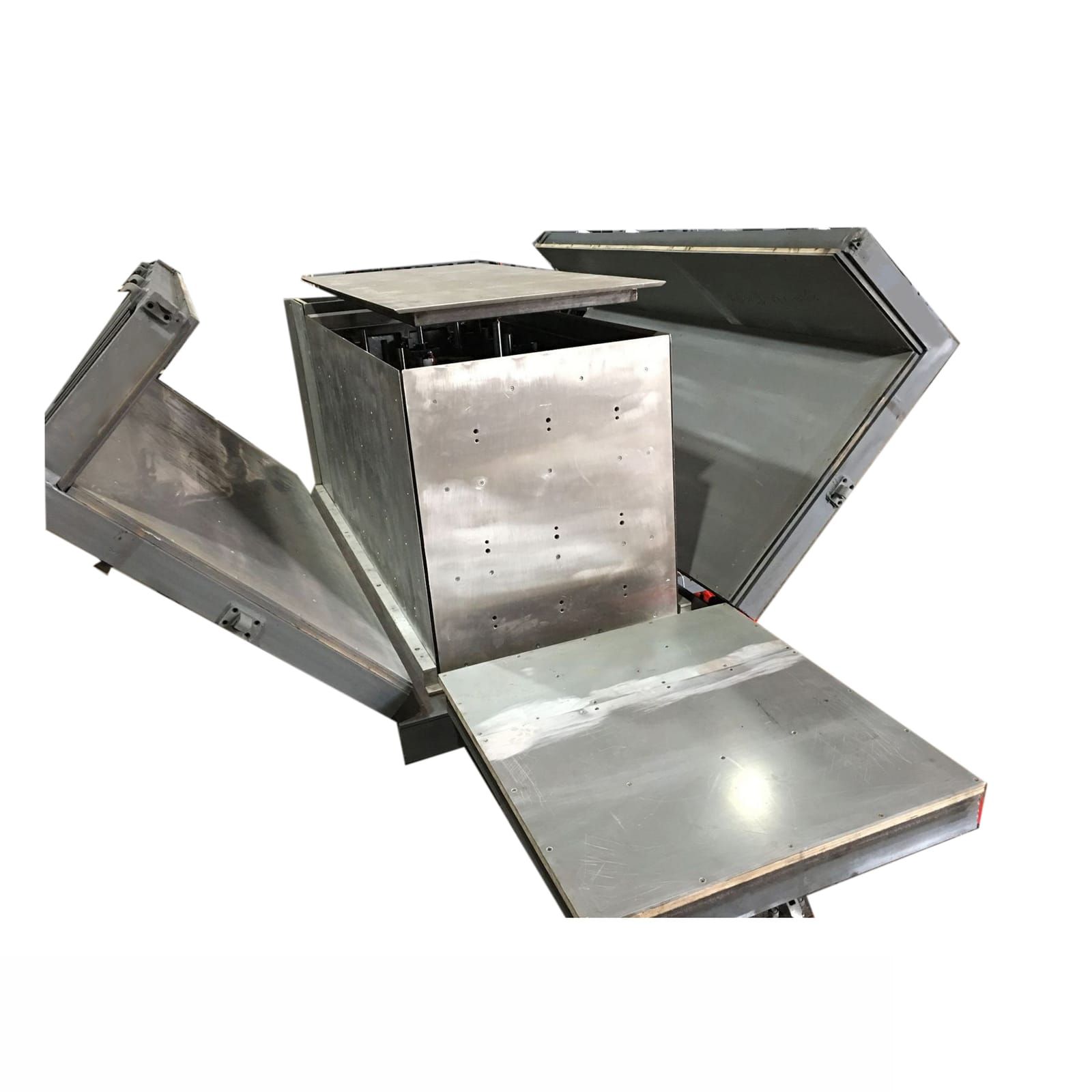
Three die types: single-station (simple parts, USD 3,000-8,000), compound (multi-operation, USD 8,000-15,000), progressive (highest throughput, USD 15,000-35,000). Best steel: Cr12MoV (HRC 58-62, 800K+ strokes). Three applications: door liner trimming, evaporator hole punching, cabinet edge cutting. Place die station before thermoforming in the production sequence. Regrind every 50,000-80,000 strokes. UREXCEED integrates dies with full refrigerator production lines.
Why precision dies define refrigerator quality
Manual trimming of refrigerator door liners and cabinet panels relies on an operator guiding a hand shear or rotary cutter along a scribed line. Edge deviation runs 0.5-2.0 mm per cut, burr height reaches 0.3 mm, and scrap rates sit between 3 % and 8 % of sheet input. On a 1,200-unit/day line, that waste adds up to 30-90 rejected parts and roughly USD 1,500-4,500 in lost material per day.
A progressive punching and cutting die running on a 200-400 ton press reduces edge deviation to +/-0.02 mm, eliminates burrs above 0.05 mm, and drops scrap below 0.5 %. Cycle speed reaches 20-40 strokes per minute. The die pays for itself when the material savings and reduced rework offset the tooling investment, which on most refrigerator lines happens within 6-12 months.
Progressive dies vs single-station dies vs compound dies
Three die architectures cover the range of refrigerator sheet-metal operations. The right choice depends on part complexity, production volume, and how many operations need to happen in one press stroke.
| Die type | How it works | Accuracy | Cycle speed | Tooling cost (USD) | Best for |
|---|---|---|---|---|---|
| Single-station | One operation (punch or trim) per stroke; part repositioned manually or by transfer arm between stations | +/-0.05 mm | 15-25 SPM | 3,000-8,000 | Simple holes, low-volume runs, prototype parts |
| Compound | Two or more operations (punch + blank, or punch + trim) in a single stroke at one station | +/-0.03 mm | 12-20 SPM | 8,000-15,000 | Parts needing tight concentricity between hole and outer profile |
| Progressive | Strip feeds through multiple stations in sequence; each stroke advances the strip one pitch and performs all operations simultaneously | +/-0.02 mm | 20-40 SPM | 15,000-35,000 | High-volume production, multi-feature parts, minimal operator intervention |
Single-station dies make sense when you run fewer than 500 parts per shift or when the part geometry is simple enough that one operation completes the job. Compound dies consolidate two operations into one stroke, which tightens positional accuracy between features because the part never leaves the die. Progressive dies cost two to four times more than single-station tooling, but they eliminate part handling between operations entirely. On a 1,000+ unit/day refrigerator line, the labour savings and throughput gain justify the premium.
Die steel selection: Cr12MoV, SKD11, DC53
Die steel determines how long the tooling lasts before regrinding and how well it holds edge sharpness through high-volume runs. Three grades dominate refrigerator die work.
| Steel grade | Hardness (HRC) | Wear life (strokes before regrind) | Toughness | Cost index | Best application |
|---|---|---|---|---|---|
| Cr12MoV (D2 equivalent) | 58-62 | 60,000-80,000 | Moderate | 1.0x (baseline) | Standard refrigerator sheet trimming and punching; galvanised or pre-painted steel 0.4-1.2 mm |
| SKD11 (JIS equivalent of D2) | 58-60 | 50,000-70,000 | Slightly higher than Cr12MoV | 1.1x | Stainless steel liners, thicker gauge panels where chipping risk is higher |
| DC53 | 60-63 | 80,000-120,000 | Twice that of Cr12MoV | 1.6x | High-volume progressive dies, complex profiles, lines running 24/7 |
Cr12MoV remains the workhorse for most refrigerator die applications. At HRC 58-62, it holds a cutting edge through 60,000-80,000 strokes before burr height exceeds the 0.05 mm threshold. The steel contains 11-13 % chromium, 0.7-1.0 % molybdenum, and 0.15-0.30 % vanadium, which form hard carbides throughout the matrix. Heat treatment involves quenching from 1,020-1,040 degrees C followed by double tempering at 520 degrees C.
DC53, developed by Daido Steel, offers roughly twice the toughness of Cr12MoV at comparable hardness. This matters for progressive dies with thin punch tips (under 3 mm diameter) that would chip in Cr12MoV. The cost premium is significant, so DC53 is typically reserved for the punch inserts and pilots inside a progressive die while the die shoe and stripper plate use Cr12MoV or lower-grade tool steel.
Three critical punching and cutting applications in refrigerator manufacturing
Door liner trimming. After vacuum forming, the ABS or HIPS liner has a flange that extends 15-25 mm beyond the finished edge. A trim die removes this flange in one stroke, producing a finished edge with +/-0.02 mm consistency around the full perimeter. The die must accommodate the 3D curvature of the liner without cracking the thermoformed material. Trim dies for door liners typically run on 100-200 ton presses at 20-30 SPM.
Evaporator hole punching. The rear wall of a refrigerator cabinet requires 4-8 precisely positioned holes for evaporator tube pass-throughs, wiring harness entry, and drain outlets. Hole diameters range from 8 mm to 32 mm with positional tolerance of +/-0.1 mm between centres. A compound or progressive die punches all holes in one stroke, ensuring relative position accuracy that manual drilling cannot match.
Cabinet edge cutting. The outer shell of a refrigerator cabinet, formed from 0.5-0.8 mm pre-painted steel, needs its top and bottom edges trimmed and the corner notches cut before the shell enters the assembly and foaming line. A progressive die handles the notching, trimming, and flange-forming in three to five stations within one tool. Stroke force for this application typically requires a 300-400 ton press.
Placing the die station in a turnkey refrigerator line
In a refrigerator production sequence, punching and cutting operations happen at two stages. Sheet-metal preparation (cabinet shell trimming, notching, hole punching) takes place before the shell reaches the foaming station, because the foam expansion would distort any subsequent mechanical working. Liner trimming happens after thermoforming but before the liner is loaded into the foaming jig.
Integration with the main line PLC requires the press controller to accept start signals, model-change commands, and fault interlocks via Profinet or EtherNet/IP. A recipe system stores die parameters (stroke depth, strip feed pitch, tonnage limit) per refrigerator model, allowing changeover between models in under 90 seconds without mechanical adjustment. On lines producing 800+ units per shift, the die station feeds directly into a conveyor that carries trimmed parts to the next assembly point, with no operator handling in between.
For facilities producing multiple refrigerator sizes on the same line, quick-change die systems with standardised die shoes and locating keys reduce changeover to a single bolting operation. The die shoe mounts on the press bed with hydraulic clamps that release and re-lock in under 60 seconds.
Die maintenance, regrinding intervals, and expected tool life
Regrinding frequency depends on the sheet material being cut. For galvanised steel at 0.5-0.8 mm thickness, regrind the cutting edges every 50,000-80,000 strokes. Each regrind removes 0.1-0.2 mm from the cutting face, and a standard die allows 15-20 regrinds before the punch length falls below the minimum working height. Total expected tool life: 800,000-1,600,000 strokes.
Between regrinds, daily maintenance includes cleaning slug buildup from the die cavity, inspecting pilot pins for wear, and checking strip-feed alignment. Weekly, measure the burr height on sample parts with a micrometer. When burr height exceeds 0.05 mm on galvanised steel or 0.08 mm on stainless steel, schedule regrinding within the next planned downtime.
Spring replacement (die-return springs and stripper springs) follows a 200,000-stroke interval. Keep two spare spring sets on hand to avoid unplanned downtime. Annual cost for consumables and regrinding on a progressive die running two shifts: USD 2,000-4,000.
Frequently asked questions
What press tonnage do I need for refrigerator punching and cutting dies?
For door liner trimming in ABS or HIPS (1.5-3.0 mm thick), 100-200 tons is sufficient. For cabinet shell trimming and notching in 0.5-0.8 mm pre-painted steel, 200-300 tons handles most profiles. Progressive dies with five or more stations cutting 0.8 mm galvanised steel typically require 300-400 tons. Always calculate the total shear force for all simultaneous operations and add a 20 % safety margin.
How does Cr12MoV compare to imported SKD11 for refrigerator dies?
Cr12MoV and SKD11 are near-equivalents in composition (both are high-chromium, high-carbon tool steels). SKD11 from Japanese mills tends to have tighter compositional control and more uniform carbide distribution, which reduces chipping risk on thin punches. For standard refrigerator trimming dies, the performance difference is marginal. For progressive dies with punch diameters under 3 mm, SKD11 or DC53 provides a measurable advantage in tool life.
Can one progressive die handle multiple refrigerator models?
A single progressive die is designed for one specific part profile. However, modular progressive dies use interchangeable punch inserts and adjustable guide rails to accommodate 2-3 similar models that share the same strip width and material thickness. Model changeover in a modular die takes 10-20 minutes versus 30-60 minutes for a full die swap.
What causes premature die wear in refrigerator manufacturing?
The four most common causes are: insufficient lubrication on the strip (dry galvanised coating abrades the cutting edge faster), misaligned strip feed causing uneven shear load, running the press above the rated tonnage for the die, and inadequate slug clearance allowing slug pull-back that damages the punch face. Addressing these four factors typically extends regrind intervals by 30-50 %.
Does UREXCEED supply dies as standalone tooling or only with full production lines?
Both. UREXCEED supplies punching and cutting dies as standalone tooling for factories that already have presses, and as integrated die stations within turnkey refrigerator production lines. Standalone die orders include die design, steel procurement, CNC machining, heat treatment, trial runs on our test press, and a dimensional inspection report. Lead time for a standard progressive die is 6-8 weeks.
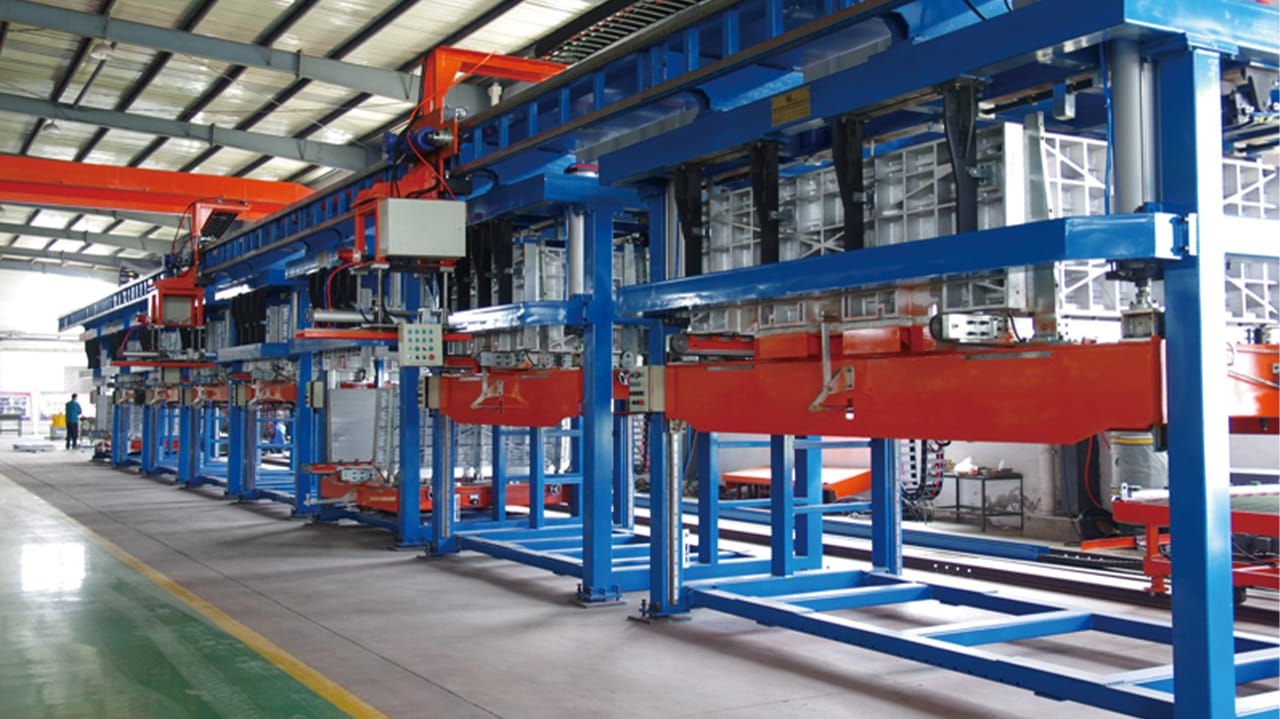
Ready to plan your refrigeration project?
Share your target output and product mix — our engineering team replies with a capacity plan and quote within three business days.
Get an engineering quoteRelated articles
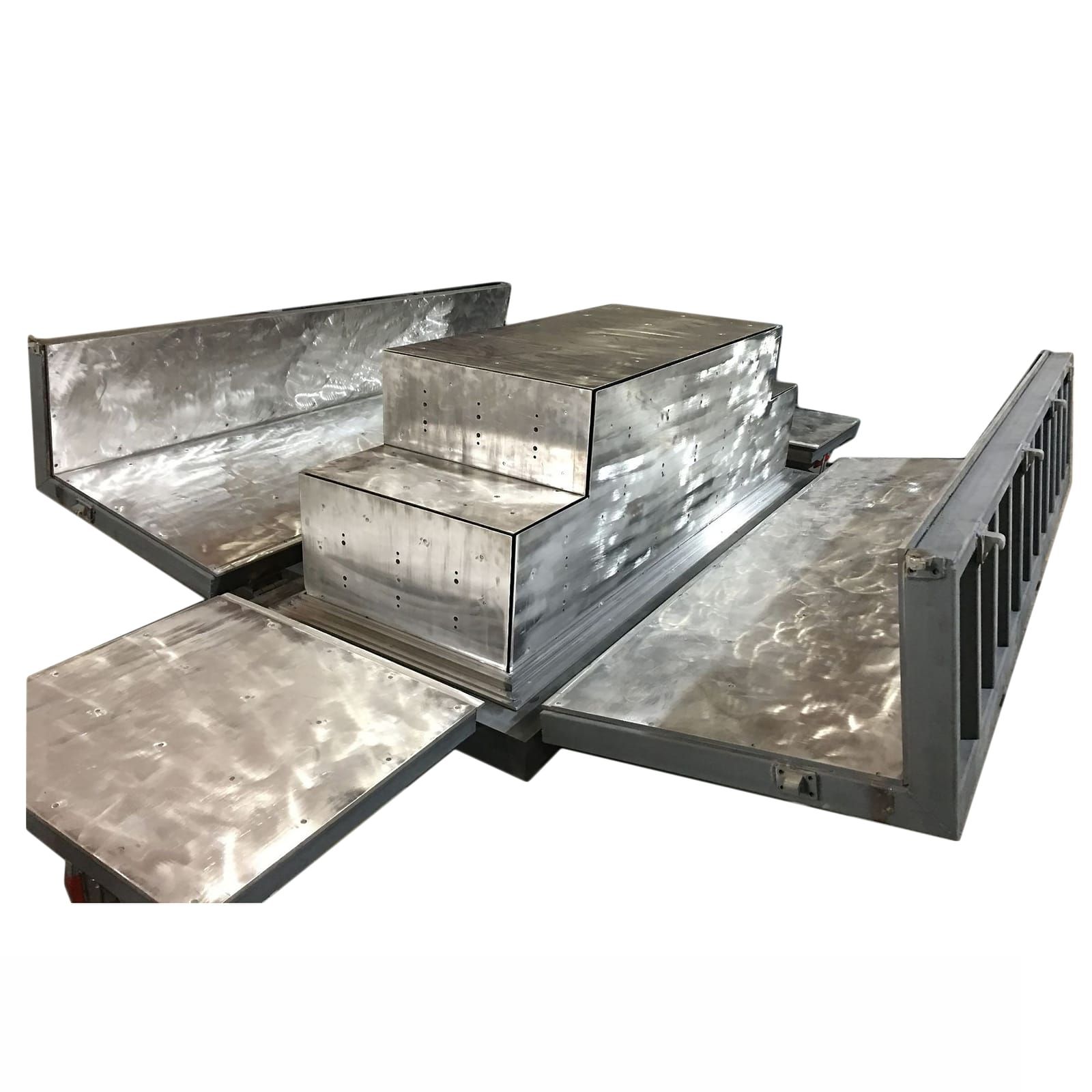
Vacuum Forming vs Foaming Moulds for Refrigerator Production — A Practical Comparison
Two very different moulds, one production line. Here is how we help factory owners choose between them — with precision specs, lifespan, lead time and typical budget.
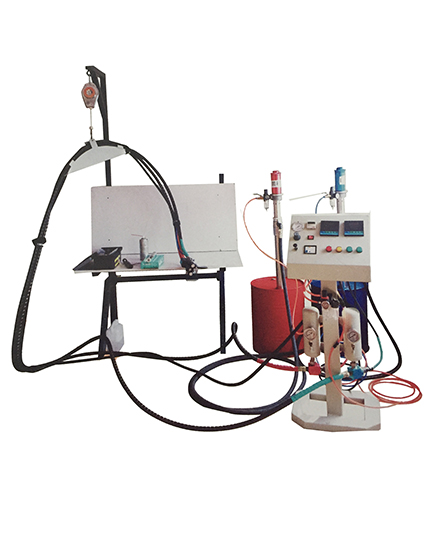
High-Pressure vs Low-Pressure PU Foaming Machine — Which One Does Your Factory Need?
Same chemicals, very different machines. We break down pressure, output, foam quality and investment so you can pick the right PU foaming machine for your line.