
Medical Refrigerator OEM Manufacturer in China — Vaccine & Pharmacy Fridge Buyer’s Guide (2026)
Sourcing a medical refrigerator (fridge) OEM manufacturer in China is a compliance and engineering decision, not a price decision. This pillar covers the four certification frameworks, the six-criteria evaluation framework, the 12-field RFQ document, realistic timelines and 2026 price tiers for procurement teams shipping vaccine and pharmacy fridges into Europe, MENA and Latin America.
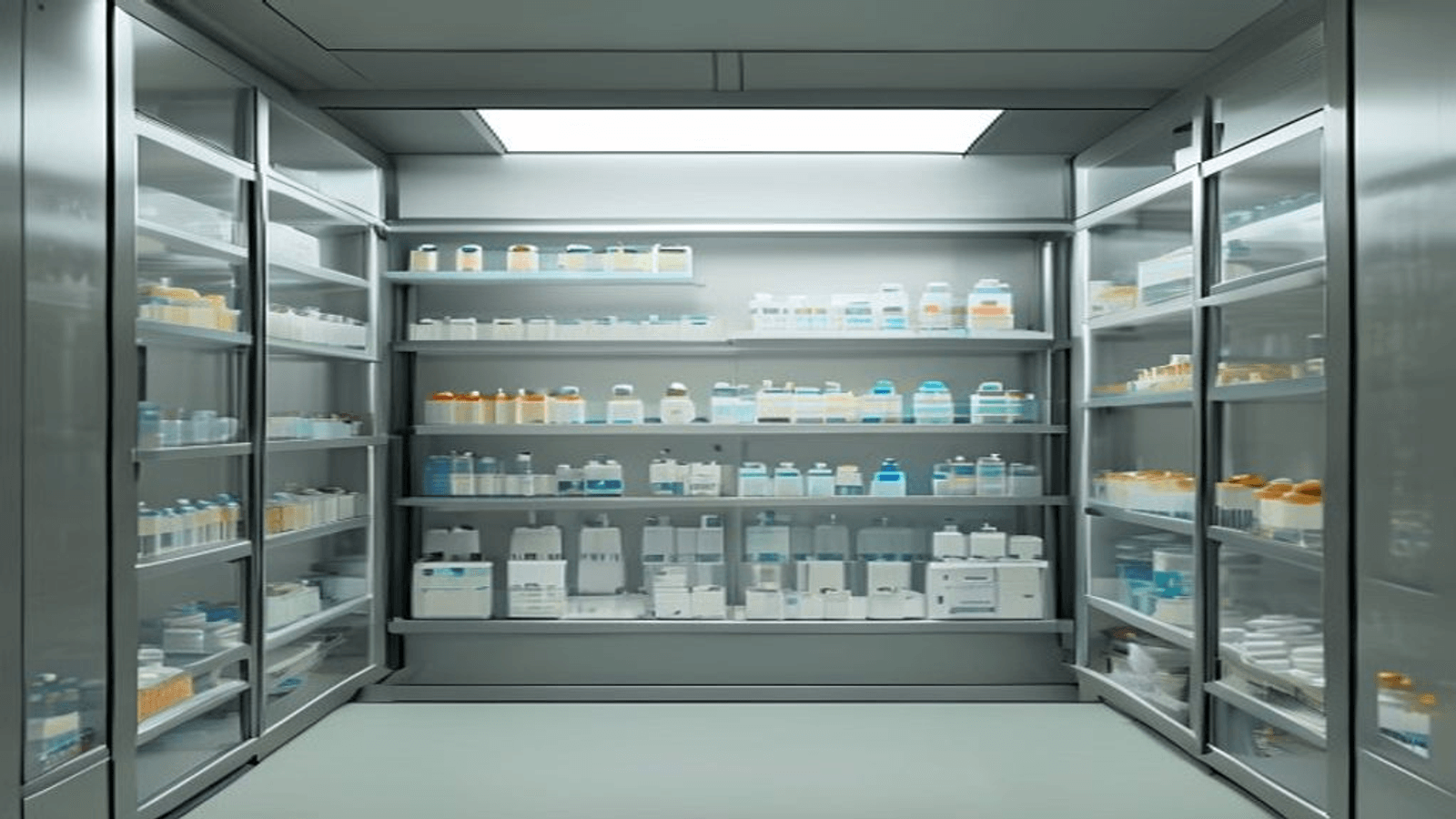
A serious medical refrigerator OEM evaluation in China filters on four compliance frameworks (EN 60601-1, WHO PQS, FDA 21 CFR Part 1271, EU MDR), then scores six operational criteria (ISO 13485 scope, dedicated medical line architecture, engineering bench depth, current type-test certificates on the buying platform, 7–10 year spare-parts commitment, references in destination market). FOB price 2026: USD 380–950 for pharmacy +2/+8 °C cabinets, USD 780–1,650 for blood bank +4 °C and −20/−30 °C vaccine freezers, USD 2,800–6,500 for −40/−86 °C ULT. Realistic timeline 6–9 months from PO to first PQ-tested cabinet. Send a complete 12-field RFQ; factories that quote back in 5 working days have the engineering bench depth a medical buyer needs.
Sourcing a medical refrigerator OEM is not the same exercise as sourcing a domestic refrigerator OEM. The cabinet itself looks similar; the discipline behind it is not. A vaccine fridge that drifts 2 °C above its label can cost a national immunisation campaign hundreds of doses and trigger a regulatory investigation that reaches the factory floor.
That is why procurement teams sourcing medical refrigeration from China ask a different question than appliance buyers. The question is not "who can build this cheapest" — it is "which Chinese factory has the compliance discipline, the production-line architecture, and the documented engineering team that lets us ship this into Europe, MENA or LATAM under EN 60601, WHO PQS, FDA 21 CFR or EU MDR."
This guide is a buyer's pillar for that decision. It covers the four compliance frameworks that pre-qualify Chinese medical refrigerator OEMs, the six-criteria evaluation framework we recommend, the production-line architecture that distinguishes a medical line from a domestic one, the RFQ document fields, the realistic timeline from inquiry to first PQ-tested cabinet, and the price tiers buyers can expect in 2026.
Speed-Read — China Medical Refrigerator OEM in 2026
| Question | Short answer |
|---|---|
| Can a Chinese OEM legally ship medical refrigerators into Europe? | Yes — if the factory holds EN 60601-1 third-party certification and the cabinet is registered under the buyer's EU MDR authorised representative. |
| What is the minimum certification floor for an OEM partner? | ISO 13485 quality system + EN 60601-1 product certification + ISO 9001 manufacturing. WHO PQS only for UN/NGO procurement. |
| Typical price for a +2°C / +8°C pharmacy refrigerator OEM? | USD 380 – USD 950 per cabinet FOB, depending on volume and door type (single, glass, double). |
| Typical lead time from PO to first PQ-tested cabinet? | 6 – 9 months including tooling, EN 60601 type-test, and on-site FAT (Factory Acceptance Test). |
| Where in China are these factories concentrated? | Jiangsu (Jiangyin / Wuxi), Zhejiang (Ningbo / Hangzhou), Shandong (Qingdao) — the same clusters that build domestic refrigeration plus dedicated medical lines. |
Why Source a Medical Refrigerator OEM from China in 2026
The conversation about Chinese medical refrigeration has changed materially in the last five years. Three structural forces did the work.
One — production-line maturity. The same cluster that supplies Vestel, Beko, Whirlpool and Sharp with domestic refrigeration production lines has, since 2018, built parallel medical-grade lines for both export OEM and the Chinese domestic medical market. The mould precision, foaming-machine pressure stability and dimensional QA infrastructure transferred from domestic to medical with the regulatory layer added on top, not as a separate discipline.
Two — compliance infrastructure. Third-party EN 60601-1 type-test laboratories accredited by TÜV Rheinland, SGS, Intertek and Bureau Veritas now operate inside China. A factory in Jiangyin can complete the full EN 60601-1 + EN 60601-1-2 EMC test on a 4-week cycle without shipping the prototype to Europe. WHO PQS pre-qualification work happens through the same labs against the PQS E03 family of specifications.
Three — cost structure clarity. The cost gap between Chinese OEM medical refrigerators and European-built equivalents widened during 2020 – 2024 even as European energy and labour costs rose. A 200-litre pharmacy refrigerator that quotes USD 720 FOB Ningbo lands at EUR 1,650 – EUR 2,100 retail in Europe, with margin for distributor, installer and warranty reserve. The same cabinet built by a Turkish or Italian OEM quotes EUR 1,200 – EUR 1,600 FOB origin.
None of this means every Chinese factory clears the bar. It means the pool of factories that do clear it has widened from a handful to several dozen, and the buyer's task is filtering.
The Four Compliance Frameworks That Decide Who Ships Where
Before evaluating any specific factory, you have to know which compliance framework the destination market enforces. Four frameworks cover essentially every regulated buyer.
EN 60601-1 — Medical Electrical Equipment Safety
The European safety standard covering all medical electrical equipment, refrigerators included. EN 60601-1 specifies dielectric strength, leakage current, mechanical safety, temperature control accuracy, alarm functions and reliability under fault conditions. EN 60601-1-2 adds electromagnetic compatibility (EMC). Third-party certification by an EU-recognised body (TÜV, SGS, Intertek, BV) is the floor for any cabinet sold into the European Union or claiming "medical grade" in countries that recognise the European framework. EN 60601-1 + A12 reference.
WHO PQS — Performance, Quality, Safety
The WHO PQS catalogue qualifies cold-chain equipment for the UN procurement system and most national immunisation programmes funded by Gavi, UNICEF and similar agencies. PQS specifies hold-over time, temperature uniformity, alarm thresholds, solar-direct-drive variants and field-serviceability. A factory passes PQS at the device level (specific cabinet model), not at the factory level — every PQS-listed cabinet has a unique catalogue code (E003/xxx).
FDA 21 CFR Part 1271 + Class I/II Listing
The US Food and Drug Administration regulates medical refrigerators used to store human cells, tissues and cellular and tissue-based products (HCT/Ps) under 21 CFR Part 1271. Most pharmacy and vaccine refrigerators are FDA Class I listed (510(k)-exempt), some are Class II requiring a 510(k) clearance. For Chinese OEMs, US market access depends on the buyer's FDA establishment registration; the factory does not register, the brand owner does.
EU MDR 2017/745 — Medical Device Regulation
Replacing the old MDD, EU MDR classifies medical refrigerators based on intended use. Pharmacy storage refrigerators are typically Class I. Blood bank refrigerators may be Class IIa (active therapeutic, monitored). Class IIa requires a Notified Body involvement in the conformity assessment. For a Chinese OEM partnership, this means the European buyer takes the MDR registration responsibility; the factory supplies the technical file inputs.
Six-Criteria Framework for Evaluating a Chinese Medical Refrigerator OEM
Once a shortlist of factories with the relevant certifications exists, the next decision is operational. We use a six-criteria scoring framework with international procurement teams.
1. ISO 13485 medical quality system depth
ISO 13485 is the medical-device version of ISO 9001. The audit goes deeper into design history files, risk management (ISO 14971), traceability and complaint handling. Factories with only ISO 9001 are not medical OEMs — they are appliance factories with a medical SKU line. Verify the ISO 13485 certificate scope explicitly lists "refrigeration equipment for medical use" or equivalent.
2. Production-line architecture — dedicated vs shared
A medical refrigerator production line shares foaming-machine technology with domestic lines but diverges on three points: cabinet handling (no contamination from oils or dust common in domestic lines), foam-density QA per cabinet (not per batch), and traceability — every cabinet has a unique serial bound to its foam shot weight, mould cycle, and operator. Ask for a video walkthrough; cross-reference the foaming station and the QA station.
3. Engineering team — design ownership
OEM partnerships go badly when the factory cannot iterate the design. Medical buyers regularly need to add a temperature monitoring port, a UPS interface, a glass-door variant or an extended-temperature alarm threshold. A factory with a 10+ engineer mechanical/electrical/firmware team in-house can ship the variant in 6 – 8 weeks. A factory with one engineer who outsources design will quote 6 months and disappoint.
4. Type-test compliance support
Type-test laboratory engagement is the bottleneck on first-shipment timeline. A factory that has a current EN 60601-1 + EN 60601-1-2 certificate on the platform you are buying (not on a different cabinet you will need to re-test) saves three months. Ask for the certificate, the report number and the lab.
5. Spare-parts and field-service commitment
Medical refrigerators run 10 – 15 years. Spare-parts availability for compressors, thermostats, door gaskets, alarm boards and door hinges must be guaranteed for the full lifecycle. A serious OEM commits to a documented spare-parts catalogue with 7 – 10 year stocking, on top of any local distributor arrangement.
6. Reference list in your destination market
Ask for active customer references in the destination region — Europe, MENA, LATAM. Verify them. A factory that ships medical refrigerators to Brazil, Saudi Arabia or France today is materially safer to source from than one targeting your market for the first time, regardless of certification status.
Medical Production Line Architecture — Three Things That Differ from Domestic
For procurement teams evaluating factory tours, three architectural differences distinguish a real medical line from a domestic line with a medical SKU.
Foaming density per cabinet, not per batch. Domestic refrigerator lines validate foam density per shift or per batch. Medical lines weigh the actual PU shot per cabinet, log it against the cabinet serial, and reject any cabinet with shot weight outside a tighter band (typically ±2 % vs ±5 % on domestic). This implies foaming machines with mass-flow meters on both polyol and isocyanate, not just volumetric meters.
Temperature uniformity validation per cabinet. A WHO PQS or EN 60601-1 cabinet ships with a temperature mapping report — typically nine probes recording for 48 hours under defined ambient conditions. Domestic refrigerators ship with a single-point factory test. The medical line either runs this test in-house or has a controlled-environment chamber bank that processes every cabinet, not a sample. This is a substantial capex item and a clear separator between real medical OEMs and pretenders.
Documentation envelope. Every cabinet leaves the medical line with a documentation package — IQ/OQ template, mapping report, calibration certificates, spare-parts list, IFU (Instructions for Use), labelling in the destination language. A factory whose answer to "can you supply IQ/OQ template" is "we will look into it" is not ready. The reference document set is part of the line, not an afterthought.
Twelve RFQ Fields That Separate Serious Buyers
The single highest-leverage thing a buyer can do in this segment is send a complete RFQ. Most quotes are wrong because the RFQ was incomplete. A serious RFQ to a Chinese medical refrigerator OEM specifies:
- Temperature range and uniformity target (e.g. +2 to +8°C, uniformity ≤ 2 °C across all loaded probes)
- Internal volume (e.g. 200 L, 400 L, 600 L)
- Door configuration (single solid, single glass, double, drawer)
- Cabinet dimensions and footprint constraint
- Ambient operating range (typical pharmacy +10 to +32 °C, tropical version +43 °C)
- Power supply (220V/50Hz vs 110V/60Hz, voltage stabiliser, UPS interface)
- Alarm and monitoring (high-temp, low-temp, door, power-fail, sensor-fail, communication protocol)
- Compliance target (EN 60601-1 yes/no, WHO PQS yes/no, FDA target, MDR class)
- Annual volume and ramp profile (year 1 / year 2 / year 3)
- Branding requirement (full private label, co-brand, generic)
- Spare-parts and warranty (5y, 7y, 10y; on-site or DOA replacement)
- Destination and Incoterm (FOB China, CIF destination, DDP)
Send the RFQ as a single PDF or structured spreadsheet. Factories that come back with a quote in 5 working days have a credible internal quote-process; factories that take 3+ weeks rarely have the engineering bench depth a medical buyer needs.
Realistic Timeline — Inquiry to First PQ-Tested Cabinet
A reasonable timeline assumption for a new OEM medical refrigerator programme with a Chinese factory is 6 – 9 months from PO to first cabinet that passes the destination compliance bar.
- Weeks 0 – 2. RFQ exchange, quote, technical clarification calls.
- Weeks 2 – 4. Sample cabinet (existing platform) ships for buyer evaluation.
- Weeks 4 – 8. Design freeze on private-label variant: door, panel, dimensions, alarm spec.
- Weeks 8 – 16. Tooling — foaming mould, door mould, panel die — built and validated.
- Weeks 16 – 20. Type-test at accredited lab — EN 60601-1 + EN 60601-1-2 EMC. Reports issued.
- Weeks 20 – 24. FAT (Factory Acceptance Test) — sample batch of 10 – 50 cabinets, mapping reports, IQ/OQ templates.
- Weeks 24 – 28. First production batch ships. Distribution-network buyers register with EU notified body or FDA listing during this window.
Compressing this timeline is possible when the factory has a current EN 60601-1 certificate on the exact platform with only cosmetic differences. In that case the shipment-ready timeline reduces to 12 – 16 weeks. It is not possible to compress below 12 weeks for a genuinely new variant; type-test labs do not accept faster cycles for medical electrical equipment.
Pricing Benchmarks — Four Cabinet Tiers in 2026
Indicative FOB China pricing for the four most common medical refrigerator OEM cabinet tiers, at 200 – 500 unit annual volume:
| Tier | Internal volume | FOB price USD | Compliance |
|---|---|---|---|
| +2°C / +8°C pharmacy | 200 – 600 L | 380 – 950 | EN 60601-1, optional WHO PQS |
| +4°C blood bank | 300 – 800 L | 780 – 1,650 | EN 60601-1, EU MDR IIa typical |
| −20°C / −30°C vaccine freezer | 200 – 500 L | 780 – 1,580 | EN 60601-1, WHO PQS E003 family |
| −40°C / −86°C ULT | 300 – 700 L | 2,800 – 6,500 | EN 60601-1, biobank protocols |
Variants — glass door, drawer cabinets, integrated chart recorder, mobile chassis — typically add 8 – 22 % to the base FOB price. Tooling is amortised separately at USD 35,000 – USD 120,000 depending on cabinet complexity, paid up-front or over the first 500 units.
UREXCEED as a Medical Refrigerator OEM Partner
We are built around the four-decade Jiangyin – Kunshan refrigeration equipment cluster. We integrate five mould factories and three PU foaming machine shops into one-stop production-line solutions, and have delivered 1,800+ projects across 40+ countries since 1995. Our medical refrigerator OEM programme covers the +2 °C to −86 °C range, with a dedicated production-line architecture: per-cabinet foam-shot weighing, per-cabinet temperature mapping, ISO 13485 quality-system documentation, and EN 60601-1 type-test support through accredited third-party labs in our region.
The cabinets we ship to medical buyers in France, Brazil and the Middle East today were specified through the six-criteria framework above. We did not write that framework to sell ourselves — we wrote it because the buyers we lose to it are the buyers who picked us in the first place by accident, and we would rather lose them on the spec sheet than at the type-test lab six months in.
If you are scoping a medical refrigerator OEM partnership for 2026 or 2027, the right starting point is a complete RFQ against the twelve fields above. Send it to info@urexceed.com with subject line "Medical refrigerator OEM RFQ — [destination market]", and we will return a quote in five working days or tell you transparently which fields disqualify our platform for your application.
Building a factory? See our production line guide → For a complete plant, browse our medical refrigerator manufacturing solutions.
Frequently Asked Questions
Can a Chinese medical refrigerator OEM sell directly into the European Union under EU MDR?
The factory itself does not register the device in the EU. The brand owner — typically the importer or distributor — registers as the EU MDR Authorised Representative and holds the technical file. The Chinese OEM contributes the technical file inputs: EN 60601-1 type-test reports, ISO 13485 certificate, risk management file, IFU and labelling. The same model works for FDA in the United States and ANVISA in Brazil. The OEM must therefore be able to supply a complete technical file dossier, not just the cabinet.
How do EN 60601-1 and WHO PQS differ for medical refrigerators?
EN 60601-1 is a general medical electrical safety standard — it covers electrical safety, EMC, mechanical safety and basic temperature control. WHO PQS is application-specific to vaccine cold chain — it adds hold-over time, temperature uniformity under ambient stress, solar-direct-drive options and field-serviceability. A cabinet can be EN 60601-1 certified without being PQS listed (e.g. pharmacy fridge for European retail), and vice versa is possible but unusual (PQS without EN 60601-1 only for off-grid lighting-load cabinets in some legacy programmes).
What is the minimum order quantity for a private-label medical refrigerator OEM in China?
For an existing platform cabinet with private-label branding only, MOQs run 50 – 200 cabinets per model. For a custom variant requiring tooling (new mould, new door panel), MOQ is typically 500 – 1,000 cabinets amortised across the first contract year. Some Chinese OEMs accept lower MOQs at higher per-cabinet pricing for distributor entry-tier programmes.
Are Chinese medical refrigerators eligible for Gavi / UNICEF procurement?
Yes — Gavi and UNICEF source vaccine cold-chain equipment through the WHO PQS catalogue. Several Chinese factories hold active PQS-listed models in the E003 family. Eligibility is at the model level, not the factory level, so a buyer must verify the specific PQS code matches the cabinet model and configuration being quoted.
How long does an EN 60601-1 type-test take in China?
For a new cabinet platform: 4 – 8 weeks at an accredited lab (TÜV Rheinland Shanghai, SGS Shenzhen, Intertek Shanghai, BV Tianjin), once the prototype is ready. Re-test for a variant on an already-certified platform: 2 – 4 weeks. Reports issue within 1 – 2 weeks of test completion. The bottleneck is usually prototype readiness and EMC chamber availability, not the test itself.
What spare-parts commitment should a buyer expect from a serious Chinese OEM?
Compressor, thermostat, evaporator fan, door gasket, alarm board and door hinges: 7 – 10 year stocking commitment minimum. The OEM should ship a recommended spare-parts list with the first cabinet batch, with line-item pricing and lead time. For Gavi / UNICEF programmes, PQS specifies a stronger field-serviceability requirement; for European pharmacy distribution, the warranty length (typically 5 years) sets the minimum spare-parts horizon.
`; export const body_medicalRefrigeratorOemChina_fr = `
Sourcer un fabricant OEM de réfrigérateurs médicaux n'est pas le même exercice que sourcer un OEM de réfrigérateurs domestiques. L'armoire elle-même se ressemble ; la discipline derrière, non. Un frigo à vaccins qui dérive de 2 °C au-dessus de son étiquette peut coûter à une campagne nationale d'immunisation des centaines de doses, et déclencher une enquête réglementaire qui remonte jusqu'au sol de l'usine.
C'est pourquoi les équipes achats qui sourcent la réfrigération médicale en Chine posent une question différente de celle des acheteurs d'électroménager. La question n'est pas "qui peut construire cela au prix le plus bas" — c'est "quelle usine chinoise a la discipline de conformité, l'architecture de ligne de production et l'équipe d'ingénierie documentée qui nous permettent d'expédier ce produit en Europe, au MENA ou en Amérique latine sous EN 60601, WHO PQS, FDA 21 CFR ou EU MDR."
Ce guide est un pilier acheteur pour cette décision. Il couvre les quatre cadres de conformité qui pré-qualifient les fabricants OEM chinois de réfrigérateurs médicaux, le cadre d'évaluation en six critères que nous recommandons, l'architecture de ligne qui distingue une ligne médicale d'une ligne domestique, les champs RFQ, le délai réaliste entre demande et première armoire testée PQ, et les tranches de prix attendues en 2026.
Lecture express — OEM réfrigérateurs médicaux Chine en 2026
| Question | Réponse courte |
|---|---|
| Un OEM chinois peut-il légalement expédier des réfrigérateurs médicaux en Europe ? | Oui — si l'usine détient la certification tierce EN 60601-1 et que l'armoire est enregistrée sous le mandataire UE MDR de l'acheteur. |
| Quel est le seuil minimal de certification pour un partenaire OEM ? | Système qualité ISO 13485 + certification produit EN 60601-1 + fabrication ISO 9001. WHO PQS uniquement pour les achats ONU/ONG. |
| Prix typique pour un réfrigérateur de pharmacie OEM +2 °C / +8 °C ? | 380 – 950 USD par armoire FOB, selon le volume et le type de porte (simple, vitrée, double). |
| Délai typique de la commande à la première armoire testée PQ ? | 6 – 9 mois incluant outillage, test de type EN 60601 et FAT (Factory Acceptance Test) sur site. |
| Où en Chine ces usines sont-elles concentrées ? | Jiangsu (Jiangyin / Wuxi), Zhejiang (Ningbo / Hangzhou), Shandong (Qingdao) — les mêmes clusters qui construisent la réfrigération domestique plus des lignes médicales dédiées. |
Pourquoi sourcer un OEM de réfrigérateurs médicaux en Chine en 2026
La conversation sur la réfrigération médicale chinoise a changé matériellement ces cinq dernières années. Trois forces structurelles ont fait le travail.
Un — maturité des lignes de production. Le cluster qui fournit Vestel, Beko, Whirlpool et Sharp en lignes de production de réfrigération domestique a construit, depuis 2018, des lignes parallèles de niveau médical, à la fois pour l'export OEM et le marché médical chinois domestique. La précision des moules, la stabilité de pression des machines de moussage et l'infrastructure d'AQ dimensionnelle ont été transférées du domestique au médical, avec la couche réglementaire ajoutée par-dessus, et non comme une discipline séparée.
Deux — infrastructure de conformité. Des laboratoires tiers de test de type EN 60601-1, accrédités par TÜV Rheinland, SGS, Intertek et Bureau Veritas, opèrent désormais à l'intérieur de la Chine. Une usine de Jiangyin peut compléter le cycle complet EN 60601-1 + EN 60601-1-2 EMC en 4 semaines sans expédier le prototype vers l'Europe. La pré-qualification WHO PQS passe par les mêmes labos contre les spécifications de la famille PQS E03.
Trois — clarté de la structure de coûts. L'écart de coût entre les réfrigérateurs médicaux OEM chinois et leurs équivalents construits en Europe s'est élargi entre 2020 et 2024, même avec la hausse des coûts énergétiques et de main-d'œuvre européens. Un réfrigérateur de pharmacie de 200 litres coté 720 USD FOB Ningbo atterrit à 1 650 – 2 100 EUR au détail en Europe, avec marge pour le distributeur, l'installateur et la réserve de garantie. La même armoire construite par un OEM turc ou italien cote 1 200 – 1 600 EUR FOB origine.
Rien de cela ne signifie que toutes les usines chinoises passent la barre. Cela signifie que le pool d'usines qui la passent est passé d'une poignée à plusieurs dizaines, et que le travail de l'acheteur est le filtrage.
Les quatre cadres de conformité qui décident qui expédie où
Avant d'évaluer une usine spécifique, vous devez savoir quel cadre de conformité s'applique au marché de destination. Quatre cadres couvrent essentiellement tout acheteur régulé.
EN 60601-1 — Sécurité des appareils électromédicaux
La norme européenne couvrant tout équipement électromédical, réfrigérateurs inclus. EN 60601-1 spécifie la rigidité diélectrique, le courant de fuite, la sécurité mécanique, la précision du contrôle de température, les fonctions d'alarme et la fiabilité en conditions de défaut. EN 60601-1-2 ajoute la compatibilité électromagnétique (CEM). La certification tierce par un organisme reconnu UE (TÜV, SGS, Intertek, BV) est le plancher pour toute armoire vendue dans l'Union européenne ou se réclamant "qualité médicale" dans les pays qui reconnaissent le cadre européen. Référence EN 60601-1 + A12.
WHO PQS — Performance, Quality, Safety
Le catalogue WHO PQS qualifie les équipements de chaîne du froid pour le système d'achats des Nations unies et la plupart des programmes nationaux d'immunisation financés par Gavi, l'UNICEF et agences similaires. PQS spécifie le temps de tenue, l'uniformité de température, les seuils d'alarme, les variantes solaires à entraînement direct et la réparabilité sur le terrain. Une usine passe PQS au niveau de l'appareil (modèle spécifique), pas au niveau de l'usine — chaque armoire PQS-listée a un code catalogue unique (E003/xxx).
FDA 21 CFR Part 1271 + référencement Classe I/II
La FDA américaine régule les réfrigérateurs médicaux utilisés pour stocker des cellules humaines, des tissus et des produits cellulaires (HCT/Ps) sous 21 CFR Part 1271. La plupart des réfrigérateurs de pharmacie et de vaccins sont FDA Classe I (exempts de 510(k)), certains sont Classe II nécessitant une autorisation 510(k). Pour les OEM chinois, l'accès au marché US dépend de l'enregistrement FDA de l'acheteur ; l'usine ne s'enregistre pas, c'est le propriétaire de la marque qui le fait.
EU MDR 2017/745 — Règlement sur les dispositifs médicaux
Remplaçant l'ancien MDD, le MDR UE classifie les réfrigérateurs médicaux selon l'usage prévu. Les réfrigérateurs de stockage de pharmacie sont typiquement Classe I. Les réfrigérateurs de banque de sang peuvent être Classe IIa (thérapeutique actif, surveillé). Classe IIa requiert l'implication d'un Organisme Notifié dans l'évaluation de conformité. Pour un partenariat OEM chinois, cela signifie que l'acheteur européen prend la responsabilité d'enregistrement MDR ; l'usine fournit les entrées du dossier technique.
Cadre d'évaluation en six critères d'un OEM chinois de réfrigérateurs médicaux
Une fois constituée une short-list d'usines avec les certifications pertinentes, la décision suivante est opérationnelle. Nous utilisons un cadre de notation en six critères avec les équipes achats internationales.
1. Profondeur du système qualité ISO 13485
ISO 13485 est la version dispositif-médical d'ISO 9001. L'audit va plus profond dans les dossiers d'historique de conception, la gestion du risque (ISO 14971), la traçabilité et le traitement des réclamations. Les usines avec seulement ISO 9001 ne sont pas des OEM médicaux — elles sont des usines d'électroménager avec une ligne SKU médicale. Vérifiez que le périmètre du certificat ISO 13485 liste explicitement "équipement de réfrigération à usage médical" ou équivalent.
2. Architecture de ligne — dédiée vs partagée
Une ligne de production de réfrigérateurs médicaux partage la technologie des machines de moussage avec les lignes domestiques, mais diverge sur trois points : manipulation d'armoire (pas de contamination par les huiles ou la poussière communes en lignes domestiques), AQ de densité de mousse par armoire (pas par lot), et traçabilité — chaque armoire a un numéro de série unique lié à son poids d'injection de mousse, son cycle de moule et son opérateur. Demandez une visite vidéo ; recoupez avec la station de moussage et la station d'AQ.
3. Équipe d'ingénierie — propriété de la conception
Les partenariats OEM tournent mal quand l'usine ne sait pas itérer la conception. Les acheteurs médicaux ont régulièrement besoin d'ajouter un port de surveillance de température, une interface UPS, une variante porte vitrée ou un seuil d'alarme de température étendu. Une usine avec une équipe interne de 10+ ingénieurs mécanique/électrique/firmware peut expédier la variante en 6 – 8 semaines. Une usine avec un seul ingénieur qui sous-traite la conception cotera 6 mois et décevra.
4. Support test-de-type
L'engagement du laboratoire de test de type est le goulot d'étranglement sur le calendrier de première expédition. Une usine qui a un certificat EN 60601-1 + EN 60601-1-2 actuel sur la plate-forme que vous achetez (pas sur une armoire différente que vous devrez re-tester) économise trois mois. Demandez le certificat, le numéro de rapport et le labo.
5. Engagement pièces de rechange et SAV
Les réfrigérateurs médicaux fonctionnent 10 – 15 ans. La disponibilité des pièces de rechange — compresseur, thermostat, joints de porte, cartes d'alarme, charnières — doit être garantie pour tout le cycle de vie. Un OEM sérieux s'engage sur un catalogue documenté avec stock 7 – 10 ans, en plus de tout arrangement de distributeur local.
6. Liste de références sur votre marché de destination
Demandez des références clients actifs dans la région de destination — Europe, MENA, LATAM. Vérifiez-les. Une usine qui expédie aujourd'hui des réfrigérateurs médicaux au Brésil, en Arabie saoudite ou en France est matériellement plus sûre à sourcer qu'une qui vise votre marché pour la première fois, indépendamment du statut de certification.
Architecture de ligne médicale — trois choses qui diffèrent du domestique
Pour les équipes achats qui évaluent des visites d'usine, trois différences architecturales distinguent une vraie ligne médicale d'une ligne domestique avec un SKU médical.
Densité de moussage par armoire, pas par lot. Les lignes domestiques valident la densité de mousse par poste ou par lot. Les lignes médicales pèsent l'injection PU réelle par armoire, l'enregistrent contre le numéro de série de l'armoire, et rejettent toute armoire dont le poids d'injection sort d'une bande plus serrée (typiquement ±2 % contre ±5 % en domestique). Cela implique des machines de moussage avec débitmètres massiques sur le polyol et l'isocyanate, pas seulement volumétriques.
Validation d'uniformité de température par armoire. Une armoire WHO PQS ou EN 60601-1 est expédiée avec un rapport de cartographie de température — typiquement neuf sondes enregistrant 48 heures sous conditions ambiantes définies. Les réfrigérateurs domestiques sont expédiés avec un test usine en un seul point. La ligne médicale fait soit ce test en interne, soit dispose d'un banc de chambres à environnement contrôlé qui traite chaque armoire, pas un échantillon. C'est un investissement matériel substantiel et un séparateur clair entre vrais OEM médicaux et prétendants.
Enveloppe documentaire. Chaque armoire quitte la ligne médicale avec un dossier documentaire — gabarit IQ/OQ, rapport de cartographie, certificats d'étalonnage, liste de pièces de rechange, IFU (Instructions for Use), étiquetage dans la langue de destination. Une usine dont la réponse à "pouvez-vous fournir le gabarit IQ/OQ" est "nous allons regarder" n'est pas prête. L'ensemble documentaire de référence fait partie de la ligne, pas d'une réflexion après coup.
Douze champs RFQ qui séparent les acheteurs sérieux
La chose à plus fort effet de levier qu'un acheteur peut faire dans ce segment est d'envoyer une RFQ complète. La plupart des cotations sont fausses parce que la RFQ était incomplète. Une RFQ sérieuse à un OEM chinois de réfrigérateurs médicaux spécifie :
- Plage de température et cible d'uniformité (ex. +2 à +8 °C, uniformité ≤ 2 °C sur toutes les sondes chargées)
- Volume intérieur (ex. 200 L, 400 L, 600 L)
- Configuration de porte (simple pleine, simple vitrée, double, tiroir)
- Dimensions d'armoire et contrainte d'empreinte au sol
- Plage de fonctionnement ambient (pharmacie typique +10 à +32 °C, version tropicale +43 °C)
- Alimentation (220V/50Hz vs 110V/60Hz, stabilisateur, interface UPS)
- Alarme et surveillance (haute-temp, basse-temp, porte, défaut secteur, défaut capteur, protocole communication)
- Cible de conformité (EN 60601-1 oui/non, WHO PQS oui/non, cible FDA, classe MDR)
- Volume annuel et profil de montée (an 1 / an 2 / an 3)
- Exigence de marquage (private label complet, co-brand, générique)
- Pièces de rechange et garantie (5a, 7a, 10a ; sur site ou remplacement DOA)
- Destination et Incoterm (FOB Chine, CIF destination, DDP)
Envoyez la RFQ comme un PDF unique ou un tableur structuré. Les usines qui reviennent avec une cotation en 5 jours ouvrés ont un processus de cotation interne crédible ; les usines qui prennent 3+ semaines ont rarement la profondeur de banc d'ingénierie qu'un acheteur médical exige.
Calendrier réaliste — de la demande à la première armoire testée PQ
Une hypothèse de calendrier raisonnable pour un nouveau programme OEM de réfrigérateurs médicaux avec une usine chinoise est de 6 – 9 mois entre la commande et la première armoire qui passe le seuil de conformité de destination.
- Semaines 0 – 2. Échange RFQ, cotation, appels de clarification technique.
- Semaines 2 – 4. Armoire d'échantillon (plateforme existante) expédiée pour évaluation acheteur.
- Semaines 4 – 8. Gel de la conception sur la variante private-label : porte, panneau, dimensions, spec d'alarme.
- Semaines 8 – 16. Outillage — moule de moussage, moule de porte, matrice de panneau — fabriqué et validé.
- Semaines 16 – 20. Test de type au labo accrédité — EN 60601-1 + EN 60601-1-2 EMC. Rapports émis.
- Semaines 20 – 24. FAT (Factory Acceptance Test) — lot échantillon de 10 – 50 armoires, rapports de cartographie, gabarits IQ/OQ.
- Semaines 24 – 28. Premier lot de production expédié. Les acheteurs réseau-distribution s'enregistrent auprès de l'organisme notifié UE ou de la liste FDA pendant cette fenêtre.
Compresser ce calendrier est possible quand l'usine a un certificat EN 60601-1 actuel sur la plateforme exacte avec uniquement des différences cosmétiques. Dans ce cas, le délai prêt-à-expédier se réduit à 12 – 16 semaines. Il n'est pas possible de comprimer sous 12 semaines pour une variante véritablement nouvelle ; les labos de test de type n'acceptent pas de cycles plus rapides pour les équipements électromédicaux.
Repères de prix — quatre tranches d'armoires en 2026
Prix indicatifs FOB Chine pour les quatre tranches OEM les plus communes, à 200 – 500 unités de volume annuel :
| Tranche | Volume intérieur | Prix FOB USD | Conformité |
|---|---|---|---|
| +2 °C / +8 °C pharmacie | 200 – 600 L | 380 – 950 | EN 60601-1, WHO PQS en option |
| +4 °C banque de sang | 300 – 800 L | 780 – 1 650 | EN 60601-1, EU MDR IIa typique |
| −20 °C / −30 °C vaccins | 200 – 500 L | 780 – 1 580 | EN 60601-1, famille WHO PQS E003 |
| −40 °C / −86 °C ULT | 300 – 700 L | 2 800 – 6 500 | EN 60601-1, protocoles biobanque |
Variantes — porte vitrée, armoires à tiroirs, enregistreur graphique intégré, châssis mobile — ajoutent typiquement 8 – 22 % au prix FOB de base. L'outillage est amorti séparément à 35 000 – 120 000 USD selon la complexité de l'armoire, payé d'avance ou sur les 500 premières unités.
UREXCEED comme partenaire OEM réfrigérateurs médicaux
UREXCEED est construit autour du cluster d'équipements de réfrigération de Jiangyin – Kunshan, fort de quatre décennies. Nous intégrons cinq usines de moules et trois ateliers de machines de moussage PU en solutions one-stop, et avons livré 1 800+ projets dans 40+ pays depuis 1995. Notre programme OEM réfrigérateurs médicaux couvre la plage +2 °C à −86 °C, avec une architecture de ligne dédiée : pesage d'injection mousse par armoire, cartographie de température par armoire, documentation système qualité ISO 13485 et support test de type EN 60601-1 via labos tiers accrédités dans notre région.
Les armoires que nous expédions aujourd'hui aux acheteurs médicaux en France, au Brésil et au Moyen-Orient ont été spécifiées via le cadre des six critères ci-dessus. Nous n'avons pas écrit ce cadre pour nous vendre — nous l'avons écrit parce que les acheteurs que nous perdons à cause de lui sont les acheteurs qui nous ont choisis au départ par accident, et nous préférons les perdre sur la fiche technique qu'au labo de test de type six mois plus tard.
Si vous chiffrez un partenariat OEM réfrigérateurs médicaux pour 2026 ou 2027, le point de départ correct est une RFQ complète contre les douze champs ci-dessus. Envoyez-la à info@urexceed.com avec pour objet "RFQ OEM réfrigérateurs médicaux — [marché de destination]", et nous reviendrons avec une cotation en cinq jours ouvrés ou vous dirons en transparence quels champs disqualifient notre plateforme pour votre application.
Questions fréquemment posées
Un OEM chinois de réfrigérateurs médicaux peut-il vendre directement dans l'UE sous le règlement MDR ?
L'usine elle-même n'enregistre pas le dispositif dans l'UE. Le propriétaire de la marque — typiquement l'importateur ou le distributeur — s'enregistre comme Mandataire MDR UE et détient le dossier technique. L'OEM chinois contribue aux entrées du dossier technique : rapports de test de type EN 60601-1, certificat ISO 13485, fichier de gestion du risque, IFU et étiquetage. Le même modèle fonctionne avec la FDA aux États-Unis et l'ANVISA au Brésil. L'OEM doit donc être capable de fournir un dossier technique complet, pas seulement l'armoire.
Comment EN 60601-1 et WHO PQS diffèrent-elles pour les réfrigérateurs médicaux ?
EN 60601-1 est une norme générale de sécurité électromédicale — elle couvre la sécurité électrique, la CEM, la sécurité mécanique et le contrôle de température de base. WHO PQS est spécifique à l'application chaîne du froid vaccinale — elle ajoute le temps de tenue, l'uniformité de température sous stress ambient, les options solaires à entraînement direct et la réparabilité sur le terrain. Une armoire peut être certifiée EN 60601-1 sans être listée PQS (ex. frigo pharmacie pour retail européen), et l'inverse est possible mais inhabituel (PQS sans EN 60601-1 uniquement pour armoires à charge éclairage off-grid dans certains programmes hérités).
Quelle est la quantité minimum de commande pour un OEM private-label de réfrigérateurs médicaux en Chine ?
Pour une armoire de plateforme existante avec uniquement marquage private-label, les MOQ vont de 50 à 200 armoires par modèle. Pour une variante personnalisée nécessitant outillage (nouveau moule, nouveau panneau de porte), le MOQ est typiquement 500 – 1 000 armoires amorties sur la première année de contrat. Certains OEM chinois acceptent des MOQ plus bas à des prix unitaires plus élevés pour les programmes d'entrée distributeur.
Les réfrigérateurs médicaux chinois sont-ils éligibles aux achats Gavi / UNICEF ?
Oui — Gavi et l'UNICEF sourcent leurs équipements de chaîne du froid vaccinale via le catalogue WHO PQS. Plusieurs usines chinoises détiennent des modèles actifs PQS-listés dans la famille E003. L'éligibilité est au niveau du modèle, pas de l'usine, donc un acheteur doit vérifier que le code PQS spécifique correspond au modèle et à la configuration d'armoire cotés.
Combien de temps dure un test de type EN 60601-1 en Chine ?
Pour une nouvelle plateforme d'armoire : 4 – 8 semaines dans un labo accrédité (TÜV Rheinland Shanghai, SGS Shenzhen, Intertek Shanghai, BV Tianjin), une fois le prototype prêt. Re-test pour une variante sur plateforme déjà certifiée : 2 – 4 semaines. Les rapports sont émis 1 – 2 semaines après l'achèvement du test. Le goulot d'étranglement est habituellement la disponibilité du prototype et de la chambre CEM, pas le test lui-même.
Quel engagement de pièces de rechange un acheteur doit-il attendre d'un OEM chinois sérieux ?
Compresseur, thermostat, ventilateur d'évaporateur, joint de porte, carte d'alarme et charnières : engagement de stock 7 – 10 ans minimum. L'OEM doit expédier une liste recommandée de pièces de rechange avec le premier lot d'armoires, avec tarif par ligne et délai. Pour les programmes Gavi / UNICEF, PQS spécifie une exigence de réparabilité terrain plus forte ; pour la distribution pharmacie européenne, la durée de garantie (typiquement 5 ans) fixe l'horizon minimum de pièces de rechange.
Productos mencionados en este artículo
¿Listo para planificar su proyecto de refrigeración?
Comparta su objetivo de producción y mezcla de productos — nuestro equipo de ingeniería responde con un plan de capacidad y cotización en tres días hábiles.
Solicitar cotización de ingenieríaArtículos relacionados
Beverage Cooler Production Line — Cost, Payback & Turnkey Setup (2026 Pillar Guide)
Investment tiers from a single-door entry line to a full bottler-program build, the payback math behind a 3,000-unit/day line, and the complete equipment list and certification checklist a beverage cooler OEM needs to go from contract to first shipment.
Chef Base Production Line: Cost, Break-Even & Turnkey Manufacturing (2026 Pillar Guide)
Investment tiers, the break-even math behind an 800-unit/day line, and the full equipment list and certification checklist a foodservice OEM needs to start chef base and refrigerated-counter production.
Chest Freezer Production Line — Cost, Capacity & Turnkey Factory Setup (2026 Pillar Guide)
Investment tiers from a 300-unit/day entry line to a 3,000-unit/day ultra-low-temperature build, the ATEX and Ecodesign pitfalls that stall first-time freezer OEMs, and the complete equipment list, mould selection logic and staffing plan needed to go from contract to first accepted cabinet.