
Cold Room Panel Manufacturers in the UAE: Why "Civil Defence Approved" Is Not One Question
In the UAE, a panel's paperwork has to satisfy a federal code, a product certification scheme, and an emirate-level listing — and Abu Dhabi has just formalised 54 local amendments of its own. A brochure line reading "Civil Defence approved" answers none of those three. Here is what to ask instead, why a European supplier's fire pack is the wrong currency here, and what a 45°C ambient does to the thickness you thought you needed.
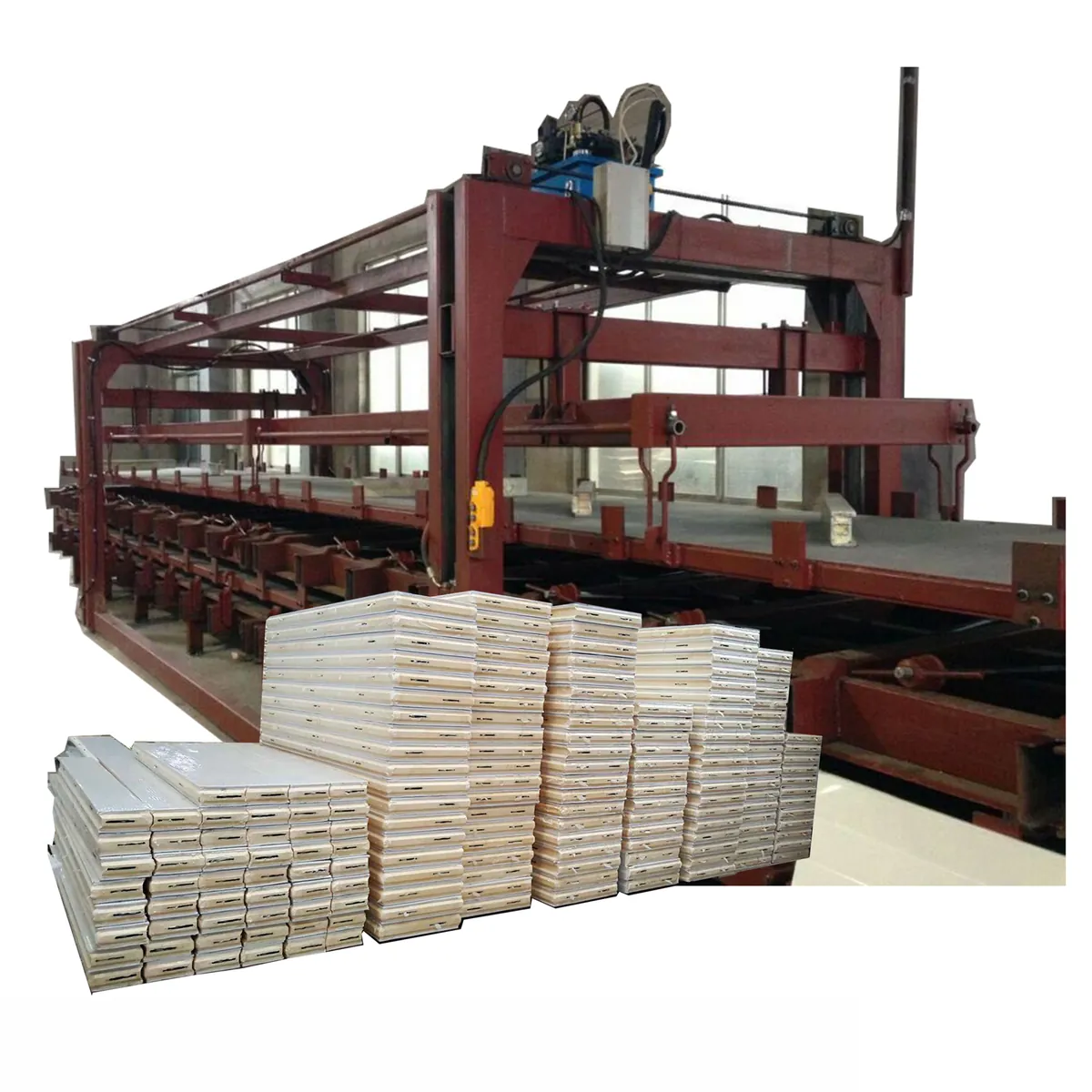
Sourcing cold room panels in the UAE differs from most markets in one structural way: approval is not a single stamp. There is a federal document — the UAE Fire and Life Safety Code of Practice, published in September 2018 and issued through Civil Defence — and separately a Certificate of Conformity for the product itself, issued by a certification body drawn from the Civil Defence approved list. On top of that sits emirate-level administration: Dubai Central Laboratory listing is what gets a material accepted on a Dubai project, while Abu Dhabi Civil Defence Authority released its own local amendments to the 2018 code on 12 March 2026, 54 of them, many formalising practices previously handled case by case. So "Civil Defence approved" is an incomplete sentence. Approved by whom, listed in which emirate, tested as a product or as a system, and valid until what date. Two further points. First, the UAE code sits in the NFPA family rather than the European one, which makes a supplier's EN 13501-1 Euroclass pack the wrong currency here — the mirror image of the situation in South Africa. Second, thermal arithmetic bites harder than buyers expect: a −18°C room against a 45°C ambient carries a 63 K gradient against roughly 38 K in a temperate indoor installation, and holding the same heat gain per square metre across that gradient takes about 1.66 times the panel thickness.
If you are sourcing cold room panels in the UAE, the single most expensive assumption you can make is that "Civil Defence approved" is a fact you can verify with one question. It is not one approval. It is a federal code, a product certification, and an emirate-level listing, and a supplier can hold one of the three while sounding like they hold all of them.
A disclosure first, because it frames everything below. UREXCEED does not sell cold room panels and we are not a UAE company. We build the discontinuous PU sandwich panel production lines that panel plants run on. Nobody on your shortlist is competing with us and there is no panel quotation at the end of this article. What we have is time spent inside panel factories specifying presses, foaming machines and raw-material systems — which is where the document-level questions come from, and equally why we are careful below to separate what we can evidence from what we cannot.
A note on vocabulary before the substance. Cold room panel, cold storage panel and PU sandwich panel all describe the same object: a rigid polyurethane or polyisocyanurate core bonded between two steel facings. Which term a supplier leads with tells you which market they usually sell into, not what comes off their press.
The approval chain has three links, and suppliers quote whichever one they hold
The federal instrument is the UAE Fire and Life Safety Code of Practice, published in September 2018 and administered through Civil Defence. It is the document your consultant, your contractor and your fire engineer are all working from, and it is where the requirement for insulated panels originates.
That code does not, by itself, approve a product. Products in the fire and life safety scope require a Certificate of Conformity, issued by a certification body drawn from the Civil Defence approved list of certification bodies and laboratories. UL, one of those bodies, describes the UAE Civil Defence CoC in its FAQ for UAE certificates as a mandatory document summarising the product certification and carrying the test results and methodology, used by Civil Defence to issue or renew the product's licence. Two things follow from that description and both matter to you: the certificate is product-specific, and it is renewable, which means it has an expiry.
Then there is the emirate layer, and this is where most confusion lives.
| Link in the chain | What it actually is | What to ask the supplier for |
|---|---|---|
| Federal code | UAE Fire and Life Safety Code of Practice, 2018 edition, administered through Civil Defence | Which edition and which local amendments the submission was made against |
| Product certification | Certificate of Conformity issued by a certification body on the Civil Defence approved list | The certificate itself: issuing body, product construction covered, expiry date |
| Emirate listing — Dubai | Dubai Central Laboratory product listing, required for materials on projects in the Emirate of Dubai | The DCL listing reference for the exact panel construction, not the company |
| Emirate amendments — Abu Dhabi | ADCDA local amendments to the 2018 code, released 12 March 2026 | Confirmation the approval is current against the amended Abu Dhabi position |
Dubai Municipality publishes its own Dubai Central Laboratory requirement document for thermal insulation under the UAE Fire and Life Safety Code of Practice 2018, which is the practical reference point for a Dubai project. The distinction worth holding onto: a certificate says the product was tested and conforms; a listing is what makes it acceptable on a particular emirate's projects. Suppliers routinely present the first when you asked about the second.
And the Abu Dhabi position moved this year. The Abu Dhabi Civil Defence Authority released its local amendments to the 2018 code on 12 March 2026 — 54 formalised amendments, many of them formalising positions that had previously been granted case by case, with tailored provisions for industrial facilities and a stated intent to align more closely with NFPA standards. For a panel buyer the consequence is narrow but real: an approval position quoted from a 2024 Abu Dhabi project is not automatically the position today, and "we supplied this panel to a job in Mussafah two years ago" is a reference, not a compliance answer.
None of this makes UAE suppliers harder to deal with than suppliers elsewhere. It makes the question more specific. Ask which emirate the project is in before you ask anything about the panel.
Product test or system test — this is the one that voids a document pack
The code's treatment of insulated panels turns on a distinction that core-level datasheets quietly skip. Panels installed as interior or external walls or roofing — and the code names storage sheds, cold stores and freezers among the applications — are to be tested either as a product or as a system, as appropriate to the installation.
That phrase is doing a lot of work. A report on the foam core alone describes a material. A cold room is an assembly: two facings, a core, a joint profile, a sealant, fixings, and in most rooms a suspended ceiling carrying its own loads. Fire does not encounter the core in isolation; it encounters the joint, the facing lap and the penetration around the evaporator pipework.
So when a supplier hands you a fire report, establish which of the two it is before you read the numbers. A core-only result presented as a panel approval is the most common gap in an otherwise complete-looking pack, and it is the one your fire engineer will find rather than you.
Your European supplier's fire pack is the wrong currency here
This is where UAE sourcing inverts the advice that applies in much of Africa, Europe and the Commonwealth, and it is worth being explicit because it catches importers repeatedly.
The UAE code sits in the NFPA family. Certification bodies working to it operate against that lineage, and the Abu Dhabi amendments released in March 2026 were explicitly framed as moving closer to NFPA alignment. A surface burning characteristics result to ASTM E84 is therefore native vocabulary in an Emirati conversation.
Compare that with South Africa, where the reaction-to-fire classification of thermal insulation moved to SANS 53501-1 from 1 January 2025 and now mirrors the European EN 13501-1 Euroclass form — and where an ASTM E84 report is precisely the document that fails to answer the question. We wrote that market up separately in cold room panel manufacturers in South Africa. The two markets have moved in opposite directions, and a supplier who exports to both should hold both packs.
Three consequences for your shortlist:
A European manufacturer's Euroclass string is not a UAE approval. A classification in the form B-s2,d0 is a real, rigorous result. It is also written in the wrong system for this jurisdiction, and it does not substitute for a Certificate of Conformity issued through the Civil Defence route.
An ASTM E84 result on its own is necessary but not sufficient. E84 is a surface burning test on a specimen; it does not describe how the assembled panel behaves. This is exactly the product-versus-system point from the previous section, arriving from the other direction.
Do not accept equivalence claims from the supplier. Whether a particular foreign report is acceptable is a decision made by the authority having jurisdiction and your fire consultant, not by the person selling the panel. Every supplier in every market will tell you their paperwork is accepted. Have it confirmed by the party who will actually sign off the building.
The thermal arithmetic the datasheet does not do for you
Fire is where the paperwork fails. Thermal is where the room fails, and in this climate the failure mode is boring and expensive rather than dramatic.
Steady-state heat gain through the envelope is proportional to U-value and to the temperature difference across the panel. The U-value part is on the datasheet. The temperature difference is not, and in the Gulf it is doing far more work than most specifications acknowledge.
A −18°C freezer sitting inside a conditioned warehouse at 20°C carries a gradient of 38 K. The same room with a wall or roof exposed to a 45°C summer ambient carries 63 K. That ratio — about 1.66 — applies directly to steady-state gain per square metre for an identical panel.
| Panel thickness | Panel-only U (k = 0.023 W/m.K) | Gain at 38 K gradient | Gain at 63 K gradient |
|---|---|---|---|
| 100 mm | 0.230 W/m2.K | 8.7 W/m2 | 14.5 W/m2 |
| 150 mm | 0.153 W/m2.K | 5.8 W/m2 | 9.7 W/m2 |
| 200 mm | 0.115 W/m2.K | 4.4 W/m2 | 7.2 W/m2 |
| 250 mm | 0.092 W/m2.K | 3.5 W/m2 | 5.8 W/m2 |
This table is arithmetic, not test data. It is U = k ÷ thickness and q = U × ΔT, worked at a single mid-band k-factor so the thickness comparison is visible. Read across a row and the practical conclusion appears: a 150 mm panel in a 63 K gradient leaks more heat per square metre than a 100 mm panel does in a 38 K one. Put the other way, holding the same gain per square metre across the hotter gradient takes roughly 1.66 times the thickness — the 100 mm you would have used in a temperate indoor installation becomes something in the region of 165 mm here, and 150 mm becomes 250 mm.
Three honest caveats, because they are the difference between arithmetic and engineering:
It is panel-only. It excludes internal and external surface resistances and, far more importantly, it excludes thermal bridging at panel joints, at the floor junction and at every door frame. In a hot-ambient installation the joints are not a rounding error — they are where the condensation appears first.
A k-factor with no thickness and no mean temperature attached is not a specification. Ask for the ASTM C518 heat flow meter report with its test conditions stated, and check the figure on the report against the figure in the quotation. They do not always agree. We go into what actually drives long-term k-factor, and why closed-cell content matters more than headline density, in PU foam density and k-factor in cold chain insulation, and thickness selection by room temperature in cold storage temperature zones and insulation specifications.
Steady-state is not the whole load. Solar gain on an exposed roof or west wall, infiltration through door openings, and defrost cycles all sit on top of this and none of them are in the table. The point of the arithmetic is not to size your plant — it is to show why a specification imported unchanged from a temperate project is structurally optimistic in this one.
There is a second-order effect worth naming. Vapour drive in a hot, humid coastal climate runs inward, hard and continuously, toward the cold face. That makes joint sealing and vapour-barrier integrity a service-life issue rather than a commissioning detail, and it is why the ASTM D2126 dimensional stability report and the ASTM D2842 water absorption result deserve more weight in a Gulf specification than in a European one. A core that takes up moisture loses insulation value permanently, not temporarily.
Manufacturer or trader: the document pack still answers it
The general method for separating a real panel manufacturer from a trader with a warehouse is not market-specific, and we have set it out at length in our cold room panel suppliers sourcing guide. In the UAE it resolves faster than in most markets, for a structural reason: certification is expensive and product-specific, so the party that made the panel is the party that commissioned the tests. A trader can resell a certified panel, but the certificate will name someone else's product.
Ask for four reports, each naming the testing laboratory and carrying a date:
- Reaction to fire, for the panel in the configuration you are buying, together with the Certificate of Conformity and — if the project is in Dubai — the Dubai Central Laboratory listing reference. Establish whether the test was on the product or the system.
- Thermal — ASTM C518 or an equivalent guarded hot plate method, with thickness and mean temperature stated, matching the k-factor quoted in the proposal.
- Structural — EN 14509 or ASTM E72, for the finished sandwich panel rather than the raw core. This governs span between supports and what a ceiling panel does at 12 m.
- Ageing — ASTM D2126 dimensional stability after thermal and humid exposure.
Insist on the fourth. It is the one most often missing, for the simple reason that a trader never commissioned it, and it is the report that reveals whether a core will bow or shrink under a large sustained gradient with condensation risk on the warm face. That is not a hypothetical loading in this climate; it is Tuesday.
Two facing questions belong in any Gulf specification: specify the coating system rather than merely the steel grade, and specify stainless on the wet side wherever washdown is routine. Coating choice, not steel grade, usually decides whether a panel still looks serviceable at year eight in a coastal industrial environment.
If you are weighing making panels instead of buying them
Most buyers should keep buying. Buying carries no capital risk, no commissioning period and no responsibility for foam chemistry. But there is a volume above which the margin handed to a supplier each year begins to exceed the amortised cost of a line, and that is the point at which panel buyers become panel manufacturers.
The arithmetic is not complicated:
- Annual demand in square metres of finished panel, taken from your last twelve months rather than a forecast.
- Delivered price per m2 landed at your site today.
- In-house cost per m2 — PU chemical system, steel coil, labour, utilities and a realistic scrap rate. Steel and PU chemistry dominate this, so do not model it from the equipment price.
- Line CAPEX for the output you actually need, from a real quotation.
Annual demand multiplied by the gap between delivered price and in-house cost gives the annual gross saving; CAPEX divided by that saving gives payback in years.
Two cautions, both learned expensively by other people. Use a quoted CAPEX rather than a published one — the figure moves substantially with press count, panel length mix and how much of the plant you already own; our cold room panel production line cost breakdown gives budgeting brackets and should be read as brackets, not as your number. And size the line on realistic output rather than theoretical: a single discontinuous press produces in the region of 200 to 500 m2 per shift depending on thickness and length mix, and a new plant does not reach the top of that band in its first year.
There is a UAE-specific line item that business plans routinely omit, and it follows directly from the first section of this article. If you manufacture, the certification burden transfers to you. Your plant carries the cost and the calendar of a Certificate of Conformity for each product construction you intend to sell, plus the emirate-level listing for each emirate you intend to sell into — and Abu Dhabi's local amendments mean the Abu Dhabi position has to be checked separately rather than assumed from a Dubai approval. That is a real cost and, more importantly, a real lead time between commissioning the press and invoicing the first compliant panel. Model it.
If payback lands beyond three or four years, keep buying — a better supplier is a far cheaper answer than a factory. If it lands well inside that, the next decision is press type, which we cover in continuous versus discontinuous panel lines, and after that the plant layout question in the cold storage panel production line setup guide.
Where this guidance comes from, and what we are not claiming
We build production lines, not panels, and that boundary is deliberate — we are not bidding against the suppliers on your shortlist. Our lines run at 1.2 m panel width in lengths of 3, 6, 9, 12 and 18 m, with a discontinuous press cycling in roughly 4 to 8 minutes depending on thickness.
What we are not claiming, stated plainly because this article is about verifying claims:
We are not asserting a fire classification for any panel construction. Under the UAE route that claim belongs to a Certificate of Conformity naming a specific product, issued through a certification body on the Civil Defence approved list. We hold this article to the same standard it asks you to hold a supplier's brochure to.
We have not published a UAE installation as a reference case, and nothing above should be read as one.
The regulatory positions here are linked to their sources so you can check them directly. Codes, local amendments and listing requirements all move — the Abu Dhabi amendments are recent enough that some published guidance still describes the pre-March-2026 position — and the emirate layer in particular is administered rather than legislated, which means the operative answer on a given project can be more current than any article. Confirm with your fire consultant and the authority having jurisdiction.
If you are running buy-versus-make numbers and want the equipment side pressure-tested against your real volume and thickness mix, that is the conversation we are useful in. If you need panels on a site in Dubai Industrial City or Mussafah next quarter, a UAE manufacturer vetted with the document pack above will serve you far better than we can.
Building a factory? See our production line guide → For a complete plant, browse our cold storage room manufacturing solutions, or contact our engineering team for a UAE-market quote.
Frequently asked questions
How do I check that a cold room panel manufacturer in the UAE is actually approved?
Treat it as three separate questions rather than one. First, the federal code: the UAE Fire and Life Safety Code of Practice, published September 2018 and administered through Civil Defence, is the instrument your consultant works from. Second, the product: fire and life safety products require a Certificate of Conformity issued by a certification body drawn from the Civil Defence approved list, and that certificate is specific to a product construction and carries an expiry date. Third, the emirate: for a project in Dubai, Dubai Central Laboratory listing is what makes a material acceptable, while Abu Dhabi Civil Defence Authority operates its own local amendments to the 2018 code, released on 12 March 2026. Ask which emirate your project sits in before you ask anything about the panel, and ask for the certificate and listing that name the exact construction you are buying rather than the company.
Is an EN 13501-1 Euroclass fire report accepted in the UAE?
Do not assume so. The UAE code sits in the NFPA lineage, and the Abu Dhabi amendments released in March 2026 were explicitly framed as moving closer to NFPA alignment, which makes ASTM-family evidence such as ASTM E84 the native vocabulary here. A European Euroclass string in the form B-s2,d0 is a rigorous result written in a different system, and it does not substitute for a Certificate of Conformity obtained through the Civil Defence route. This is the mirror image of South Africa, where the switch to SANS 53501-1 from 1 January 2025 made the Euroclass form the expected one and left ASTM E84 as the report that answers the wrong question. Whichever report you hold, acceptance is a decision for the authority having jurisdiction and your fire consultant, not for the supplier.
What is the difference between a Certificate of Conformity and a Dubai Central Laboratory listing?
They do different jobs and suppliers often present one when you asked about the other. The Certificate of Conformity is product certification: issued by a certification body on the Civil Defence approved list, it summarises the test results and methodology for a specific product and is used by Civil Defence to issue or renew that product's licence, which means it is renewable and has an expiry date. A Dubai Central Laboratory listing is emirate-level acceptance: it is what allows a material to be specified and used on projects within the Emirate of Dubai. A supplier can hold a valid certificate for a construction that is not the one they are quoting you, and a company-level claim of approval tells you nothing about the specific panel. Ask for both, referenced to the construction on your order.
Why does the code distinguish between testing a panel as a product and as a system?
Because a cold room is an assembly, not a material. The code requires panels installed as interior or external walls or roofing — naming applications including storage sheds, cold stores and freezers — to be tested either as a product or as a system, as appropriate to the installation. A report on the foam core alone characterises a material in isolation, whereas fire in a real room encounters the joint profile, the facing lap, the sealant, the fixings and the penetrations around evaporator pipework. A core-only result presented as a panel approval is the most common gap in an otherwise complete-looking document pack, so establish which of the two any fire report actually is before reading the numbers in it.
How much thicker do cold room panels need to be in the UAE climate?
As a first approximation, about 1.66 times, and the reason is arithmetic rather than opinion. Steady-state heat gain is proportional to U-value multiplied by the temperature difference across the panel. A minus 18 degree Celsius freezer inside a conditioned warehouse at 20 degrees carries a 38 K gradient; the same room with a wall or roof exposed to a 45 degree summer ambient carries 63 K. Holding the same heat gain per square metre across the hotter gradient therefore takes roughly 1.66 times the thickness, so a 100 mm specification imported from a temperate project lands near 165 mm here and 150 mm lands near 250 mm. Three caveats: that is panel-only, excluding surface resistances and, more importantly, thermal bridging at joints, door frames and the floor junction; it is steady-state only, so solar gain on exposed roofs, door infiltration and defrost loads sit on top of it; and it assumes a mid-band k-factor, which is not a substitute for the k-factor on your supplier's ASTM C518 report. Use it to see why an imported specification is structurally optimistic, not to size your plant.
Which test reports should I ask a UAE panel supplier for?
Four, each naming the testing laboratory and carrying a date. Reaction to fire for the panel in the configuration you are buying, together with the Certificate of Conformity and, for a Dubai project, the Dubai Central Laboratory listing reference — and establish whether the test was on the product or the system. Thermal conductivity to ASTM C518 or an equivalent guarded hot plate method, with thickness and mean temperature stated, matching the k-factor in the quotation. Structural performance to EN 14509 or ASTM E72 for the finished sandwich panel rather than the raw core, since this governs span between supports. And dimensional stability to ASTM D2126 after thermal and humid exposure. Insist on the fourth: it is the report a trader never commissioned, and in a hot humid climate with inward vapour drive it is the one that predicts whether the core will bow or shrink in service. For food and pharmaceutical rooms add water absorption to ASTM D2842.
Should I buy cold room panels in the UAE or manufacture them myself?
Buy, until annual volume is large and stable enough that the margin paid to your supplier each year exceeds the amortised cost of a line. Run it as arithmetic: annual demand in square metres multiplied by the gap between your delivered price per square metre and your in-house cost per square metre gives an annual gross saving, and line CAPEX divided by that saving gives payback in years. Use a real quotation rather than a published figure, and size the line on realistic output — a single discontinuous press runs in the region of 200 to 500 square metres per shift depending on thickness and length mix, and a new plant does not reach the top of that band in year one. Then add the UAE-specific line item most business plans omit: if you manufacture, the certification burden transfers to you, meaning a Certificate of Conformity for each product construction you intend to sell plus emirate-level listing for each emirate you sell into, with Abu Dhabi checked separately rather than assumed from a Dubai approval. That is a cost, and it is also a lead time between commissioning the press and invoicing your first compliant panel.
Products Mentioned in This Article
Ready to plan your refrigeration project?
Share your target output and product mix — our engineering team replies with a capacity plan and quote within three business days.
Get an engineering quoteRelated articles
Converting a Refrigerator Foaming Line to Cyclopentane: Retrofit vs New Machine, Cost and Timeline
Switching from HFC-245fa to cyclopentane is an equipment and safety-infrastructure project, not a raw-material swap. Here's how to decide between retrofitting an existing foaming machine and buying a new cyclopentane-ready one, what the safety infrastructure actually costs, and a realistic project timeline.
Freezer Mould Selection Guide: Chest vs Upright vs Display Cabinet
A freezer mould is not one product — chest (horizontal), upright and display (island / glass-door) freezers each need a different mould geometry, clamping load and cure schedule. This guide picks the right freezer mould family by cabinet size, volume and operating temperature.
High-Pressure vs Low-Pressure PU Foaming Machine — Which One Does Your Factory Need?
Same chemicals, very different machines. We break down pressure, output, foam quality and investment so you can pick the right PU foaming machine for your line.