
PU Spray Foam Machine: Types, Applications & Buyer's Guide for Cold Chain Insulation
Hydraulic, electric or air-driven — which spray foam machine fits your cold storage and refrigerated transport projects? We compare output, cost and ROI so you can invest with confidence.

Hydraulic spray foam machines (USD 25K–60K, 10–20 kg/min) dominate large cold storage projects; electric units (USD 20K–50K, 5–15 kg/min) suit mid-size indoor work at lower noise; air-driven (USD 8K–20K, 3–8 kg/min) cover small repairs and remote sites. Target 120–150 mm closed-cell foam at 38–42 kg/m³ for −25 °C cold rooms. Typical ROI: 6–12 months at 3–5 projects/month. Pair with a low-pressure foaming machine if you also pour insulation boxes in-factory.
Why spray foam insulation is gaining ground in refrigeration and cold chain
Factory-injected PU foam — the kind dispensed by high-pressure or low-pressure foaming machines — works perfectly for products manufactured in a controlled environment. But the moment insulation moves on-site — cold storage rooms, refrigerated truck bodies, rooftop chillers, pipeline lagging — you need a machine that goes to the job, not the other way around.
That is the role of a PU spray foam machine. It heats, meters and atomises two-component polyurethane through a handheld gun, creating a seamless insulation layer that bonds directly to the substrate. No joints, no thermal bridges, no panel-fitting gaps.
How a PU spray foam machine works
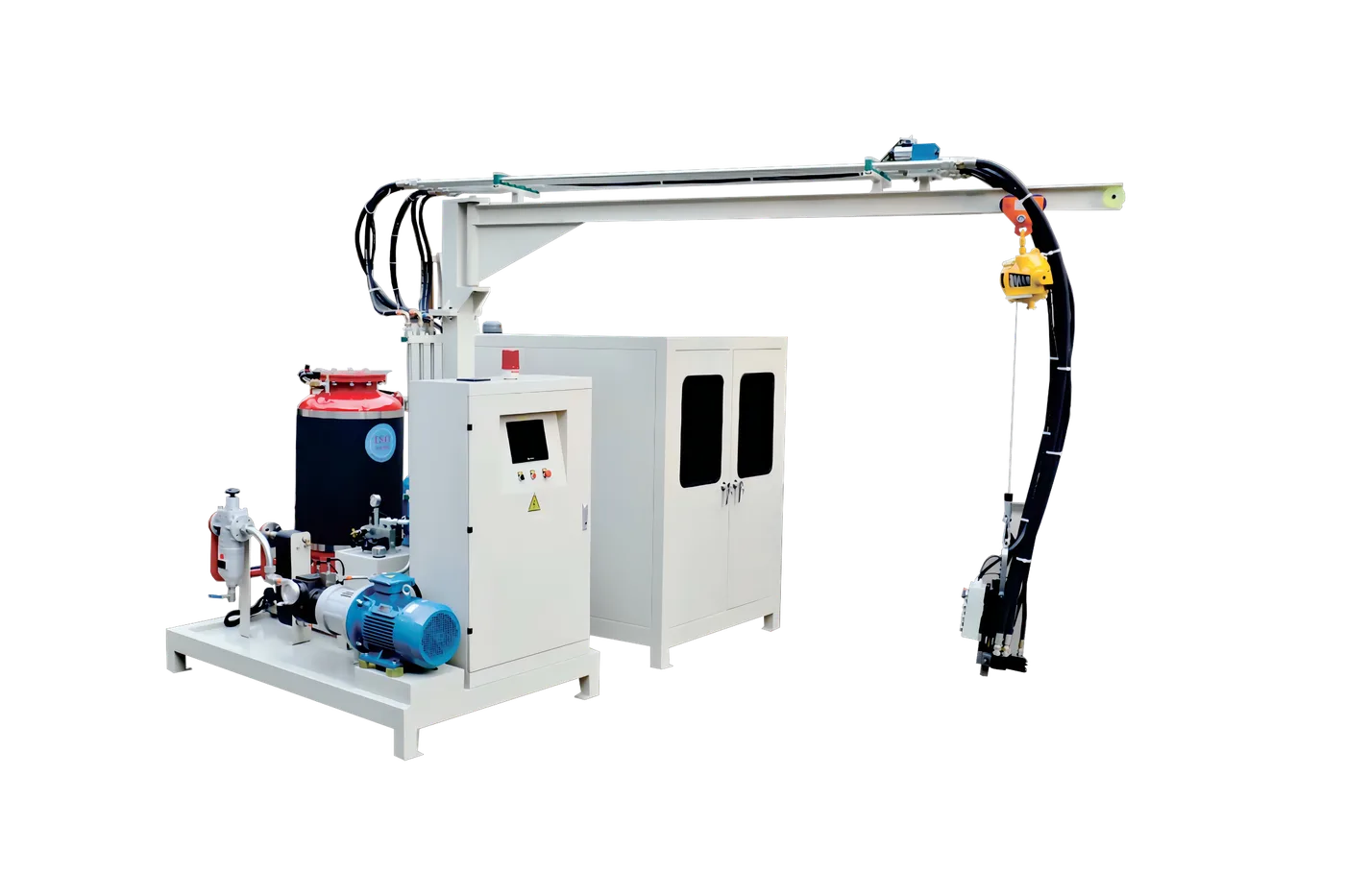
A spray foam system has four subsystems working in concert:
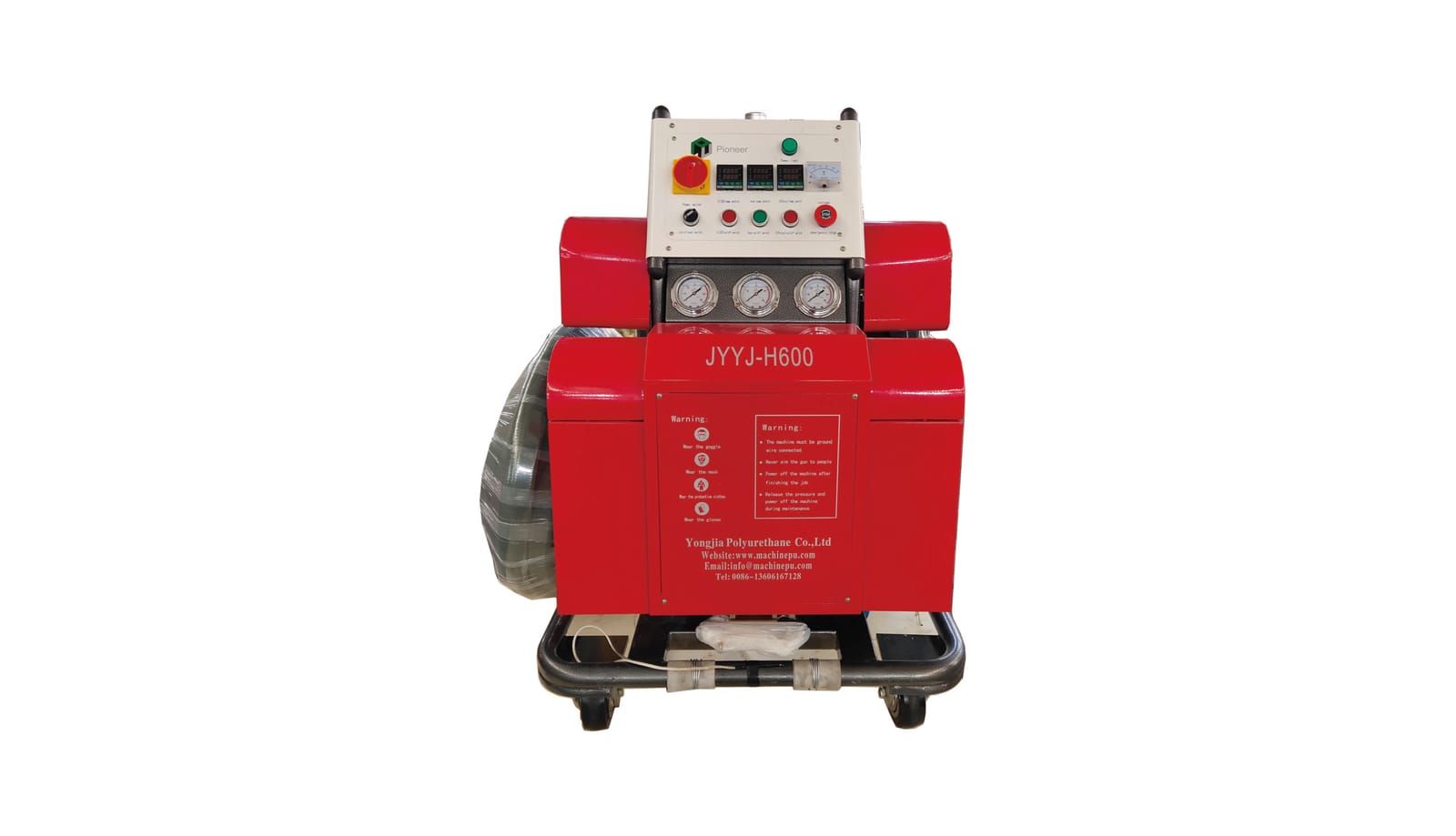
- Proportioning unit — two heated, high-pressure pumps meter isocyanate (A-side) and polyol blend (B-side) at a fixed 1:1 ratio by volume. Output pressure ranges from 100 to 160 bar.
- Heated hose set — 10 to 60 m of twin hose keeps both components at 60–80 °C from drum to gun. Consistent temperature = consistent cell structure.
- Spray gun & mixing chamber — impingement mixing at the gun tip. The two streams collide, atomise and are sprayed in a 30–50 cm fan pattern. Typical output: 5–20 kg/min.
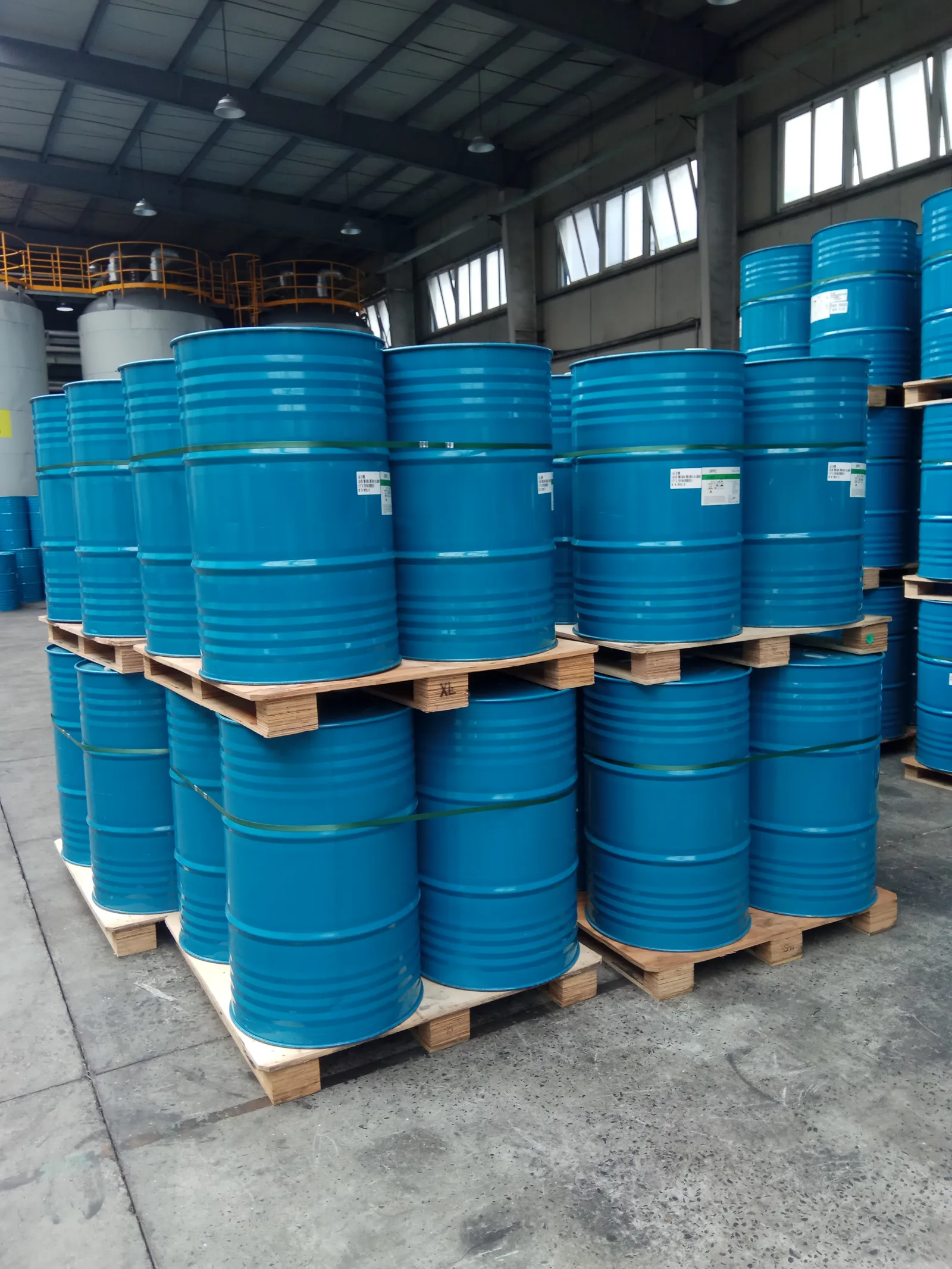
- Transfer pumps & drum agitators — feed raw material from 200 L drums or IBCs into the day tanks. Agitators prevent polyol settling.
The operator applies foam in passes of 15–25 mm thickness. Multiple passes build up to the target thickness (typically 50–150 mm for cold storage walls). Foam rises and cures in 8–15 seconds per pass, reaching full mechanical strength within 24 hours.
Three machine types compared
| Parameter | Hydraulic | Electric | Air-Driven (Pneumatic) |
|---|---|---|---|
| Drive system | Hydraulic pump + motor | Electric servo motor | Compressed air + pneumatic pump |
| Output range | 10–20 kg/min | 5–15 kg/min | 3–8 kg/min |
| Operating pressure | 120–180 bar | 100–160 bar | 80–120 bar |
| Hose length | Up to 90 m | Up to 60 m | Up to 30 m |
| Noise level | 75–85 dB (loudest) | 60–70 dB (quietest) | 70–80 dB |
| Power requirement | 30–60 kW 3-phase | 15–30 kW 3-phase | 7.5 kW compressor + 5 kW heater |
| Best for | Large cold rooms, warehouses, continuous production | Mid-size projects, indoor jobs, noise-sensitive sites | Small repairs, retrofit, remote sites without 3-phase power |
| Typical investment | USD 25,000–60,000 | USD 20,000–50,000 | USD 8,000–20,000 |
Our UPM-SPRAY-20 is a hydraulic-class machine rated at 5–20 kg/min with electric hose heating to 80 °C and configurable hose lengths from 10 to 60 m — purpose-built for cold storage and refrigerated transport insulation.
Five high-value applications in refrigeration and cold chain
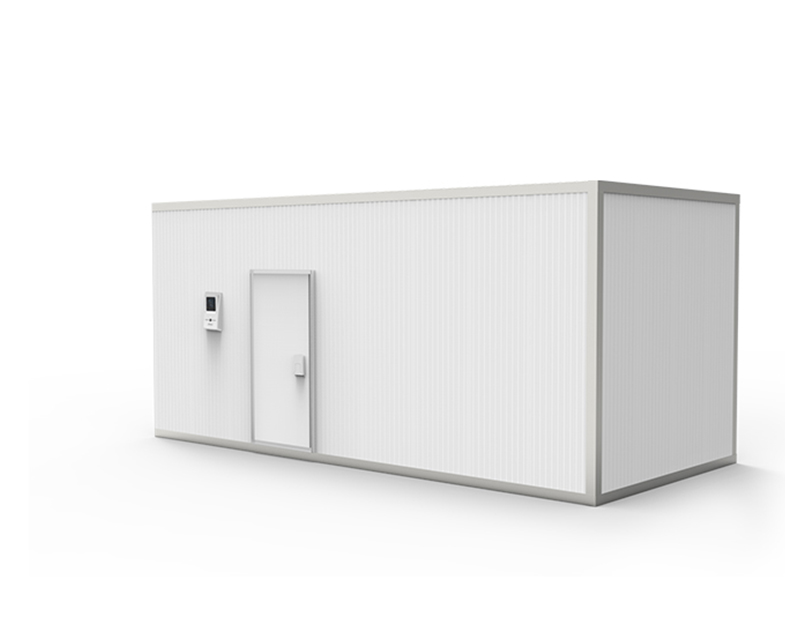
- Cold storage room walls and ceilings — seamless 80–150 mm closed-cell foam replaces pre-cut panels, eliminating thermal bridges at joints. Typical k-factor (ASTM C518): 0.020–0.023 W/m·K (refer to our PU foam density and k-factor guide).
- Refrigerated truck and container bodies — spray-applied foam conforms to curved and corrugated metal surfaces that rigid panels cannot follow. Total body insulation in 4–6 hours for a 40 ft reefer container.
- Pipe and duct lagging — chilled water lines, glycol circuits and HVAC ducts get a monolithic jacket with no seams for condensation to exploit.
- Existing facility retrofit — when an operating cold store needs thicker insulation (e.g. converting from +2 °C dairy to −25 °C frozen seafood), spray foam adds insulation value without demolishing the existing structure.
- Roof insulation for food processing plants — ASTM E84 Class A-rated closed-cell spray foam provides both thermal performance and fire resistance, qualifying for insurance underwriter approval.
Decision framework: choosing the right spray foam machine
Ask these five questions before placing an order:
- What is your average project size? Over 500 m² per job → hydraulic. Under 200 m² → electric or air-driven keeps costs proportional.
- How far is the gun from the machine? Roof jobs and large warehouses need 60–90 m hose reach (hydraulic). Truck bodies at 10–15 m are fine with any type.
- Is 3-phase power available on-site? Remote construction sites may only have single-phase or generator power — air-driven machines tolerate this; hydraulic machines do not.
- What foam density do you need? Cold chain applications typically require 35–45 kg/m³ closed-cell foam. Verify the machine can sustain the required output at that density without overheating.
- Do you also pour foam into moulds? If your business mixes on-site spray with factory-poured insulation boxes, consider pairing a spray machine with a low-pressure foaming machine for maximum versatility. See our HP vs LP foaming machine comparison for factory-pour specifics.
Spray foam vs pre-made insulation panels — when to use which
Both methods use the same polyurethane chemistry. The difference is where and how the foam is applied:
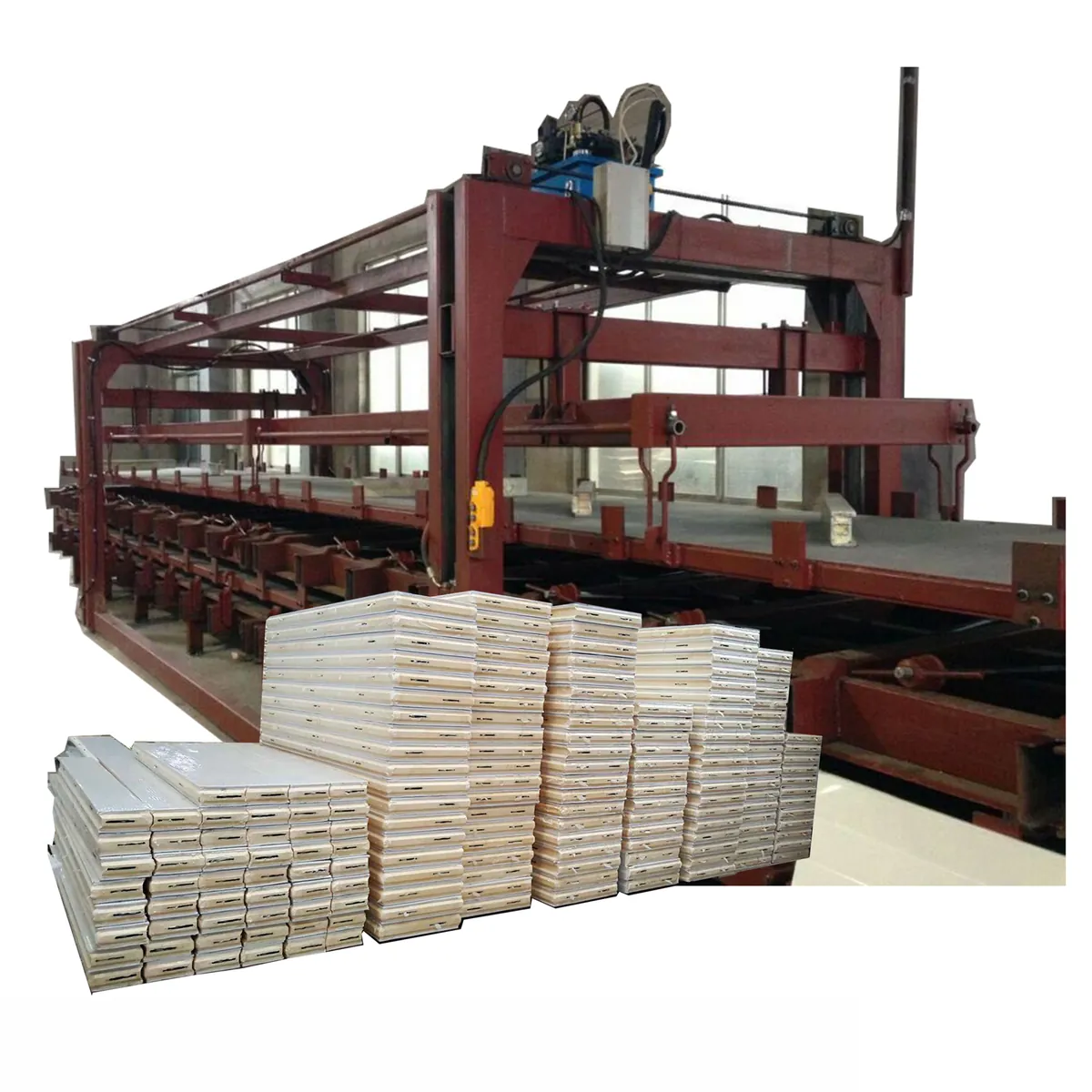
- Pre-made panels (produced on a cold room panel line) — factory-controlled density and thickness, fast on-site assembly, ideal for new-build standardised cold rooms.
- Spray foam — custom thickness per surface, zero joints, bonds to irregular substrates, ideal for retrofits, curved surfaces and non-standard geometries.
Many contractors use both: panel walls for speed, spray foam at junctions, doors, and penetrations where panels leave gaps.
Maintenance essentials that protect your investment
- Daily: flush gun and hose with manufacturer-specified solvent. Inspect spray tip for wear — a worn tip wastes 5–15 % material.
- Weekly: check hose heating elements and temperature sensors. A 5 °C temperature drop at the gun increases foam viscosity and creates rough surface texture.
- Monthly: calibrate proportioning ratio. Even 2 % off-ratio causes soft spots that fail adhesion tests. Use cup tests (free-rise density) to verify.
- Annually: hydraulic oil change (hydraulic machines), pump seal replacement, full pressure calibration.
Building a factory? See our production line guide → For a complete plant, browse our cold storage room manufacturing solutions.
Frequently asked questions
What thickness of spray foam is needed for a −25 °C cold storage room?
For a target of −25 °C internal temperature in a 35 °C ambient climate, you need approximately 120–150 mm of closed-cell spray foam at 38–42 kg/m³ density (k-factor 0.020–0.022 W/m·K). This achieves a total wall R-value of about 5.5–7.5 m²·K/W, meeting EN 14509 and most national cold storage building codes.
Can I use the same machine for both open-cell and closed-cell foam?
No. Open-cell and closed-cell formulations require different mix ratios, pressures and gun tips. Most industrial cold chain applications use closed-cell foam exclusively because it provides vapour barrier properties and higher compressive strength. Open-cell foam is used in building insulation where vapour permeability is desired.
How much area can one operator spray per day?
With a hydraulic machine at 15 kg/min output, one trained operator can spray approximately 150–250 m² per 8-hour shift at 80 mm thickness. Actual throughput depends on surface preparation time, access constraints and ambient temperature. Below 10 °C ambient, foam rise slows and daily output drops by 20–30 %.
What safety equipment is required for spray foam application?
Full-face supplied-air respirator (PAPR or airline), chemical-resistant coveralls, nitrile gloves, and safety goggles are mandatory. Isocyanate vapour is a respiratory sensitiser — once sensitised, an operator can never work with PU again. Adequate ventilation (≥ 6 air changes/hour for enclosed spaces) and isocyanate vapour monitoring are required by OSHA 29 CFR 1910.1000 and equivalent regulations.
What is the ROI timeline for a spray foam machine investment?
A USD 30,000–40,000 hydraulic spray foam machine typically pays for itself in 6–12 months for a contractor doing 3–5 cold storage projects per month. Material cost is USD 2.5–4.0 per kg; installed price to end customers is USD 8–15 per m² per 25 mm thickness. At 200 m²/day average, gross margin per day is USD 800–1,500 before labour and transport.
Ready to plan your refrigeration project?
Share your target output and product mix — our engineering team replies with a capacity plan and quote within three business days.
Get an engineering quoteRelated articles
Cold Room Panel Manufacturers in the UAE: Why "Civil Defence Approved" Is Not One Question
In the UAE, a panel's paperwork has to satisfy a federal code, a product certification scheme, and an emirate-level listing — and Abu Dhabi has just formalised 54 local amendments of its own. A brochure line reading "Civil Defence approved" answers none of those three. Here is what to ask instead, why a European supplier's fire pack is the wrong currency here, and what a 45°C ambient does to the thickness you thought you needed.
Converting a Refrigerator Foaming Line to Cyclopentane: Retrofit vs New Machine, Cost and Timeline
Switching from HFC-245fa to cyclopentane is an equipment and safety-infrastructure project, not a raw-material swap. Here's how to decide between retrofitting an existing foaming machine and buying a new cyclopentane-ready one, what the safety infrastructure actually costs, and a realistic project timeline.

Freezer Mould Selection Guide: Chest vs Upright vs Display Cabinet
A freezer mould is not one product — chest (horizontal), upright and display (island / glass-door) freezers each need a different mould geometry, clamping load and cure schedule. This guide picks the right freezer mould family by cabinet size, volume and operating temperature.